Menopause
TaraCares: London and York based start-up to address stigma, silence and suffering of the menopause transition experience
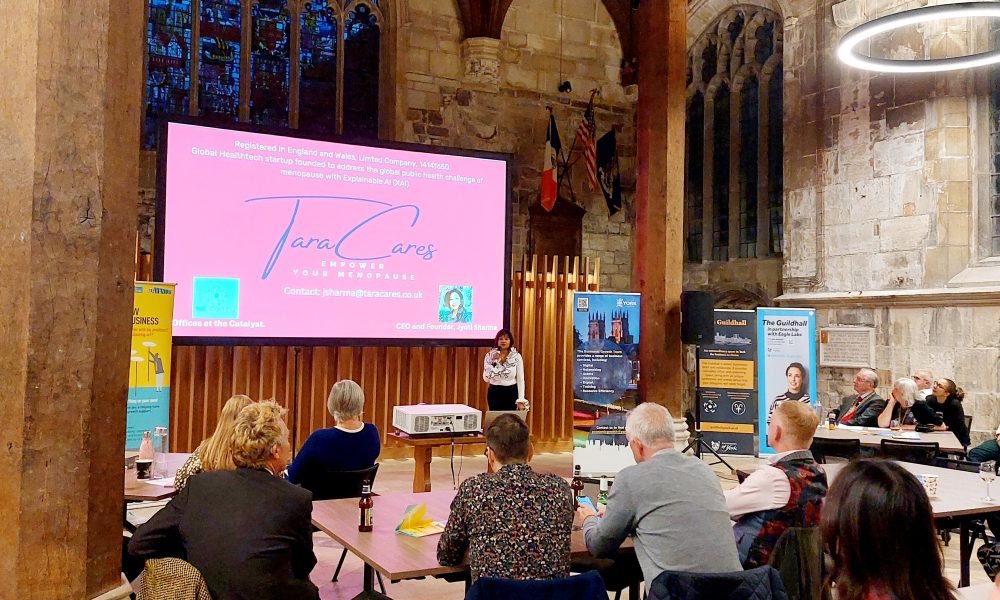
By Jyoti Sharma, Founder and CEO of TaraCares

Did you know that many frequently used menopause assessment tools were developed almost 70 years ago?
Some examples include – *Kupperman Index (1952), Green Climacteric Scale (GCS, 1976), Menopause specific Quality of Life (MENQOL, 1996), and Menopause Rating Scale (early 1990s), all developed decades ago.
As noted in literature, these scales come with several limitations, such as inadequate coverage of all the relevant menopause transition symptoms, lack of thresholds for initiating treatment, lengthy and unsuitable tools for use in primary care – the Menopause Quality of Life (MENQOL) has 30 items while the GCS has 20 items – failure to acknowledge the use of visual scales and the use of clinical language vs colloquial language.
In the absence of breakthrough, patient-centric innovation translated in an evidence-led language that is easy to understand and respond to, the “menopause gold rush economy” will become yet another “blind guiding the blind” and exactly that – a rush!

A UK based start-up is confronting this challenge with new-age research wisdom, clinical excellence and computational science unified into the TaraCares Trifecta.
I founded TaraCares to eradicate misinformation, misdiagnosis, and mismanagement of menopause for females from 18 – 80.
After 22 years of a successful international technology, innovation, and management consulting career, I decided to resign from Ernst & Young, a Big 4 consulting firm based in London, where I worked as a hyper growth technology executive leader.
I used to run the People Experience business for over 100 countries across their EMEIA area (Europe, Middle East, India and Africa) working with software enterprises such as SAP, SAP SuccessFactors, Microsoft, and Qualtrics, but during the pandemic, I made a decisive shift.
I resigned from a fantastic firm and team for my mission and priority to address the global public health challenge of menopause with science and research.
To be close to England’s capital of excellent health sciences research, I moved up from London to York, in North Yorkshire where TaraCares, the mission-led venture was founded with divine grace.
After spending over 3,000 hours interviewing women with lived experience of menopause, I realised no woman wants to be called menopausal.
Therefore, the neuroscience of language in how we understand, research, and inform menopause healthcare has become central to TaraCares.
As I previously mentioned in FemTech World’s recent roundtable debate, the TaraCares team are leading a safe and inclusive future for equitable menopause health and wellbeing by creating it with science in action for every person assigned female at birth.
Jyoti Sharma at the FemTech World X HealthTech World Roundtable in November
Through an AI-driven platform that uses Explainable AI to deliver trust, transparency and increased precision in how clinicians, especially in primary care, diagnose and treat menopause, we aim to improve adherence to menopause clinical practice guidelines outlined by the National Institute for Health and Care Excellence in the UK (NICE), including how women receive individualised and integrated knowledge.
We realised that to take ownership of your health day to day you need to be adequately and scientifically aware – through solutions that are accessible and affordable, else it is not a solution.
TaraCares mission is 100 per cent aligned with the 2022-2025 strategic delivery plan of UKRI, Innovate UK and Women’s Health strategy. Our inclusive and affordable solutions are being designed to tackle the stigma, suffering and silence of the menopause transition experience with tailored knowledge, timely diagnosis, and total management through preventive and self-driven healthcare.
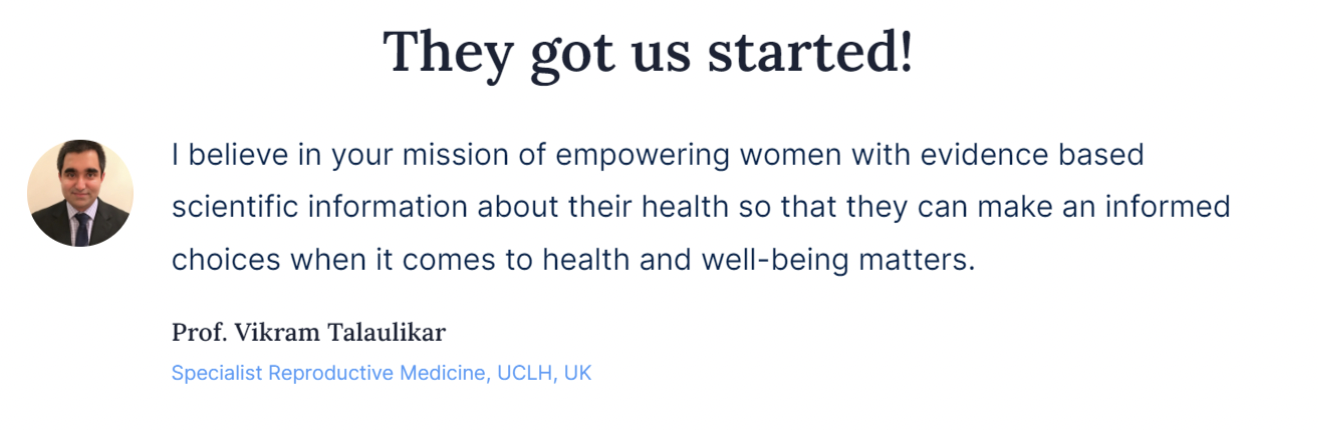
In a short period of time since incorporation in May 2022, we have gained immense support from the public and respected leaders across the globe, such as Professor Vikram Talaulikar, a celebrated specialist in post reproductive medicine at University College London, Hospital (UCLH).
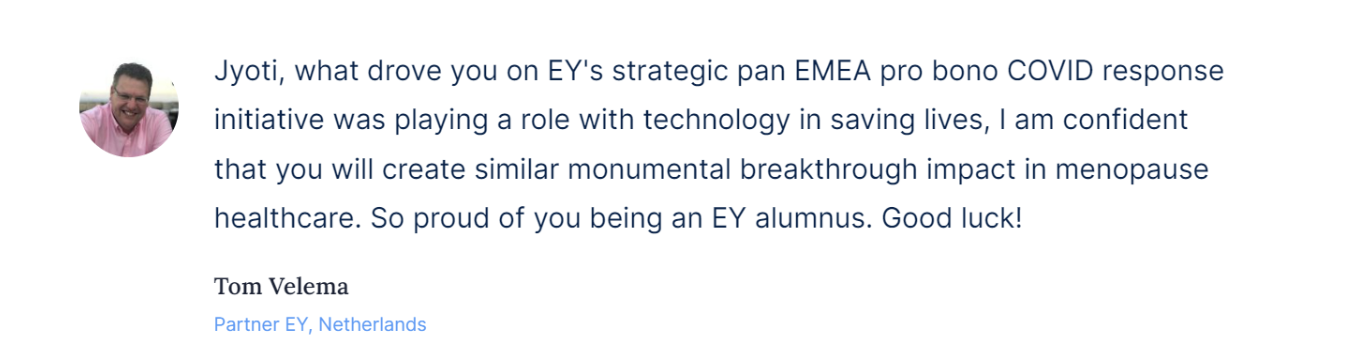
Tom Velema, entrepreneur and senior EMEIA partner at EY and with whom I worked on EY’s global strategic COVID response initiative continues to be one of my mentors.
TaraCares has started the new year with a sparkle publishing our brand new website over Christmas which has seen a significant reception, especially the section on Menopause Science. We are proud to formally collaborate with many incredible experts – some of whom are featured on our website.
As an experienced, driven, ambitious for impact and patient-centric, healthtech startup, we have already forged alliances working with the Department of International Trade in the UK to enter underserved countries with our solutions.
Our team is also running research studies, collaborating with leading universities in England such as the University of Huddersfield.
But our work doesn’t stop here. In early 2023, we are launching our scientific community to tackle misinformation on menopause with clinicians, scientists, and technologists because we believe that together, we can help every woman take ownership of their menopause.
If you would like to join the TaraCares community or take part in our research, email femalehealth@taracares.co.uk.
For a conversation with thoughtful, responsible, and impact-oriented members of the public, clinicians, data scientists, engineers, and investor communities, I can be reached at jsharma@taracares.co.uk.

Menopause
Enter the menopause innovation award before it’s too late

If you are working in menopause care and have not yet entered the Femtech World Awards, you have until this Friday, 17 April, to put your work forward.
The award celebrates those leading the way in reshaping how menopause is understood and supported across healthcare and society.
The winner will have demonstrated exceptional innovation in addressing the health, wellbeing and quality of life needs of people going through this transition.
Judges will assess impact, inclusivity, accessibility and the ability to challenge stigma while delivering meaningful, real-world solutions.
The scope is intentionally broad.
Whether you have developed a digital platform, a diagnostic tool, a pharmaceutical or non-pharmaceutical treatment, a workplace support programme or something that does not sit neatly within a single category, if your work is improving the menopause experience, this award is for you.
Who is behind the award
The category is sponsored by Cross-Border Impact Ventures (CBIV), an impact venture capital firm investing in early growth stage health technology companies across medical devices, diagnostics, therapeutics and digital health.
Every company CBIV supports must show relevance to women’s, children’s and adolescents’ health, with the ambition to scale into emerging markets.
Annie Thériault, managing partner at Cross-Border Impact Ventures, said: “Being part of the FemTech World Awards gives us a front-row seat to the most exciting breakthroughs in women’s health.
“It’s a powerful way to stay connected to the pulse of innovation and the future of care.”
What you stand to gain
Entry is free.
Every shortlisted organisation receives extensive coverage across all Femtech World platforms, placing your innovation in front of a global audience of investors, clinicians, industry leaders and potential partners.
The winner also receives a trophy and a dedicated interview.
The deadline is this Friday
Nominations and entries close on 17 April.
After that, the Femtech World team will shortlist the strongest submissions, with the final decision made by a representative from CBIV.
Find out more about the awards and enter for free here.
Menopause
Premature menopause raises long-term heart risk by 40%, study finds

Women who enter natural menopause before age 40 face about a 40 per cent higher lifetime risk of developing coronary heart disease than women who experience menopause later, according to a large study that is the first to calculate lifetime heart risk associated with premature menopause.
The findings suggest that doctors should routinely ask women about age at menopause, using the menopausal transition as an opportunity to identify higher-risk women and intervene earlier.
Dr Priya Freaney is assistant professor of medicine in the division of cardiology at Northwestern University Feinberg School of Medicine.
She said: “When menopause happens before age 40, women still have more than half of their life expectancy ahead of them.
“Understanding their cumulative lifetime risk of blockage-related heart disease is critical.”
Coronary heart disease is a condition where the heart’s arteries become blocked or narrowed by a buildup of fatty deposits called plaque.
By restricting blood flow to the heart, these plaques can lead to sudden events (heart attacks) or gradual damage (weakened heart muscle).
The study of more than 10,000 U.S. women followed for decades also found that premature menopause was three times more common among Black women than white women (15.5 per cent vs. 4.8 per cent).
According to Freaney, the disparity likely reflects a complex mix of life-course exposures, health conditions and structural inequities rather than solely inherent biological differences.
Freaney and colleagues analysed data from 10,036 postmenopausal Black and white women who participated in six long-running U.S. studies, including the Framingham Heart Study, Atherosclerosis Risk in Communities Study and the Women’s Health Initiative.
The women were followed between 1964 and 2018.
During that time, the Northwestern scientists found more than 1,000 cases of coronary heart disease events in the data, including fatal and non-fatal heart attacks.
Even after accounting for cardiovascular risk factors such as smoking, obesity, hypertension and diabetes, premature menopause was associated with 41 per cent higher risk of coronary heart disease for Black women and 39 per cent increased risk for white women.
The scientists note in the study that the causes of premature menopause are not fully understood and are likely multifactorial.
Potential contributors include genetic, biological and environmental factors, as well as earlier age of the first menstrual period, health behaviors (such as smoking), obesity and the cumulative effects of chronic stress.
It is also unclear whether the menopausal transition itself creates a vascular environment that promotes disease, or whether women who experience premature menopause already have an underlying risk profile that predisposes them to both premature menopause and cardiovascular disease.
Even at the average age, menopause’s hormonal changes can affect cardiovascular health.
During menopause, declining estrogen levels trigger changes that increase coronary heart disease risk.
“As the natural estrogen declines, no matter what age it happens in, cholesterol and blood pressure go up, body fat distribution shifts to the abdomen, muscle mass gets lower, blood sugars can become dysregulated and arteries stiffen,” said Freaney, who also is director of the Women’s Heart Care Program at Northwestern Medicine Bluhm Cardiovascular Institute.
“Together, these changes over a short period increase the risk of heart disease.”
Freaney said women who experience premature menopause should think of it as an early signal to take their heart health seriously.
“Tell yourself: I have to be far more proactive than my neighbor about my own heart health,” Freaney said.
“The vast majority of heart disease is preventable, but people need to know that they’re at risk early in life because effective prevention takes decades.
“Tell your doctor, ‘I experienced premature menopause. What can we do to protect my heart?’” she suggests.
The findings also highlight a gap in how menopause is discussed in medical care, according to Freaney.
“All clinicians need to get comfortable asking about menopause because we have estrogen receptors from our head to our toes.”
For years, menopause has largely been treated as a gynecologic issue, she said. But the hormonal transition affects nearly every system in the body, including the cardiovascular system.
That means cardiovascular clinicians should routinely ask about menopause history when assessing long-term cardiovascular risk.
“Historically, women have been vastly understudied in cardiovascular science, and we still have much to learn about how menopause influences heart health,” Freaney said.
Menopause
Cardiff opens its first women’s health hub as nationwide rollout begins

Cardiff’s first women’s health hub has opened, offering specialist perimenopause and menopause support for women aged 40 to 65.
Minister for mental health and wellbeing Sarah Murphy visited the East Cardiff Menopause Hub this week to learn about the new service, which brings together patient-centred advice, treatment and community support under one roof.
The hub forms part of a Wales-wide network of pathfinder women’s health hubs established during the first phase of delivering the Women’s Health Plan.
Women registered with one of the East Cardiff GP Cluster practices will be able to access extended 20-minute consultations, available face-to-face, by telephone or online, with GPs who have specialist experience in menopause care.
Practice nurses will also provide broader healthcare support, including blood pressure checks, lifestyle advice and guidance on hormone replacement therapy.
A Menopause Café, open to women of all ages, will offer a welcoming community space to share experiences and ask questions.
Sarah Murphy said: “It was fantastic to visit the Maelfa hub and see first-hand how Cardiff and Vale University Health Board is bringing high-quality, compassionate care closer to home for women in East Cardiff.
“Women’s health hubs will make it easier for women in Wales to get care when they need it.
“As the pathfinder hubs are rolled out, we’ll be listening to women’s feedback and adapting to make sure we are building a health service which meets the needs of women and girls, now and for generations to come.”
By March, every health board in Wales will have a pathfinder women’s health hub. Each health board has received an additional £300,000 this financial year to support their development.
The hubs form part of the Women’s Health Plan, which includes more than 60 actions to close the gender health gap and is based on feedback from around 4,000 women across Wales.
Dr Claire Beynon, executive director of public health at Cardiff and Vale University Health Board, said: “Too many women feel unsupported or unheard when seeking help for the symptoms of menopause.
“The East Cardiff Menopause Hub is a really positive step in bringing high-quality, compassionate care closer to home, with longer appointments and specialist expertise focused on women’s health needs.
“By combining clinical care with community support, this service helps women feel informed, confident and in control of their health. It also reflects our wider commitment to reducing health inequalities.”
Entrepreneur2 weeks agoThree sessions that show exactly where women’s health is heading in 2026
News4 weeks agoLuna and Kindbody partner to bring data-driven insight to women’s health and fertility care
Fertility4 weeks agoMenstruation costs £20,359 a lifetime, sparking calls for Government action
Menopause3 weeks agoCalifornia plans US$3.4m menopause care overhaul
News4 weeks agoHalogen Ventures surpasses 100 investments in female-founded startups
Menopause3 weeks agoWatchdog bans five ads for women’s heath claims
Pregnancy2 weeks agoHow NIPT has evolved and what AI NIPT means in 2026
Fertility4 weeks agoPeers push to pardon women criminalised under abortion laws


Pingback: TaraCares to present at MedFemTech Congress ahead of platform launch - FemTech World
Pingback: TaraCares agrees MIMOSA™ pilots and launches Menopause Intelligence™ Maturity Index for corporates - FemTech World