Fertility
Home insemination makes fertility care more affordable for thousands ineligible for NHS treatment
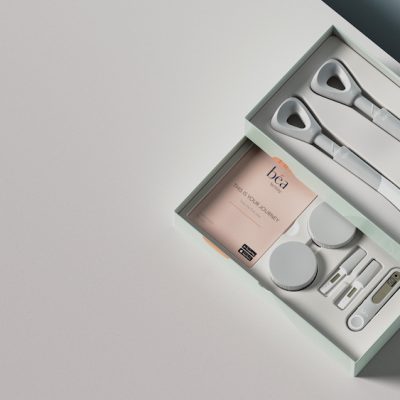
At-home artificial insemination sees increasing popularity, as only 32 per cent of the IVF cycles in England are covered by the NHS.
The medical firm Béa Fertility is preparing to launch an intracervical insemination (ICI) kit that can safely be used at home, aiming to make fertility treatment more affordable for those who can’t afford IVF.
ICI is a type of artificial insemination that involves inserting sperm into the cervix by using a cervical cap. Unlike IVF, when an egg is removed and fertilised with sperm in a laboratory, ICI is a less invasive process that does not involve any hormonal or injectable treatment.

Nicole Leeds, Béa Fertility chief marketing officer, said: “IVF is the tool that is used most often, but it is not needed by everybody and it can be very expensive and invasive. There’s also a hidden cost of it because unless you live in a big city, it can be quite hard to access multiple clinics for appointments.
“That’s why our focus is to make infertility care more accessible and affordable, but keeping the clinical standard. We wanted Béa to offer everything that you need within a kit sent to your home.”
According to recommendations by the National Institute for Health and Care Excellence (Nice), the NHS should fund three full IVF cycles to women under 40 who have been trying for at least two years, and one cycle for some women aged 40 to 42.
Yet, according to a recent report, more than 80 per cent of NHS clinical commissioning groups fail to meet this guidance, forcing couples to go private, where the average cost of a cycle is roughly £5,000.
For those who can’t afford these costs, ICI is a much cheaper alternative. Recent data suggests that ICI has a pregnancy success rate of 37 per cent after six treatment cycles and the trust in this kind of treatment is constantly growing.
“With medical devices is all about being able to speak clearly and honestly about efficacy making patients aware of their options,” Nicole adds.
“One of the most important things is that we will have medical device regulation under the UK regulator,” she explains. “All of our evidence, procedures and manufacturing will be approved in the same way that a device used in a clinician’s office is approved.”
A future partnership with clinics across the country could mean that the ICI home kit would be directly recommended by doctors to those patients who can’t afford IVF.
However, a problem remains unsolved. The UK law for single people or those in same-sex couples means that they will not be eligible for this kit because sperm bought from a sperm bank must be processed through a private fertility.
Nicole explains that unless the law is changed there is little companies can do. “Making sure that all couples can build the family they want is very important to us, but so is obeying the laws of the country that we operate in,” she adds.
“We are actively trying to help people understand fertility better and we are exploring making care accessible to everybody.”
The kit is set to launch later this year and will be priced between £250 and £300 estimated to be around five times cheaper than one round of IUI. The price includes two artificial insemination devices, as well as 20 ovulation tests, a few pregnancy tests and two semen containers.
For more info visit Béa Fertility.

Fertility
Housing, work and fertility stop Britons having the families they want – research
Fertility
Femtech World reveals fertility innovation award shortlist

Femtech World is thrilled to reveal the shortlist for the Fertility Innovation Award.
The award, sponsored by FinDBest IVF, celebrates a pioneering product, service or initiative that is transforming fertility care and support.
FinDBest IVF is a global B2B digital platform created to simplify and accelerate how IVF and ART manufacturers connect with trusted, pre-vetted distributors around the world.
This year’s nominees represent a remarkable breadth of approaches to fertility care: from clinic-floor breakthroughs to at-home hormone intelligence to truly borderless access.
Three companies made the cut, with each tackling a real, persistent barrier in reproductive health.
Congratulations to the shortlist and many thanks to everyone who entered.
Fertility Innovation Award Shortlist

HRC Fertility’s Needle-Free IVF is a pioneering advancement designed to transform one of the most challenging aspects of fertility treatment: daily hormone injections.
Developed by board-certified reproductive endocrinologist Dr Rachel Mandelbaum, this innovative approach reimagines how stimulation medications are delivered during IVF and egg freezing, dramatically improving the patient experience while maintaining the same trusted clinical outcomes.
Inspired by feedback from patients who struggled with the injection process, Dr Mandelbaum adapted an innovative drug-delivery system commonly used in other areas of medicine and applied it to reproductive care

Mira is a hormonal health technology company that provides lab-grade hormone testing and AI-driven insights to help women and couples understand their fertility.
The platform has already supported more than 200,000 couples on their fertility journeys worldwide, helping over 60,000+ users achieve pregnancy.
For some users, pregnancy rates have reached up to 89 per cent within six months, demonstrating how accurate hormone data can significantly improve fertility outcomes.

Founded in 2021 by Marija Skujina, a Certified Fertility Nurse Specialist accredited by the European Society of Human Reproduction and Embryology, with nearly 15 years of clinical experience at one of the world’s top IVF clinics, and having navigated her own fertility journey as a patient, Marija built the clinic she had always wished existed.
Plan Your Baby began with a bold, but simple mission – make best quality fertility and pregnancy available anywhere.
Plan Your Baby has created a new generation fertility and pregnancy clinic with patients accessing expert consultations remotely, while blood tests and ultrasound scans are available at over 450 locations across the UK, eliminating the exhausting travel burden that often forces people to take days off work, relocate appointments, or abandon treatment altogether
What happens now
The shortlist will be judged by a representative from category sponsor FindBestIVF, with the winner announced at a virtual event on June 19.
Winners will receive a trophy and be interviewed by a Femtech World journalist.
Fertility
First patients dosed in miscarriage trial
Entrepreneur3 weeks agoFuture Fertility raises Series A financing to scale AI tools redefining fertility care worldwide
News2 weeks agoWomen’s digital health market set to reach US$5.28 billion in 2026 – report
Fertility4 weeks agoFuture Fertility partners with Japan’s leading IVF provider, Kato Ladies Clinic
Diagnosis3 weeks agoNew meta-analysis further supports low re-excisions and high placement accuracy with the Magseed marker
Menopause4 weeks agoMore research needed to understand link between brain fog and menopause, expert says
Mental health3 weeks agoLifting weights shows mental health and cognitive benefits in older women, study finds
News3 weeks agoResistance training has preventative effects in menopause, study finds
Pregnancy3 weeks agoNIPT or NT scan? Why the 2026 evidence supports doing Both