




Connect with us

News

UK fertility regulator could propose scrapping donor anonymity law

HFEA to revisit the 1990 Human Fertilisation and Embryology Act

Published

on

The fertility watchdog says that a rise in genetic testing websites is likely to make it impossible for donors to stay anonymous.

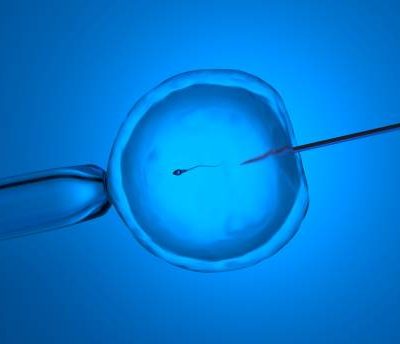
The Human Fertilisation and Embryology Authority (HFEA) is considering whether to recommend scrapping anonymity for future sperm and egg donors as part of a future overhaul of UK fertility laws, according to the Guardian.

Peter Thompson, the chief executive of the HFEA, said an increase in consumer genetic testing websites could threaten donor anonymity and therefore, the law needs to be brought into line with this new reality.

“We feel that the technology of cheap DNA tests throws into question the underlying assumption [of anonymity],” said Thompson for the newspaper. “Given that, the responsible thing to do is to start a conversation about where we as a society want to go on these things. It’s a big change.

“You can see a position in the future where confidentiality just becomes impossible, whatever the attitude of families, the honest truth is that people will just find out,” he added.

Under the current rules introduced in April 2005, people conceived from donated sperm, eggs or embryos are able to find out the identity of the donor once they reached the age of 18. However, donors can choose to keep their anonymity until then.

Scrapping anonymity from birth could mean more contact between donors, donor-conceived people and their parents, but is likely to spark controversy.

The HFEA is planning to look at the 1990 Human Fertilisation and Embryology Act and propose draft legislation by the end of this year.

The Guardian reports that the regulator is expected to demand greater powers to fine fertility clinics found selling ineffective “add-on” treatments and wants to make it easier for same-sex couples and single people to access treatment.

The HFEA chief executive said that the watchdog had not decided on a proposal around anonymity, but that one option under consideration is “a presumption of openness almost from the word go”, with the anonymity of donors being lifted at birth.


Fertility

AI could transform ovarian care through personalisation, study finds

Published

on

AI could transform ovarian care by personalising cancer and fertility treatment, but more clinical validation is needed before routine use.

A systematic review and meta-analysis found AI models showed high diagnostic accuracy for ovarian cancer when combining data such as ultrasound scans and blood test results.

Across 81 studies, AI models correctly identified ovarian cancer in around nine out of 10 cases, with pooled rates of 89 to 94 per cent.

They were also highly accurate at ruling out ovarian cancer when it was not present, with specificity of 85 to 91 per cent.

The analysis also found that explainable AI tools could predict complete surgical cytoreduction in advanced ovarian cancer.

Complete surgical cytoreduction means removing all visible cancer during surgery, which can be an important goal in treatment planning.

The tools achieved a pooled AUC of 0.87. AUC is a measure of how well a model distinguishes between different outcomes, with higher scores showing stronger performance.

In reproductive medicine, AI algorithms helped physicians optimise ovarian stimulation protocols and predict follicular growth during IVF.

Ovarian stimulation is the use of hormones to encourage the ovaries to produce eggs, while follicles are the small sacs in the ovaries where eggs develop.

The review found AI could reliably model ovarian response in IVF with a pooled AUC of 0.81.

However, researchers said challenges remain in translating promising research findings into routine clinical practice.

They identified substantial variation across studies, driven by retrospective study designs, variable AI systems and a lack of standardised validation.

Only 22 per cent of analysed studies reported prospective, multicentre external validation, where models are tested forward in time across multiple healthcare settings.

The authors called for rigorous validation to help close the gap between research and routine clinical practice, alongside standardised methodological and reporting frameworks, smooth integration with clinical workflow and robust governance to support responsible and ethical AI use.

They concluded: “Artificial intelligence is a transformative force in the management of ovarian conditions.

“In gynaecologic oncology, AI enhances every phase of care, from early detection and accurate diagnosis to prognostic stratification and surgical planning.”

In reproductive medicine, AI personalises ovarian stimulation and refines the diagnosis of heterogenous endocrine disorders such as PCOS.

PCOS, or polycystic ovary syndrome, is a hormonal condition that can affect periods, skin, weight and fertility.

Continue Reading

Cancer

Three cancer innovators shortlisted for Femtech World Award

Published

on

Femtech World is delighted to reveal the shortlist for this year’s Women’s Cancer Innovation award.

The award, sponsored by Endomag, will honour a groundbreaking innovation dedicated to the prevention, early detection treatment or ongoing care of cancers that uniquely or disproportionately affect women.

Endomag is a medical technology company devoted to improving the global standard of cancer care.

Its Sentimag system, Magseed marker and Magtrace lymphatic tracer are used by thousands of the world’s leading physicians and cancer centres.

After careful review of this year’s submissions, we are delighted to announce the three shortlisted entries for the Women’s Cancer Innovation Award 2026.

Auria is tackling one of the most stubborn problems in breast cancer screening: the 66 per cent of women who simply don’t participate.

Rather than improving existing imaging pathways, Auria is creating an entirely new access layer: a non-invasive, at-home test that detects protein biomarkers for breast cancer in tears.

Auria’s test, a CLIA-certified Lab Developed Test, has been validated across more than 2,000 patients in multiple clinical studies with collaborators including MD Anderson Cancer Center and Stanford University.

It reports a sensitivity of 93 per cent and a negative predictive value of 98 per cent.

Founded on six years of combined research at the University of Barcelona and UC Irvine, The Blue Box has developed a non-invasive, urine-based test that detects breast cancer by analysing volatile organic compound (VOC) signatures – no radiation, no compression, no imaging facility required.

The test achieves a sensitivity of 88.42 per cent, outperforming mammography by 15 per cent overall, and by 30 per cent specifically in women with dense breasts. 

The technology could function as a first-line screening tool in primary care settings, as a complement to mammography for high-density patients, or as an accessible alternative in healthcare systems where imaging infrastructure is limited.

Celbrea is a disposable and affordable thermal screening device that empowers women of all ages to stay on top of monitoring their breast health.

The device aims to add to doctors’ existing standard evaluation protocols with a quick, painless examination. Celbrea does not replace a mammogram but simply provides an additional way to screen for breast disease, including breast cancer.

The device consisting of two disposable pads with photochromic sensors. The pads are self-applied to each breast for 15 minutes.

1188 nano-sensors are embedded within a biocompatible multilayer pad, accurately measuring any temperature differences on the surface of the breast using liquid crystal thermographic technology.

What happens next

The shortlisted entries will now be judge by an Endomag representative who will reveal the winner at a virtual awards event on June 19.

Winners will receive a trophy and will be interviewed by a Femtech World journalist.

Continue Reading

Insight

Common cancer marker may play active role in preventing the disease, study finds

Published

on

Ki-67, a protein used to measure tumour growth, may also help prevent chromosome errors that drive cancer, a study suggests.

The findings could change how scientists view Ki-67, a marker commonly used in breast cancer and other tumours to assess how quickly cancer cells are growing.

Researchers found the protein may help preserve genome stability by maintaining the structural integrity of centromeres, key parts of chromosomes that help ensure DNA is shared correctly during cell division.

The research was led by professor Paola Vagnarelli at Brunel University of London in collaboration with scientists at the University of Edinburgh and the Technical University of Berlin.

Professor Vagnarelli said: “Doctors already measure Ki-67 to see how aggressive a cancer might be. But our results suggest it is actually helping maintain genome stability.

“That means it may be more than a marker. It could potentially also be a therapeutic target.”

The study examined three proteins that attach to chromosomes during cell division and help rebuild the molecular system that tells each new cell what kind of cell it is.

Every human cell carries identical DNA. What makes a liver cell different from a brain cell is which genes are switched on and which are kept inactive.

When a cell divides, that entire system of switches must be rebuilt. The three proteins involved in this process were Ki-67, Repo-Man and PNUTS.

Vagnarelli’s team developed a method that individually removes each protein from a living cell at the precise point of division. Older techniques could not isolate that moment cleanly.

They found that cells rely on all three proteins to reset themselves after division, but each failed in a different way when removed.

Without PNUTS, gene activity spiralled out of control and thousands of genes switched on at once.

Without Repo-Man, cells escaped safety checkpoints that usually stop damaged or abnormal cells from continuing to divide.

“What we didn’t expect was how clean the separation was,” said Vagnarelli.

Each protein fails in its own specific way. There is no redundancy, no safety net. Which means there are three separate points at which this process can go wrong.

“When the system breaks down, cells can emerge with the wrong number of chromosomes. That condition, called aneuploidy, is seen in disorders such as Down syndrome and in many cancers.

“We also found that these chromosome errors can trigger inflammatory signals inside the cell.”

Aneuploidy means a cell has too many or too few chromosomes, which can disrupt normal growth and function.

Inflammatory signals are chemical messages that can make a cell behave as if it is responding to injury or infection.

“These cells behave almost as if they are under attack,” said Vagnarelli.

“The immune response switches on because the genome is unstable.

“That link between chromosome imbalance and inflammation could help explain patterns we see in several diseases.”

The researchers said the findings may help cancer scientists better understand how chromosome instability, loss of gene regulation and cells dividing before they are ready contribute to tumour growth.

They said understanding the normal machinery that prevents these errors may help researchers find ways to push cancer cells into making mistakes they cannot survive.

“We now have a clearer map of the machinery that resets the cell after division,” said Vagnarelli.

“That knowledge gives us a starting point for thinking about new therapeutic approaches.”

Continue Reading

Trending

Copyright © 2025 Aspect Health Media Ltd. All Rights Reserved.

