




Connect with us

News

The heart of the matter: How CordiFio is creating change
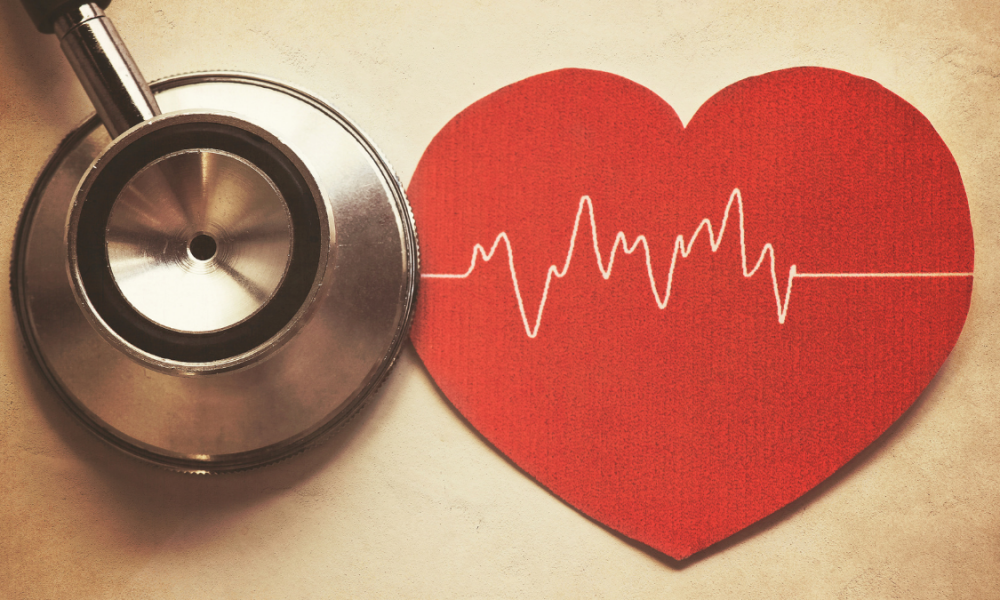
FemTech World speaks to Petronela Sandulache of CorDiFio about why heart condition diagnoses are harder for women

Published

on

Heart health attacks CorDiFio

Heart health for women can be a difficult diagnosis to make due to symptoms mirroring other conditions. FemTech World meets Petronela Sandulache founder of CorDiFio

Petronela started her career in the consulting and automotive industry all over the world before a family tragedy made her assess her goals.

She said: “When something terrible happened in my family, it made me think about life and what it is all about. The most important person in our lives had a misdiagnosis and that was it. Someone who is relatively healthy just disappears overnight. That was when I started to investigate the disparities in medical diagnosis for women.”

Petronella added: “Women present different types of symptoms that get confused with indigestion or anxiety rather than being taken seriously and having a further investigation. Once I started investigating, I found out that the number one killer of women more than all cancers combined is heart disease yet 50 per cent following an attack get misdiagnosed.

This is huge pressure on the healthcare system because misdiagnosis means wrong treatments and doctors. The ones who are paying the price are women.”

Heart health attacks CorDiFio

Heart attacks and health

When it comes to heart attacks, women present different symptoms to men. Yet when it comes to diagnosis, the male symptoms are often used as a benchmark for how it presents.

Petronela explained: “In research conducted by the Canadian stroke and heart foundation, they discovered that 30 to 50 per cent of women diagnosed with depression are actually misdiagnosed and this can mask heart disease in women. They have only recently started to investigate the problem of heart disease, stroke or Alzheimer’s disease in women and why things present differently.”

Hormones are one reason why women have been excluded from studies and it’s why certain conditions present differently in women. Women also face challenges when it comes to taking part in clinical trials such as childcare or pregnancy.

“Obviously we have hormones that are not taken into consideration when you just study male models. So I thought we need to do something about this because femtech is just about tracking your period, making babies or menopause. Women are much more than their reproductive organs. Everything we know about common diseases, treatments and diagnosis has been done on men,” Petronela said.

“We need to do something about heart disease because if you don’t know that you have it, then you can be gone in five minutes. That’s why I called the company, CorDiFio, it means, in Italian, the heart of Fio which was the name of my mother. I’m dedicating this to her and all the women out there so they don’t need to go through the same type of thing,” she added.

The research also revealed that different ethnic backgrounds may place women at higher risks for cardiovascular diseases.

Petronela said: “It’s important to note within the female population, we have ethnic backgrounds with different risk profiles. We know that African, Hispanic or southeast Asian women have a higher probability of dying from cardiovascular disease compared to caucasian women.”

Heart health awareness

CorDioFio is dedicated to raising awareness so that women can detect heart problems early before it becomes a medical emergency. Its goal is to empower both women and their doctors to come up with early detection which will help to save lives.

“The great news is that 80 per cent of heart disease and strokes are preventable if caught in time. We are determined to keep women’s hearts beating longer.”

When it comes to CorDiFio’s technology, how does it work for patients?

Petronella explained: “If you download our app or go to the website to register then we take you on a journey by asking specific questions that take about 20 minutes to answer. We will generate a personalised health report for you to download and take to your appointment with your GP. You will learn your risk factors, where you need to keep an eye out and it’s something tangible to start that conversation with doctors by highlighting things you wouldn’t have thought of.”

She added: “We have tested this with various women from all over the world to see what their doctors say about the reports. They found that they don’t have a heart problem which is great so it’s peace of mind but some found they had other issues which present a diagnostic opportunity. We want to integrate this and are working with wearables.”

Read more about femtech and CorDiFio

Fertility

Toxins and climate harms having ‘alarming’ effect on fertility, research warns

Published

on

Simultaneous exposure to toxic chemicals and climate-related heat may be worsening fertility harms across humans and wildlife, research suggests.

The review of scientific literature looks at how endocrine-disrupting chemicals, often found in plastic, together with climate-related effects such as heat stress, are each linked to lower fertility and fecundity, meaning the ability to reproduce, across species including humans, wildlife and invertebrates.

Though the reproductive harms of each issue in isolation are well studied, there is little research on what happens when living organisms are exposed to both.

“Together, the two issues are likely to pose a greater threat to fertility, and the additive effect is “alarming”, said Susanne Brander, a study lead author and courtesy faculty at Oregon State University.

“You’re not just getting exposed to one, but two, stressors at the same time that both may affect your fertility, and in turn the overall impact is going to be a bit worse,” Brander said.

The paper looked at 177 studies.

Shanna Swan, a co-author on the new paper, co-produced a 2017 study that found sperm levels among men in western countries had fallen by more than 50 per cent over four decades. Other research has suggested human fertility has been declining at a similar rate.

The University of Washington’s Institute for Health Metrics and Evaluation has previously said the world was approaching a “low-fertility future”, with more than three quarters of countries below replacement rate by 2050.

The new paper’s authors focused on the effects of endocrine-disrupting chemicals and substances, including microplastics, bisphenol, phthalates and PFAS.

These are thought to cause a range of serious reproductive problems, disrupt hormones and be a potential driver of falling fertility.

Brander said the harms linked to these chemicals are often similar across organisms, from invertebrates to humans.

Phthalates, for example, have been linked to altered sperm shape in invertebrates, spermatogenesis in rodents, meaning sperm production, and reduced sperm counts in humans.

PFAS are also thought to affect sperm quality, and both have been linked to hormone disruption.

The chemicals are widespread in consumer goods, so people are often regularly exposed.

Meanwhile, previous research has shown how rising temperatures, lower oxygen levels and heat stress, among other effects linked to climate change, may also worsen infertility.

Heat stress has been found to affect human hormones, and is linked to spermatogenesis in rodents and bulls.

Research shows temperature also plays a role in sex determination in fish, reptiles and amphibians.

The species has evolved to choose which sex it produces in part based on temperature, and the heating planet can “push it too far in one direction or the other, which overrides that evolutionary benefit”, Brander said.

Similarly, many endocrine disruptors may alter environmental sex determination.

The study set out some of the overlapping effects of chemical exposure and climate change across taxonomic groups, from invertebrates to humans.

In birds, for example, exposure to increased temperature, PFAS, organochlorines and pyrethroids may each individually cause abnormal sperm, increased fledgling mortality, abnormal testes and population decline.

“What happens if they’re exposed to more than one of those stressors at the same time? There has been little exploration of that question.

“Even if there have not been a lot of studies looking at these simultaneously, if you have two different factors that both cause the same adverse effect, then there’s a likelihood that they are going to be additive,” Brander said.

Katie Pelch, a senior scientist with the Natural Resources Defense Council nonprofit, who was not part of the study, said the authors had reviewed high-quality science.

She said she wanted to see more examples of the overlap in impacts, but agreed with the overall premise.

“It is likely [multiple stressors] would have an additive effect, at very least, even if they have different mechanisms of harm,” Pelch added.

The solution to the systemic problems would involve tackling climate change and reducing the use of toxic chemicals.

The study cites the global reduction in the use of DDT and PCBs achieved under the Stockholm Convention as an example of an effective measure, but Brander said much more is needed.

“There is enough evidence in both areas to act to reduce our impact on the planet,” she said.

Continue Reading

Diagnosis

Home blood pressure checks could lower heart risks for new mothers – study

Published

on

Home blood pressure checks after hypertensive pregnancy could cut the risk of heart attack, stroke and potentially early death, research suggests.

Women who regularly monitored their blood pressure in the weeks after giving birth, and had doctors tailor their medication if needed, had better functioning arteries nine months later than those who received routine care.

When the medication was adjusted to account for blood pressure changes, the women ended up with less stiff arteries, an effect researchers estimated could reduce the future risk of heart attack or stroke by 10 per cent.

Paul Leeson, professor of cardiovascular medicine who led the study, said the findings suggested that the weeks after birth provided a “powerful and often overlooked opportunity” to protect women’s future health.

“By simply monitoring blood pressure at home, new mothers with hypertensive pregnancies can protect their bodies from future damage,” he said.

High blood pressure, in the form of gestational hypertension or pre-eclampsia, where there are signs of organ damage, affects 5 to 10 per cent of pregnant women.

The condition can damage the mother’s organs and endanger the baby’s life.

Beyond the immediate threat to mother and baby, hypertension in pregnancy can raise the risk of long-term problems, with women three times more likely to develop high blood pressure and twice as likely to have heart disease later in life.

The Oxford team recruited 220 women who developed hypertension in pregnancy. All were on blood pressure medication but were due to reduce their dosage and eventually stop taking the drugs.

In the study, 108 women had standard care in which their medication was reduced based on a few blood pressure checks in the eight weeks after giving birth.

The remaining 112 women used a monitor to check their blood pressure at home each day.

They entered the readings into an app shared with doctors who, if needed, changed their medication day to day, with the aim of giving them better control of their blood pressure.

The new approach led to much better control of the women’s blood pressure, and in tests six to nine months later the women had less stiff arteries.

Stiff arteries are less effective at expanding and contracting, which can drive high blood pressure and ultimately the formation of clots that can block blood vessels and cause heart attacks and strokes.

Trials are now under way to find effective ways of rolling out blood pressure monitoring to women after hypertensive pregnancies. One option is for specialist NHS clinics to deliver the care.

Dr Sonya Babu-Narayan, clinical director at the British Heart Foundation, which funded the work, said the results highlighted a crucial window after birth when paying close attention to blood pressure could help protect women’s heart health for years to come.

“We now look forward to seeing results from larger studies with longer follow-up to see how this might save women’s lives,” she said.

Continue Reading

Fertility

Researcher explores weight loss jab impact on PCOS

Published

on

Weight loss jabs are being studied to see if they could help women with polycystic ovary syndrome (PCOS)

The condition, which affects up to one in ten women, changes how the ovaries work and is linked to infertility and weight gain.

Dr Shagaf Bakour has won a £60,000 NHS research grant through Sandwell and West Birmingham NHS Trust to look at whether drugs such as Mounjaro and Ozempic might help.

“The research could lead to earlier support, better long-term health, and more joined-up care for a condition that affects many women but is still often overlooked,” she said.

Women with PCOS have higher levels of male hormones and can suffer from irregular periods and symptoms such as excess body or facial hair, the NHS said.

Associated weight gain can also lead to an increased risk of diabetes and heart problems.

Bakour, a gynaecologist and director of medical education at Aston Medical School, will work with a team to evaluate the effect of the weight loss medicines on metabolic and reproductive outcomes.

The drugs mimic a hormone called GLP-1, which suppresses appetite.

Bakour, alongside Dr Hoda Harb, a consultant obstetrician and gynaecologist at the NHS trust, will review existing evidence on their use and assess how they help patients with PCOS.

“The aim is to give women with PCOS evidence-informed, clearer treatment options and more consistent care,” she said.

“The project hopes to show whether these medicines can improve both general health and fertility health, while also helping local services develop clearer care pathways.

Prof Elizabeth Hughes, director of research and development at the NHS trust, said the effects of PCOS, including infertility, were “very emotive subjects”.

“We should be doing all we can within research and development to advance healthcare for women and to better help future generations with this condition,” she added.

Continue Reading

Trending

Copyright © 2025 Aspect Health Media Ltd. All Rights Reserved.

