




Hormonal health
More than half of women turn to Google for menstrual health concerns, says report
Younger women aged 18–34 were the most likely to turn to online resources, a new UK survey has shown


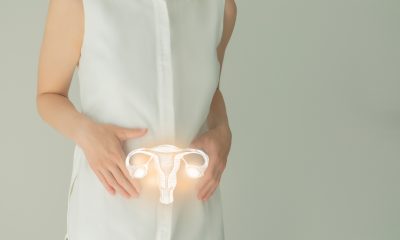
More than half of women in the UK rely on search engines for their information about menstrual health, a new report has found, highlighting “prominent” gaps in the knowledge women have about their own bodies.
The women’s period tracker Flo Health has released the findings of a nationwide survey of women aged 18–55, unveiling a staggering degree of misinformation.
The survey, titled MIND THE GAPS: Menstrual & reproductive misinformation in the UK in 2023, has shown shown that 56 per cent of UK women rely on search engines for their information about menstrual health, with nearly one in 10 seeking help on social media.
Younger women aged 18–34 were the most likely to turn to online resources and also the most likely to find aspects of sex and masturbation to be taboo, the research has also found, adding that £1b in cuts to sexual health services resulted in fewer credible resources.
Among other key findings, the survey revealed that:
72 per cent of women never double-check the health information they get on social media
26 per cent do not understand that they could catch sexually transmitted infections (STIs) during oral, vaginal, or anal sex
59 per cent do not know that you can catch an STI without having sex
54 per cent were not aware of premenstrual syndrome before their first period
Dr Claudia Pastides, director of medical accuracy at Flo Health, said: “While every woman’s body is different, and every woman’s experience with her menstrual and reproductive health is unique, this is not taken into consideration enough.
“Low health literacy is a direct contributor to the spread of misinformation and leads to poor health outcomes and unhealthy behaviours, especially in the areas of menstrual, sexual, and pregnancy health.”
The findings demonstrate that there is an urgent need for online platforms to focus on fact-checking and ensuring that users can easily identify credible information sources, Pastides concluded.










Manchester City has launched a female athlete health platform covering menstrual, pelvic and breast health, as well as nutrition.
The Her City website is designed for the club’s women’s first-team players, coaches, support staff, academy players and parents.
Manchester City says the platform is the first of its kind in the Women’s Super League and was developed over two years.

The project was led by director of performance services Emma Deakin, physical performance scientist Rosie Anderson and PhD student and first-team nutritionist Sarah Malone.
It grew out of PhD research into menstrual, pelvic and breast health and nutrition, with the team seeking to turn that work into an online educational resource.
The website divides the four areas into separate sections and provides peer-reviewed information that the club says has been critically analysed by experts.
Content will continue to be reviewed and updated as further evidence emerges.
Resources include posters, visual explainers, audio materials and downloadable educational content, with information tailored to different groups including players and parents.
The platform aims to improve knowledge, develop critical analysis skills and strengthen communication within football and at home.
It also includes material to help users assess misinformation they encounter on social media or elsewhere.
A confidential contact form allows users to raise concerns or ask questions directly of experts at Manchester City.
Parents of academy players can also access the platform, with resources intended to help them support their children during a key phase of their development.
Manchester City said its longer-term aim is to make the platform available to all women working across City Football Group.

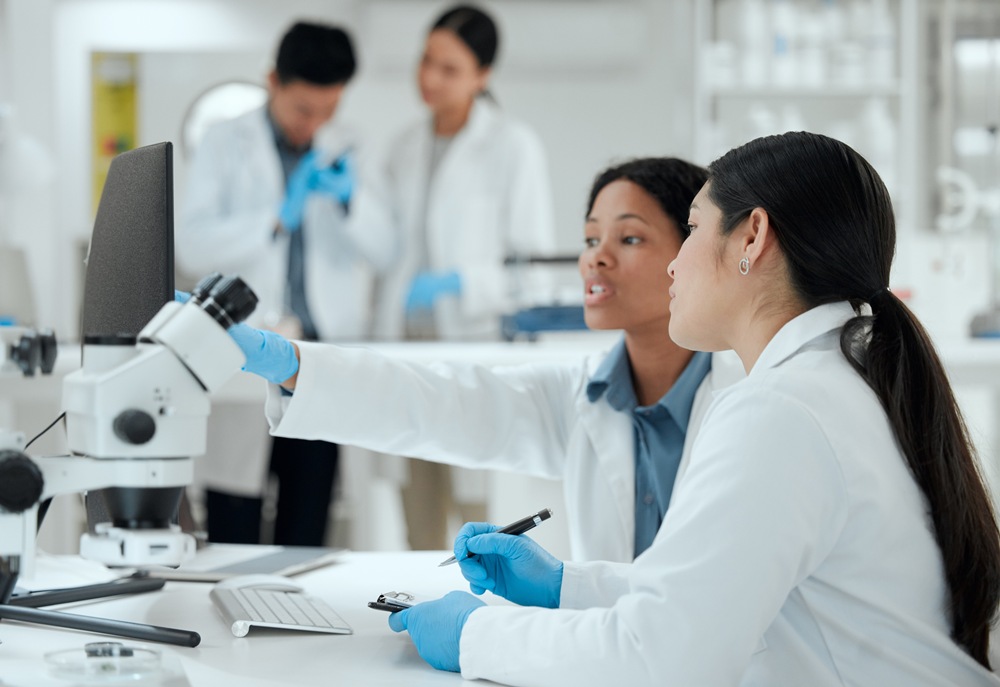
Michigan State University researchers are launching a novel project to transform how medications are developed and prescribed for women.
A US$4.6m award will fund computer models designed to predict how hormonal changes affect the way medicines move through and act in women’s bodies.
The funding is the first instalment of an award worth up to US$12.8m over three years, supporting work intended to account for hormonal changes throughout women’s lives.
Researchers plan to examine factors including menstrual cycles, pregnancy, contraceptive use, menopause and hormone replacement therapy, which can affect responses to medicines.
Teresa K. Woodruff, lead investigator on the project, said: “Because female hormone levels are constantly shifting, precision medicine allows us to map out these complex interactions.
“This NIH-backed initiative will create the first computationally driven clinical tool designed to guide medical care across every stage of a woman’s life.”
The project is led by researchers at Michigan State University and funded by the National Institutes of Health, with collaborators from Rutgers, Emory, Tulane, the University of Colorado Anschutz, the University of Michigan and the University of Utah.
Thirteen researchers will develop computational models to predict how changes in female hormones influence the way medicines move through and act within the body.
The work is part of the NIH Computational Modeling of Hormone Homeostasis Initiative, which is awarding US$21m nationally to support research into sex-specific hormonal biology.
The team plans to use artificial intelligence to digitise and organise more than 40 years of hormone research data in a publicly accessible database.
Researchers will also develop a standard computer model of a 28-day menstrual cycle, alongside models of how hormones regulate organs and tissues involved in processing nutrients, including the liver, muscle and fat.
Real-world patient data will then be used to expand the models to represent groups including women going through menopause or taking birth control, as well as women with conditions such as diabetes and obesity.
The project will also use three-dimensional human tissue models and lab-grown organoids, including liver, muscle and ovarian tissue, to test and refine the computer predictions.
Researchers plan to examine medicines including metformin, insulin and GLP-1 drugs, with the aim of developing tools that could help clinicians tailor doses and avoid harmful side effects.
Qiang Zhang, associate professor at Emory University, said: “Empowered by AI, novel assays and legacy human data, we will develop mechanistically based computational models of female physiology that can make translational, quantitative predictions for women’s responses to metabolic therapies.”
The researchers said the work could help address differences in how women respond to treatments for metabolic conditions including obesity, type 2 diabetes, cholesterol imbalances and thyroid disorders.
Nanette Santoro, professor at the University of Colorado Anschutz and president of the Endocrine Society, said: “Women experience large shifts in reproductive hormones at several points in their lifespan: puberty, pregnancy and menopause.
“During reproductive years, women also undergo profound day-to-day changes in reproductive hormone levels, giving them a markedly different endocrine backdrop than men.
“Using state-of-the-art computational technology to examine how these changes interact with commonly used medications is a critical pathway toward supporting life-course women’s health.”
The project team said its computer models and data will be made freely available to researchers and healthcare professionals when the work is completed.

Gail’s has unveiled a menopause action plan offering new workplace support to thousands of staff ahead of legal reforms due in 2027.
The high street bakery chain will offer new benefits including 24/7 digital GP access and a new employee assistance programme, according to The Times.
It will also explore new online training for staff, including specific training for management.
Gail’s people director Miranda Burgum told The Times: “All we’re trying to do is talk freely and for it not to be a forbidden subject. It’s helping our managers and teams understand that this isn’t a taboo.”
“We’re going to develop the education with our managers, so it will be threaded through all our policies
“It will look at induction training, it will look at the types of people we need to make sure that we make reasonable adjustments for.
“And if somebody needs some sort of risk assessment, we’re going to be looking at [that].”
The move comes ahead of reforms due to be introduced in spring 2027 under the Employment Rights Act.
UK employers with 250 or more employees will be legally required to publish and update official menopause action plans.
The plans are intended to support employers to take effective action to improve workplace gender equality and support employees experiencing menopause.





 Menopause5 days ago
Menopause may not explain rising heart condition in women – study

 Pregnancy1 week ago
Paracetamol use may impact future fertility, studies suggest

 Sponsored Content2 weeks ago
Last chance to save on Women’s Health Week and Women’s Sport Summit: Early Bird pricing ends 11 September

 Mental health5 days ago
Women with birth trauma face 2.5x higher healthcare costs – study

 Menopause2 weeks ago
Cancer drug could tackle osteoporosis menopause weight gain
 Cancer5 days ago
Study could explain why obesity is a breast cancer risk factor

 News4 days ago
Medical cannabis may improve endometriosis symptoms – study

 Diagnosis2 weeks ago
FDA approves AstraZeneca breast cancer drug
Pingback: Issue #32 – More than Half of Women Rely on Google for Menstrual Health Concerns – FemTech India
Pingback: GIFT IDEAS FOR HEALTHIER AND HAPPIER VALENTINES’ DAY – FemTech India