




News
Future Fertility adds new partner Apricity Fertility on the heels of achieving UK regulatory approval
Future Fertility received CE Mark approval for its oocyte assessment software in August and continues to steadily grow its presence across Europe


Future Fertility has received UK regulatory approval for its AI-based oocyte assessment software, expanding UK footprint in partnership with Apricity Fertility.
Future Fertility develops AI-powered solutions that empower fertility patients and their providers with personalised insights to help optimise the fertility journey.
The company’s AI decision support software for oocyte (human egg) quality assessment has achieved UK compliance for commercial use across the UK.
Future Fertility previously received CE Mark approval in the summer of 2022. Now, this UK achievement further solidifies their commercial presence in Europe.
Its Oocyte Software is the first and only non-invasive, clinically validated tool to use artificial intelligence to analyse 2D images of oocytes and generate personalised insights about egg quality.
In today’s standard of care, fertility specialists and embryologists make judgments about egg quality based on a patient’s age group, but this doesn’t account for the variability between patients in the same age group, especially among younger patients.
Through VIOLET™ (for egg freezing patients) and MAGENTA™ (for IVF-ICSI patients), patients and providers can understand the likelihood of each retrieved egg developing to a day 5/6 embryo (eligible for blastocyst transfer), which helps to manage expectations for success and optimise treatment plans.
Future Fertility has already teamed up with leading-edge clinics to integrate their AI solutions and provide the best patient care.
As a longstanding collaborator and partner to the CARE Fertility clinic group, the technology has proven to be scientifically valid and useful to the patient experience.
As Future Fertility expands their UK footprint, they are proud to announce a new partnership with their first virtual clinic partner, Apricity.
Apricity is the UK’s first virtual fertility clinic. Their unique virtual model and mobile app has reimagined the fertility journey, enabling patients to easily navigate each step of the fertility process with at-home solutions and access to world class specialists.
Its digital solution is designed to improve the fertility experience and maximise chances of conception via a fully-customised treatment journey for patients.
Apricity partners with a selected network of clinics around the UK to deliver required in-person treatments, bringing visits to a clinic down to two per cycle rather than ten as with a traditional journey.
“The UK is a leading market in fertility care, the birthplace of the first IVF baby,” says Future Fertility CEO, Christy Prada.
“We are proud to have strong partners in the UK and look forward to partnering with Apricity to bring our products to new patient groups and clinics across the region.”
Apricity and Future Fertility’s partnership will launch as a pilot programme, kicking off this year in cooperation with IVF London.
Oocyte assessment will be conducted via the IVF London lab using Future Fertility’s software, and results will be made available to patients to discuss with their fertility specialists.
Apricity CEO, Caroline Noublanche comments: “Apricity are excited to partner with Future Fertility on this pilot, which aligns with our ‘less stress & more success’ approach.
“‘Less stress’ as giving our patients a greater level of transparency on their oocytes and chances right after egg collection and ‘better success’ as complementing Apricity’s own AI and the amazing embryology team at IVF London to make the best informed choices and ultimately improve the chances of conception.”
For more info, visit futurefertility.com.


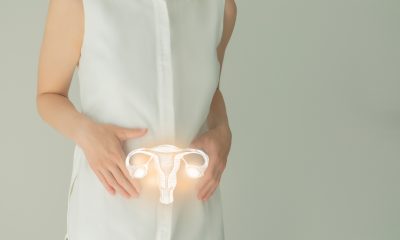



Women using PIEDs reported difficulty accessing reliable information, testing and clinical expertise, according to a qualitative study.
Researchers interviewed nine women who used performance- and image-enhancing drugs, primarily to enhance body composition, physical appearance or sporting performance.
Participants reported problems accessing comprehensive blood and hormone testing and finding clinicians familiar with health concerns linked to women’s use of these drugs.

This has been a male-dominated area of research for a long time, so there are significant gaps in understanding women’s health care needs.
The research, led by University of Queensland School of Psychology PhD candidate Hannah Schuurs, explored how the women managed their health while using PIEDs, which include substances such as steroids and peptides.
Schuurs said: “We interviewed nine women who use PIEDs about how they managed their health throughout their PIED use.
“They reported difficulty accessing reliable information and a lack of clinical expertise and formal health care support.
“The study participants were all active in self-monitoring, tracking changes in their bodies, and actively sought formal health care support.
“But they found it hard to access comprehensive blood and hormone testing, or clinicians who were familiar with the unique health concerns associated with women’s PIED use.”
The study found participants spent considerable time educating themselves about the drugs and their potential risks.
“They often found themselves educating healthcare professionals rather than receiving guidance tailored to their circumstances.
Schuurs said: “The participants had spent considerable time educating themselves about PIEDs and their risks and found they were often educating their health care providers, rather than receiving guidance tailored to their circumstances.”
“Structural and systemic barriers shifted a disproportionate level of responsibility for harm reduction and care coordination onto the women themselves.”
Participants were also aware of sex-specific risks, including hormonal disruption and virilisation. Virilisation is when masculine physical traits develop due to high levels of androgens.
However, the women did not necessarily expect healthcare professionals to have all the answers.
Schuurs said: “Participants were often understanding of gaps in clinical knowledge, provided they were met with openness and a willingness to work collaboratively.
“They emphasised that respectful, nonjudgmental health care relationships were just as important as technical expertise.”
The findings also challenged stereotypes that people using PIEDs are uneducated or indifferent to their health.
Participants reported actively managing their health while navigating stigma, uncertainty and gaps in healthcare.
Schuurs said: “The participants actively managed their health and navigated stigma, uncertainty and gaps within health care.”
“We need health care responses that are collaborative rather than judgmental, as those narratives can oversimplify people’s experiences and make it harder for them to seek support.”
She said the research showed PIED use could form part of wider goals relating to health, wellbeing, performance and self-management.
Schuurs said: “Better understanding women’s experiences is critical if we want health care systems to respond effectively and ensure women can access the support they need.”
“There is a real opportunity to improve education, clinical guidance and support for health care professionals in this space that values and draws from the lived experience of women themselves.”


Women later diagnosed with endometriosis used more antidepressant and anxiety medication than other women, with the pattern emerging years before diagnosis, recent study found.
The difference was evident up to 10 years before diagnosis and continued for a decade afterwards, according to a large Danish registry-based study involving 136,842 women.
Women with the condition also had substantially more contact with psychiatric hospital departments than those without it.
Researchers at Aarhus University found that women with endometriosis redeemed 29 per cent more prescriptions for antidepressants and 16 per cent more for anxiety medication in the years before diagnosis.
After diagnosis, the differences rose to 40 per cent for antidepressants and 46 per cent for anxiety medication.
Marie Josiasen, PhD student at the department of public health and one of the researchers behind the study, said: “What surprised us was how clear and persistent the pattern was, and that the difference did not diminish over time.
“On the contrary.
“Women with endometriosis consistently redeemed more prescriptions for antidepressant medication than women without the disease throughout the entire period, from ten years before to ten years after diagnosis.”
The study does not provide an answer as to what causes the mental strain.
Josiasen said prolonged pain, uncertainty about the cause of symptoms and fertility problems could be among the factors contributing to psychological strain.
She said: “It’s possible that prolonged pain, uncertainty about the cause of the symptoms, and frustration over not being able to live the life one wants may be among the reasons. For some women, fertility problems can also be a major psychological burden.”
Researchers also found that the gap compared with women without endometriosis did not narrow after diagnosis. Instead, it became more pronounced in the years that followed.
Josiasen said: “A diagnosis can be a relief, but it also involves coming to terms with having a chronic illness.”
The study does not indicate whether diagnosing endometriosis earlier could reduce psychological strain.
As part of her PhD project, Josiasen will investigate the role hormonal contraception may play in the mental health of women with endometriosis.
She said: “We can see that many receive medication and are in contact with psychiatric services. But we still lack an understanding of what actually helps these women.
“That’s what I want to help find out.”
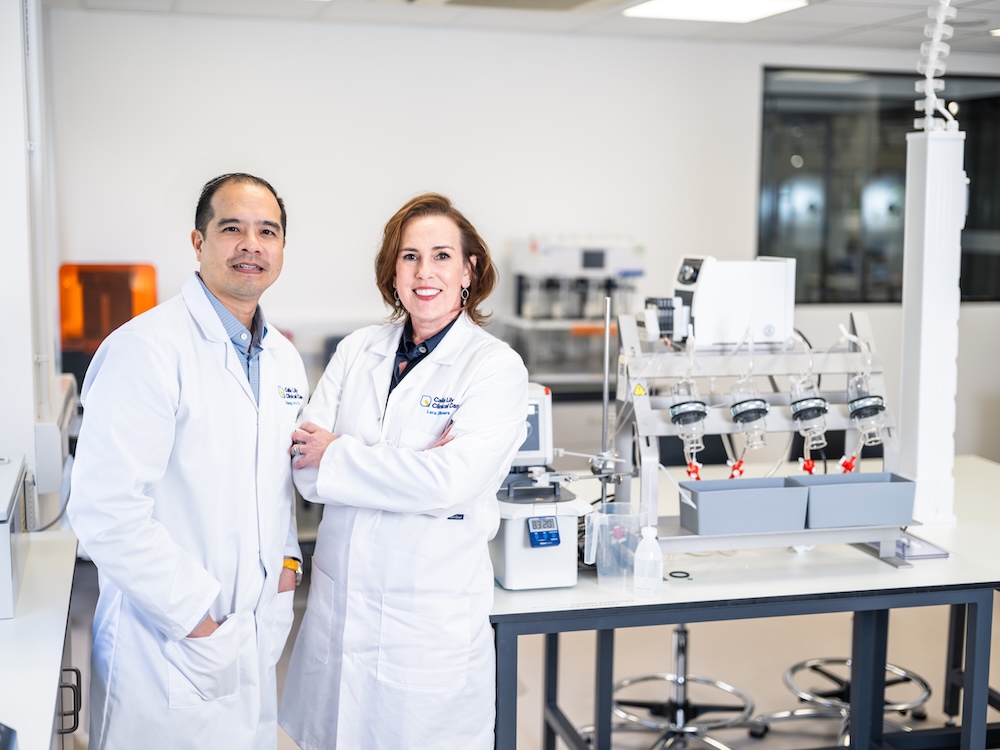
Calla Lily Clinical Care has joined a US$50m antibiotics programme to assess vaginal delivery of UTI treatments through its Callavid platform.
The women’s health medical technology company will evaluate whether antibiotics can be delivered directly through the vaginal wall to treat urinary tract infections (UTIs).
The project will use Callavid, the company’s intravaginal drug delivery platform, aiming to deliver treatment to the site of infection while limiting systemic exposure.
Calla Lily has been selected for Wellcome Leap’s Focused Antibiotics programme, which is exploring ways to reformulate existing antibiotics so they reach infections while sparing the gut microbiome without loss of efficacy.

Dr Serena de Gelidi, Principal Investigator and R&D Manager, Calla Lily Clinical Care
The programme is backed by US$50m and aims to investigate technologies that could reduce the unintended effects of antibiotic treatment.
UTIs are among the most common bacterial infections in women. According to the source material, women are prescribed almost 40 per cent more antibiotics than men between the ages of 16 and 54.
Calla Lily will assess whether Callavid can deliver antibiotics through the vaginal wall while bypassing gastrointestinal transit and first-pass metabolism.
The company expects the approach could keep systemic exposure below 5 per cent.
There is currently no first-line UTI antibiotic available in a mass-manufactured vaginal formulation, according to Calla Lily.
The company said a successful project could contribute to the wider programme’s goal of reducing antibiotic-driven resistant infections by up to 40 per cent a year.
Callavid has a patented, leak-free, tampon-like design intended to deliver medicines and hormones through the vagina.
The platform is already being assessed in the NIHR-funded FREEDOM trial, which is studying vaginal progesterone delivery using Callavid.
That study began in April 2026 and is examining safety, user acceptability and drug absorption. According to the company, it has passed its safety stopping rule and 90 per cent of patients have completed their first round of dosing.
Dr Lara Zibners, co-founder and chair of Calla Lily Clinical Care, said: “Women are disproportionately impacted by urinary tract infections, yet the consequences of that repeated systemic exposure have been largely overlooked. Organisations such as Wellcome Leap play a vital role in tackling major healthcare challenges through bold innovation. We are honoured to be part of the Focused Antibiotics programme and to explore the potential of Callavid in a foundational antibiotic application, demonstrating how women’s health innovations can deliver benefits far beyond fertility and reproductive care.
Thang Vo-Ta, co-founder and chief executive of Calla Lily Clinical Care, said: “Being selected by Wellcome Leap, one of the world’s most ambitious health innovation funders, is a significant validation of what we are building at Calla Lily Clinical Care. Our ambition has always been for Callavid to become the defining platform for intravaginal drug delivery across a wide range of indications. The Focused Antibiotics programme gives us the ideal partner to pursue one of the most consequential of those indications: treating the world’s most common bacterial infection in women while helping to address a global resistance crisis that, left unchecked, could claim eight million lives annually by 2050. This marks a pivotal moment in demonstrating that when you solve for women, you solve for everyone.”
The project will be led by Dr Serena de Gelidi, principal investigator and R&D manager at Calla Lily Clinical Care.
She will be supported by Professor Andrew Lewis, principal scientist at the company and an international authority on drug-eluting systems, with 58 patents and more than 260 peer-reviewed publications.











 News2 weeks ago
UK femtech investment surges 194% in a decade, research finds

 Entrepreneur2 weeks ago
TidalSense raises £14m to expand five-minute COPD test across NHS

 Entrepreneur2 weeks ago
Cross-Border Impact Ventures raises US$58m for women and children’s health

 Entrepreneur7 days ago
Applications close August 18 for Women’s Health Innovation Summit 2026 Innovation Showcase

 News2 weeks ago
Cultural stigma is a barrier to menopause help, black women say

 Menopause7 days ago
Third of women unaware of perimenopause mental health impact

 Motherhood2 weeks ago
One in eight mothers diagnosed with gestational diabetes, research finds

 Hormonal health2 weeks ago
Menstrual data is missing a critical layer: The mind