





Equal and equitable access to fertility care remains a challenge for the over 48 million couples struggling to conceive. We meet Tess Cosad, co-founder and CEO of Béa Fertility, and deep dive into the world of ICI.
IVF treatment is booming all over the world and according to the European Society of Human Reproduction and Embryology (ESHRE), IVF has even started to play a role in demographic analyses.
Since the world’s first successful cycle, the global IVF market has grown and is currently valued at around US$15bn.

But while IVF and IUI remain the most popular forms of assisted conception, they are not the only ones out there.
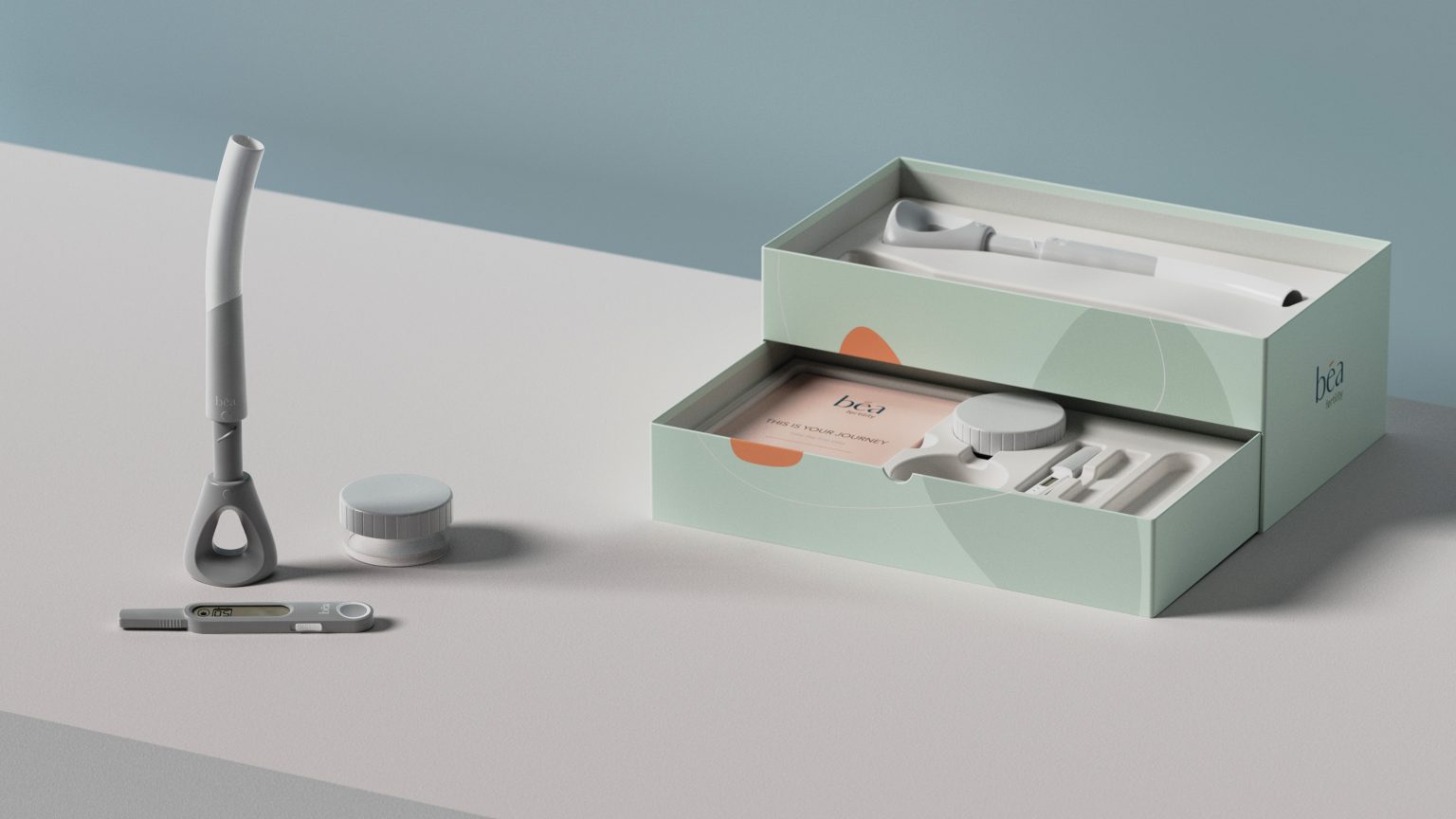
Intracervical insemination, known as ICI, is a form of home insemination treatment that, unlike IVF where the egg is fertilised with sperm in a laboratory, uses a silicone cap to hold the sperm against the cervix for an extended amount of time.
“ICI used to be the de facto fertility treatment, but when IVF and IUI came along, it fell out of favour,” says Tess Cosad, co-founder of Béa Fertility.
ICI is now being brought back by Béa in an attempt to level the playing field when it comes to assisted conception and provide access to affordable fertility treatment.
“The human, exciting journey of creating a family often becomes the source of stress, shame, struggle and desperation,” says Cosad. “Our idea is to empower people with something that they can do in the comfort, safety, privacy, intimacy of their home because that family-building journey should start in your home not in the clinic.
“For us, the very nature of the product is such that we hope it is a less stressful experience. In addition to the kit we provide, we’re also building a digital product to support people’s mental health and give them access to coaches who can be there for them and answer their questions.”
According to the World Health Organisation (WHO), between 48 million couples and 186 million individuals struggle with infertility globally.
But while vital for some patients, IVF and similar treatments currently account for less than three per cent of infertility services, deepening global inequalities in fertility care.
“The delta between who is getting IVF and who really is struggling to create a family is so significant because most people can’t afford it,” explains Cosad.
“In the US there are 510 fertility clinics as of this year. That’s about 10 per state which means that some would have to travel for more than 24 hours to get to a fertility clinic.
“Because going through fertility treatment can be deeply stressful, our goal is to take out some of the stress by allowing people to use the kit in the privacy of their home as well as taking out the financial stress.”
Currently, IUI, although less expensive than IVF, is estimated to be between four to six times the cost of ICI.
Analysis suggests that procedures including egg freezing, IVF and surrogacy have become a top workplace perk as companies try to attract talent and remain competitive in a tight labor market.
However, Cosad is hopeful that, by expanding access to fertility care to everybody who needs support, Béa will make a difference in this space.
“The clinics know that they’re not helping enough people,” says the founder. “They’re looking for ways to reach out and support more families and we’re one of those ways.
“We won NIHR funding from the National Institute for Health Research and that is the beginning of us starting to do the trials needed to get into the NHS. But we are also looking at partnering with clinics to be able to support our users if the treatment doesn’t work for them.
“There are so many other countries in the world where there’s a lot of cultural shame and stigma around fertility care and I believe we can really support them.
“We’re launching in the UK next year,” Cosad continues. “Nine months after that, hopefully the first baby will come along and in five years, I hope we will be able to proudly look back at the number of people we’ve helped.”


Newsletter
Sign up for free weekly updates
The latest femtech news, research and investment, straight to your inbox.




