




Connect with us

Fertility

Fertility, nutrition and the conversation we need to have

With over 48 million couples experiencing infertility globally, nutrition has come under the spotlight

Published

on

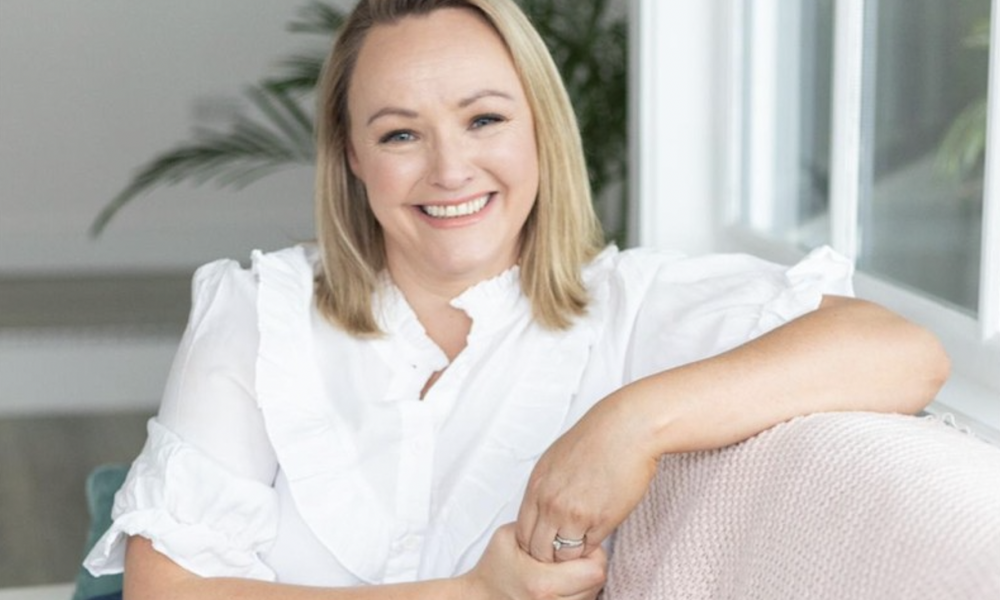
Deborah Brock, Nua Fertility founder

As multiple studies suggest that reproductive health is highly influenced by nutrition, FemTech World finds out how our diet can impact fertility.

In 2011 Deborah Brock and her husband started their fertility treatment. “Growing up in Ireland, nobody ever thought us how to get pregnant when the time came,” she remembers. “We were led to think that you would touch a guy and get pregnant. But we were thrown in this medical world without knowing anything.”

They decided to switch clinics and three ICSI – intracytoplasmic sperm injection – and frozen embryo transfers later, they had a baby. “We had a very long journey, but we were lucky to find some amazing doctors who treated us like patients first,” Deborah tells me. “They told us that we had to work together as a team, they looked at multiple aspects of our life and they helped us make some key nutritional and lifestyle changes from the very beginning.”

Deborah has a background in community and education and she worked with people from some of the most disadvantaged areas of Dublin. “Education was key,” she says. “But educating others was about educating myself in the first place. After my successful pregnancy, I thought there must be something that can make a difference [in people’s life] with slight changes that can have a great impact. So, I started researching and I realised that there is a connection between our gut microbiome and our reproductive health and I got in touch with the APC Microbiome research centre, here in Ireland.”

After three years of research, Deborah developed two fertility supplements – one for men and one for women – that focus on the microbiome to optimise fertility health.

The human microbiome consists of trillions of symbiotic microbial cells harboured by each person, primarily bacteria in the gut. There are roughly 40 trillion bacteria cells in the human body and the digestive tract is the place with the highest density of microorganisms. The gut bacteria are closely tied to our immune health and help us to digest food. However, they can be highly impacted by environmental factors and diet.

“An imbalance in the gut microbiome is connected with nearly 70 per cent of unexplained infertility,” Deborah explains. “It’s connected with PCOS, endometriosis and even with simply absorbing the nutrients that you need. If something’s out of balance, you’re not going to absorb what you’re taking in. That can be knocked out from a number of things such as antibiotics, contraceptive pills and lifestyle.

“So, when we launched Nua, we wanted to bring the amazing microbiome to the world and show what effect this can have on your reproductive health.”

The supplements contain five strains of live bacteria, vitamins, and minerals, as well as vitamin D which which helps the normal function of the immune system and Zinc which contributes to normal fertility and reproduction. Although full of benefits, Deborah says that small lifestyle changes matter the most.

“There is no magic pill that exists in the world to have a baby. There is no magic doctor that exists to have a baby. But what you can do is get your body ready and prepared for a baby as best as you can,” she insists. “That’s why we want people to take control of their fertility health.

“What we’re trying to do this year is extend the website and have a digital side where people can log in and have the products as well as a programme [they can follow]. Because it’s about much more than taking a pill. You need to look at what you’re taking, eating and drinking and you need to look at the diversity of your gut microbiome.”

The programme her team are building has weekly webinars, tools and recipes that can help people map out their plan. “We try to get people to do what’s right for them. We did wellness and yoga in the past and we also partnered with Fertility Network UK. Charity is my background and it’s really important for us to work with people [from different backgrounds]. Accessibility isn’t there and we need to remember that not everybody has access to this.”

Her lived experience made her extremely passionate about fertility and it feels as if her aim is to support and educate people rather than just sell a product. “My husband and I weren’t really informed about the impact that nutrition could have on fertility,” she says. “When we were on that initial journey, many doctors we spoke to did not talk about nutrition and lifestyle at all. I think if you weren’t lucky enough to grow up and understand how to cook different foods, what variety of foods is out there and you didn’t have access to that information, it’s really hard to know how to eat properly.

“In the UK, one in seven couples are affected by infertility and with nutrition playing such an important role in our life, I think education is more needed than ever,” Deborah continues. “And it’s not just about educating people that we’re working with and our customers. It’s also about educating younger people so that, when the time comes, they know that they have to look at various different areas of their health first. The reason why I love the microbiome and gut bacteria is because once you change a few things in your everyday life, you can see those changes within a couple of days.”

Does she think that more people should receive emotional support? “Absolutely. The emotional journey that people go on is extremely important, but it can be very hard-hitting. Couples who might have just started their fertility journey and had a failed cycle, are then left on their own. We want to be there for them. Not just on the success points, but also when they don’t get pregnant and when they need the most support.”

The founder says that this year they want to expand their online community and raise funds. “We are on a funding round and we are open for anybody to talk to us.  I try to arm myself with people that I can truly learn from because we have big ambitions for the future.”

Before we wrap up our call, I ask Deborah what is the best part about her job. “When I get a 12-week scan or of new babies,” she laughs. “That’s what keeps me going in the business battle and what tells me that we’re doing something right. Hearing back from women who got pregnant naturally for the first time just by taking our supplements and making a few changes in their nutrition is extraordinary.”

She adds that: “The key is to treat people with respect. Meet them where they’re at, and really support and educate them. We’re very conscious about the world, the people, what we’re doing and our impact on them. I think if you have that, have integrity, and you’re honest in what you’re doing, then you can also have a thriving business.”

The Nua supplements are available in pharmacies in the UK and Ireland and online on nuafertility.com.



Fertility

Genetic carrier screening before pregnancy: What to know

Published

on

Article produced in association with London Pregnancy Clinic and Jeen Health

For the majority of couples planning a pregnancy, genetic testing is not something they think about until a problem arises.

Pre-conception genetic carrier screening challenges this approach by identifying risk before pregnancy begins.

As panel sizes have grown and at-home testing options have become widely available, carrier screening is transitioning from a niche clinical referral into a mainstream component of reproductive planning.

What Carrier Screening Tests For

Being a carrier of a genetic condition means carrying one copy of a variant in a gene associated with that condition, without being affected by it.

In most cases, carriers are entirely unaware of their status.

The clinical significance of carrier status emerges when both members of a couple carry a variant in the same gene: in this scenario, each pregnancy carries a one in four chance of resulting in a child who inherits two copies of the variant and is affected by the condition.

The conditions most frequently included in expanded carrier screening panels include cystic fibrosis, spinal muscular atrophy (SMA), fragile X syndrome, sickle cell disease, and a range of metabolic and enzyme deficiency disorders.

The Beacon 787 carrier test, offered by Jeen Health, screens for 787 conditions from a single sample, making it one of the most comprehensive panels currently available to UK families.

Who Is Most Likely to Benefit

Any couple planning a pregnancy can consider carrier screening. It is particularly relevant for:

  • Couples with a family history of a known inherited condition
  • Those from populations with higher carrier frequencies for specific conditions, including Ashkenazi Jewish, South Asian and African communities
  • Couples pursuing fertility treatment, where genetic information informs treatment planning
  • Those who wish to have the most complete picture of their reproductive health before conception

Importantly, being a carrier of a condition does not mean a child will be affected. It means there is a defined statistical risk that can be quantified, discussed and planned for with appropriate clinical support.

How the Test Is Performed

Carrier screening is typically carried out on a blood or saliva sample.

For at-home options such as the testing offered by Jeen Health, a cheek swab collection kit is dispatched to the patient, the sample is returned by post, and results are delivered digitally within a defined turnaround period.

In-clinic carrier testing may use a blood draw and provides the advantage of immediate access to a clinical consultation at the point of result delivery.

London Pregnancy Clinic offers genetics counselling through its partnership with Jeen Health, allowing couples to receive and contextualise carrier test results with expert support.

Genetic counselling before and after testing is recommended by Genomics England as a standard component of any genomic testing pathway.

What Happens If Both Partners Are Carriers

If both partners are identified as carriers for the same autosomal recessive condition, they are typically offered further counselling to discuss their options.

These may include proceeding naturally with an awareness of the risk, using prenatal diagnosis (CVS or amniocentesis) during pregnancy to test the fetus, or pursuing preimplantation genetic testing (PGT) in the context of IVF, which allows unaffected embryos to be selected before transfer.

The purpose of identifying carrier status before pregnancy is to give couples time to consider these options without the added pressure of an ongoing pregnancy.

Knowledge of carrier status does not remove reproductive choices; it expands the information available when making them.

The Role of Pre-Conception Services

Carrier screening sits within a broader category of pre-conception care that includes fertility assessments, general health optimisation and, where relevant, management of existing conditions before pregnancy begins.

London Pregnancy Clinic offers pre-conception services encompassing fertility investigations, genetics counselling and carrier testing as part of an integrated 0th trimester approach, allowing couples to address genetic and clinical risk factors before their pregnancy starts rather than after.

Disclaimer: This article is produced for informational purposes only and does not constitute medical advice, diagnosis or treatment.

Clinical guidance referenced reflects published NHS, NICE and RCOG standards as at March 2026. Individual circumstances vary; readers are advised to consult a qualified healthcare professional before acting on any information in this article.

This piece was produced in association with London Pregnancy Clinic and Jeen Health, which provided background clinical information for editorial purposes.

Hyperlinks to external sources are included for reference only and do not represent an endorsement of any product, service or organisation.

Continue Reading

Fertility

Fertility clinic named London finalist in UK StartUp Awards

Published

on

A London-based fertility clinic has been shortlisted for a startup award.

Plan Your Baby was shortlisted as a London finalist for Innovative Startup of the Year at the UK StartUp Awards.

Plan Your Baby is a new generation fertility and pregnancy telehealth clinic that provides fertility treatment and and-to-end pregnancy clinical monitoring and psychological support.

The company said on LinkedIn: “Being recognised in a city as competitive as London is meaningful for our team. 

“The award is judged by industry experts and reflects the growing need for fertility care that is structured, transparent, and centred around the patient.

“Many people come to us looking for clarity in what can often feel like a complex process. 

“Our focus has been to make each step easier to understand and easier to access.”

Plan Your Baby founder Marija Skujina was inspired to launch the company after working at the highest level in private fertility clinics and realising the impact that the traditional approach to fertility treatment was having on clients.

She told Femtech World in a 2023 interview: ““Fertility support is not just a medical procedure, it’s physical, mental, and emotional too.

“That’s why I launched Plan Your Baby: to help parents conceive in a fully supported and holistic manner.”

The UK StartUp Awards aim to ‘recognise the achievements of amazing individuals who have had a great idea, spotted the opportunity and taken the risks to launch a new product or service.’

If selected as the regional winner, Plan Your Baby will go on to the national final at Ideas Fest this September.

Previous winners include Magic AI, makers of a wall-mounted AI fitness mirror that acts as a personal trainer, and EnsiliTech, a medtech startup developing innovative health technology solutions at the intersection of engineering and healthcare.

Continue Reading

Fertility

Future Fertility partners with Japan’s leading IVF provider, Kato Ladies Clinic

Published

on

Future Fertility, a Toronto-based health technology company specialising in AI-powered fertility insights, has entered the Japanese market through a new commercial partnership with Kato Ladies Clinic — a globally recognised leader in IVF research and advancing clinical fertility care.

The collaboration marks Future Fertility’s first partnership in Japan and reflects growing global demand for technologies that bring greater objectivity and personalisation to fertility care.

Kato Ladies Clinic will integrate the company’s AI-powered oocyte (egg) quality assessment tools into its clinical workflows, with the aim of supporting more informed treatment planning and patient counselling across IVF and egg freezing cycles.

“At Kato Ladies Clinic, we are committed to advancing fertility care through innovation while maintaining a strong focus on individualised, patient-centred treatment,” said Keiichi Kato, chief executive officer.

“Partnering with Future Fertility enables us to integrate objective, data-driven insights into our clinical approach and better support our patients in making informed decisions.”

Future Fertility’s platform analyses images of oocytes using artificial intelligence trained and validated on a dataset of more than 650,000 unique oocyte images.

The technology is already in use at more than 300 clinics across more than 35 countries, helping clinicians better understand the developmental potential of individual eggs and provide patients with more personalised insight earlier in their treatment journey.

From Research Collaboration to Clinical Adoption

The partnership between Future Fertility and Kato Ladies Clinic began as a scientific research collaboration in 2024, marking the first use of AI-powered oocyte quality assessment in Japan.

The collaboration not only validated the technology in a new patient population and across diverse clinical protocols — including minimal stimulation cycles —but also resulted in a peer-reviewed publication in Reproductive BioMedicine Online (RBMO) and a poster abstract presentation at ESHRE 2025.

The joint research explored how AI-derived oocyte quality scores relate to early embryonic development and overall treatment outcomes. In a retrospective study conducted at Kato Ladies Clinic, researchers analysed nearly 2,800 mature oocytes across more than 1,300 ICSI cycles, linking image-based assessments of egg quality to key developmental milestones.

The study demonstrated that lower AI scores were associated with reduced fertilization rates, delays, and abnormalities in early embryo development, increased developmental errors, and lower-quality blastocyst formation.

Notably, the researchers also found that cumulative oocyte scores were a stronger predictor of live birth outcomes than the number of eggs retrieved — underscoring the importance of assessing egg quality alongside quantity.

“Our collaboration with Future Fertility has demonstrated how artificial intelligence can uncover meaningful biological differences between oocytes that were previously difficult to quantify,” said Kenji Ezoe, senior scientist.

“Bringing this technology into routine clinical use is an important step toward translating research into improved patient outcomes.”

Future Fertility’s VP of clinical embryology & scientific operations, Jullin Fjeldstad, noted that the findings provide important clinical validation.

“Our joint research with Kato Ladies Clinic has shown how AI-based oocyte assessment can be directly linked to numerous embryo development outcomes, from fertilization through early developmental milestones and blastocyst formation,” she said.

“We are excited to see this work translated into clinical practice.”

Growing Demand for Fertility Care in Japan

The partnership comes at a time when demand for fertility treatment in Japan continues to rise.

The country performs over 450,000 fertility treatment cycles annually, making it one of the largest markets globally. Delayed childbearing and evolving societal trends have also contributed to increasing interest in egg freezing.

As patients seek more clarity and personalization in their care, tools that provide earlier insight into reproductive potential are gaining traction.

“Entering the Japanese market with a partner like Kato Ladies Clinic is a significant step forward for our global commercial strategy,” said Rafael Gonzalez, Future Fertility’s VP of global sales & strategy.

“It reflects the growing demand for technologies that support more transparent, data-driven fertility care across diverse healthcare systems.”

Expanding a Global Footprint

Founded in 1993, Kato Ladies Clinic is known for its pioneering work in natural and minimal stimulation IVF and has long been a leader in clinical innovation in Japan.

For Future Fertility, the partnership represents both a geographic expansion and a continuation of its broader mission to bring AI-driven insights into routine fertility care.

“We are proud to partner with Kato Ladies Clinic, a globally respected leader in IVF and a pioneer in reproductive medicine in Japan,” said Future Fertility’s CEO, Christy Prada.

“This partnership represents an important milestone as we expand into Asia and continue our mission to bring objective, personalised insights into fertility care worldwide.”

Future Fertility develops AI-powered tools designed to generate personalised insights across the fertility journey.

Its flagship oocyte assessment technologies analyse egg images to provide objective, individualised measures of egg quality, supporting treatment planning, patient counselling, and clinical decision-making in egg freezing and IVF, while also enabling more data-driven approaches to donor egg distribution and quality assurance.

As fertility care continues to evolve, collaborations like this one are helping shape a new standard — one that emphasises earlier insight, greater transparency, and more personalised decision-making for patients navigating increasingly complex reproductive journeys.

Continue Reading

Trending

Copyright © 2025 Aspect Health Media Ltd. All Rights Reserved.

