



Connect with us

Hormonal health

PMOS could increase heart disease risk, study finds
Published

on

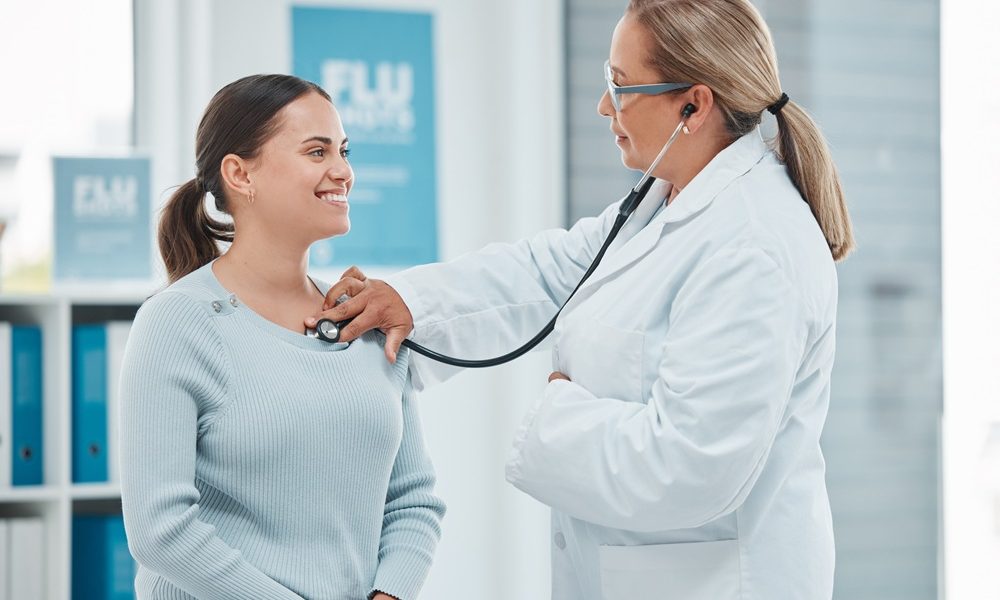
Women with PMOS may have a fourfold higher risk of heart disease, new research suggests.

PMOS, or polyendocrine metabolic ovarian syndrome, is a complex hormone condition affecting about one in eight women in the UK.

It can affect hair growth, periods, fertility and mood.

US researchers analysed health insurance data collected between 2000 and 2022 from 413,450 women with PMOS aged 18 to 50.

They compared the group with more than two million women who did not have the condition.

The study found that women with PMOS had a fourfold higher risk of heart disease than those without it.

The increased risk remained after researchers accounted for other factors linked to heart disease, including high blood pressure and diabetes.

International PMOS guidelines recommend screening all patients for heart disease risk at diagnosis and providing advice on lifestyle changes.

However, researchers said patient surveys “report delayed diagnosis and substantial dissatisfaction with counselling regarding long-term comorbidities”.

Comorbidities are additional health conditions that occur alongside a main condition.

Researchers added: “Our results emphasise the need for physician education and patient awareness of cardiovascular disease risk to improve implementation of early preventive interventions.”

The team called for further studies following women through menopause, when periods stop.

They also called for research into whether treatments such as GLP-1 drugs or hormonal contraception affect the link between PMOS and heart disease.

GLP-1 drugs are medicines used for conditions including type 2 diabetes and weight management.

The main symptoms of PMOS include irregular periods or long gaps between periods, excessive hair growth or hair loss, weight gain or difficulty losing weight, and difficulty becoming pregnant.

Other symptoms include depression or anxiety, oily skin and acne, tiredness, and thick, dark patches of skin on the neck or armpits, known as acanthosis nigricans.

Until recently, PMOS was known as polycystic ovarian syndrome, or PCOS.

Experts called for the name change after highlighting that misunderstandings about cysts and too much focus on the ovaries were delaying diagnoses.

Earlier this month, the National Institute for Health and Care Excellence said women with PMOS should be seen by health professionals annually to monitor symptoms and manage long-term risks.

NICE said the condition affects between three and four million women in the UK but is “frequently underdiagnosed and inconsistently managed”.

Hormonal health

We are wrapping our children in plastic and calling it care

Published

on

By Ciara Donlon, founder & CEO of MOSS

A baby is born.

In the first hours of their life, before they have tasted food, before they have felt sunlight, before they have learned the sound of their own name, they are wrapped in a nappy.

That nappy, in most cases, is made from plastic, synthetic polymers, and wood pulp sourced from trees that took decades to grow.

It will be used for two hours. It will sit in landfill for five hundred years plus.

We do this up to eight times a day. For three years. For every baby born.

I have spent the better part of my adult life working with bamboo, not as a founder chasing a trend, but as someone who has watched this material perform under the most demanding conditions imaginable.

Before MOSS, I built THEYA Healthcare, one of Ireland’s first femtech companies, pioneering bamboo-based care for women undergoing breast cancer treatment, backed by clinical trials from UCD (University College Dublin).

When I turned to what came next, the answer was staring at me from every buggy on the street.

We are living through a crisis our children will inherit entirely. Conventional nappies are the third largest single-use plastic item in household waste.

An estimated three hundred million go to landfill every year.

The tree-derived wood pulp in their absorbent cores is responsible for the destruction of one billion trees annually, and the plastic components that make them leak-proof make them essentially indestructible once discarded.

A child who goes through approximately 6,000 nappies in three years generates a legacy of waste that will outlast not just them, but generations to come.

I am not writing this to make parents feel guilty. Parents are doing the very best they can. I am writing this because the industry has not given them a genuine alternative, and I believe that is something we have a responsibility to change.

MOSS was built on one question: what would a nappy look like if it were designed entirely around what was best for the baby’s skin and best for the planet they will grow up in?

The answer was bamboo, and I say that not from instinct, but from evidence.

Through THEYA’s research at University College Dublin, bamboo viscose fibre was tested against cotton across every performance metric that matters for fabric worn against the most sensitive skin.

In antibacterial testing, bamboo resulted in a 97 per cent reduction in tested bacteria. Cotton produced a 0 per cent reduction. In absorbency and breathability testing, bamboo outperformed cotton and all leading competitor products.

When I turned to nappies, manufacturer testing confirmed what the clinical evidence had shown.

MOSS’s bamboo absorption core matches or outperforms conventional wood pulp cores on every performance measure: faster second-cycle absorption, significantly less rewet against the skin, and higher total absorption capacity across every size.

In the MOSS parent product trial: 88 per cent of parents felt their baby was drier, 93 per cent found them softer, 73 per cent reported fewer leaks, and 87 per cent said they would recommend MOSS.

Bamboo is 59 per cent more absorbent than cotton. Ten times more bamboo can be grown per square metre.

It requires no irrigation, no pesticides, no insecticides, no synthetic inputs, while cotton accounts for nearly 30 per cent of global pesticide and insecticide sales and needs 20,000 litres of water to produce a single T-shirt.

Bamboo sequesters five times more carbon per hectare than most trees, regenerates from its own root system without replanting, and harvesting it does not kill the plant.

What that means in practice: a softer material better for the health of the baby’s skin, proven to reduce bacterial load and regulate temperature, is also the most sustainable choice available.

These are not competing priorities. They are the same priority.

We are the only nappy brand in Europe that does not require a single tree to be cut down for production.

MOSS nappies contain no tree-derived pulp, no PFAS, no fragrance, no alcohol, no bleach. They are between 60-100 per cent bamboo.

THEYA Healthcare was recognised by the Cartier Women’s Initiative Awards for its work at the intersection of materials science, sustainability, and women’s health.

That recognition mattered less than what it signified: designing for the people the industry had left behind is not a niche. It is the future.

When I turned to nappies, I brought the same lens. Who is being left behind?

Two groups: the baby, whose skin deserves a material free from synthetic chemicals; and the planet, which cannot absorb another generation of single-use plastic waste at current volumes.

MOSS exists for both of them.

I think often about what it means to build something for babies in 2026. These children will live into the 2100s.

The decisions we make in the next decade, about materials, about what we choose to manufacture and what we choose to discard, will shape the world they inherit in ways that are difficult to overstate.

One nappy brand will not solve the climate crisis. But founders have a responsibility to ask harder questions, to look at an industry built on cheap plastic and ask: does it have to be this way?

It does not.

What I found when I went looking was that the sustainable choice was also the better choice for the baby. Bamboo is softer than cotton. More absorbent. Naturally antibacterial, temperature-regulating, and proven to support skin health at a clinical level.

The product that was better for the planet turned out to be better for the child wearing it.

I built MOSS because I believe that the standard of care we offer newborns, in the materials we choose, the ingredients we exclude, should be as considered as every other decision a parent makes.

And because when parents are given a genuine choice, they will make it.

We owe it to them to make that choice available. We owe it, even more, to the children and future generations.

About the author

Ciara Donlon is a multi award-winning entrepreneur with nearly 30 years of experience in corporate strategy, e-commerce, and medical devices.

She is the Founder & CEO of MOSS and the founder of THEYA Healthcare, one of Ireland’s first femtech companies. THEYA’s bamboo fabric research was conducted at University College Dublin in conjunction with four Dublin teaching hospitals. Ciara is a Cartier Women’s Initiative laureate for Europe.

After a decade working in e-commerce in the corporate world, in 2010, Ciara transitioned to entrepreneurship, founding a lingerie business inspired by her interactions with breast cancer survivors, revealing a gap for non-toxic underwear for women undergoing treatment.

This led to Theya Healthcare, where she pioneered bamboo-based post-surgical innovations, backed by clinical research and protected by global patents.

Under her leadership, Theya gained international acclaim for its innovative approach to comfort and safety.

Now, as CEO of MOSS, she is transforming the baby care market, driven by a simple belief: that the everyday essentials of parenthood should give parents genuine peace of mind and protect babies, without compromising their health or the planet.

MOSS publicly launches 5th October 2026. Founding Members can register from 7th September at mossnappies.com

Continue Reading

Hormonal health

Menstrual data is missing a critical layer: The mind

Published

on

By Aleena Ashraf, neuroscientist, published author and part of Véa’s Clinical Advisory Board

Menstrual data is missing a critical layer: the mind.

The menstrual cycle won’t be fully understood until we track the mind alongside the body.

We measure the body exceptionally well.

Just three period-tracking apps, Clue, Flo and Period Tracker, have been downloaded over 200 million times combined.

Dates, symptoms, mood and fertility windows are all diligently monitored.

Still, logging when a period starts doesn’t document what it’s like to live inside a cycle.

A recent survey reported 61.9 per cent of participants used period-tracking apps for more than two years, yet only surface-level data could be observed.

Mental clarity, motivation, resilience, mental load, none of this gets recorded.

Which is why the data can’t answer one of the most common questions women ask themselves: why does the same task feel manageable one week and impossible the next?

Get this right and the payoff is significant: more precise, predictive and personalised care.

Neuroscience and the menstrual cycle

The menstrual cycle isn’t only a reproductive process.

It’s a neurobiological rhythm that the brain actively regulates.

Ignoring that means overlooking the system driving much of what gets logged as “mood”.

After menstruation, rising estradiol lifts serotonin and dopamine, sharpening mood, motivation and mental efficiency.

This is the phase where pushing hard toward a goal tends to feel the easiest.

Later, progesterone takes over and increases GABA, the brain’s calming neurotransmitter.

The body shifts toward rest and recovery: slower pace, more introspection and less drive for risk.

The brain isn’t weaker in one phase and stronger in another. It’s continuously realigning to match hormonal change.

This isn’t a drop in capability but a shift in cognitive mode.

Hormonal changes aren’t disruptive – they’re informative.

The subjective experience of every woman living through them is exactly where current data systems fall short.

The lived experience is missing

What it actually feels like to think and function differently across the month remains almost entirely undocumented.

Women keep pushing through their cycle to meet constant demands at work and at home.

The cost doesn’t show up immediately but builds quietly, then surfaces as burnout, anxiety or withdrawal.

The turning point is rarely dramatic. It lives in small, recurring thoughts:

“Why does this feel harder today?”

“Why can’t I think straight?”

“Why is everything triggering me?”

During the luteal phase, irritability is usually treated as a symptom to control or tolerate.

There is lower tolerance for social demands, heightened sensitivity to routine tasks and occasional emotional outbursts.

But tracked over time against the cycle’s stages, it stops looking random.

It becomes a measurable signal of cognitive and emotional load.

The same is true for the urge to withdraw.

Read in isolation, it looks like disengagement, a dip in performance or a personal shortcoming.

Read longitudinally, it frequently lines up with the phase where the brain is shifting toward introspection and recovery.

Rather than seeing it as avoidance, it’s regulation.

Picture a professional in a high-pressure role.

In one phase of her cycle she is sharp, decisive and efficient.

In another, she is re-reading the same email, struggling to focus and disproportionately overwhelmed by routine tasks.

Without context, that looks like inconsistency.

With context, it’s a pattern that can be understood, anticipated and supported.

Journaling reveals the missing layer

Journaling is already a proven way to surface this deep layer.

It’s well established for improving mental health and stress regulation.

A 2022 systematic review reported a 9 per cent decrease in anxiety levels through writing.

But its potential goes further than that.

Journal entries build a longitudinal record of how someone’s inner state and hormone-linked rhythms evolve across the cycle, across roles, across time.

The problem is journaling can be hard to sustain without structure.

It’s also tricky to know what to write, as it’s self-directed.

Insights end up buried in raw writing, disconnected from the neurological pattern actually driving it.

Véa is a digital platform that guides women to document their lived experience over time, surface recurring trends and put words to what they’re going through.

It develops freeform writing into systematic self-reflection through a framework supported by neuroscience.

This captures snapshots of how women are thinking and feeling across different phases of the cycle.

Guided support peels back layers of cognition and emotion, surfacing what current menstrual data misses.

No single narrative gets imposed on every user.

Instead, the method leaves room for genuinely different perspectives of productivity to emerge.

Performed well, this turns journaling into a system of signals, not a pile of disconnected entries.

Done responsibly, privately and anonymously, this kind of data could help understand more about female health.

It isn’t diagnostic and it isn’t here to label anyone. But it can feed clinical understanding and future research alike.

What changes if we take this seriously

Treat the menstrual cycle as a neurological framework rather than a purely reproductive one, and the entire model of care begins to change.

It’s possible to identify strain earlier.

Work can be paced differently.

For clinicians, it means treatment plans that account for cyclical variation in symptoms and inner state.

For researchers, it gives a richer dataset that moves past static and linear measurements toward dynamic patterns.

For employers, it’s a chance to build more personalised ways of working around shifting cognitive load.

For families, it’s a reason to recognise and redistribute the invisible load carried by female homemakers.

This also fits within the broader shift toward preventative healthcare.

Catch the early signs and intervention can happen before burnout or more serious conditions take hold.

The menstrual cycle may be one of the richest data systems we have, if we are willing to read it correctly.

Learn more about Véa at veajournal.com

Continue Reading

Hormonal health

Menstrual cycle timing may influence vaccine side effects, research suggests

Published

on

Menstrual cycle timing may affect vaccine side effects, according to a study involving 1,474 users of period-tracking app, Clue.

People vaccinated before ovulation were more likely to report side effects than those vaccinated after ovulation.

They also appeared to go longer before a subsequent Covid-19 infection, although the researchers said this finding was exploratory.

Amanda Shea, fractional chief science officer at Clue, said: “We know that immune function fluctuates across the menstrual cycle, yet it’s still rarely considered in mainstream health research.

“To truly understand women’s health, we need to stop treating the menstrual cycle as background noise and start recognising it as a fundamental part of human biology.

“Incorporating cycle data into research is essential to building the evidence needed for more personalised and effective care.”

In the study, participants vaccinated during the follicular phase had 35 per cent higher odds of reporting any vaccine side effect than those vaccinated during the luteal phase.

The follicular phase occurs before ovulation, when oestrogen is dominant. The luteal phase follows ovulation and is dominated by progesterone.

Sensitivity analyses produced similar findings after people vaccinated around menstruation were excluded, suggesting the association was not simply explained by menstrual or premenstrual symptoms.

A sensitivity analysis checks whether findings remain consistent when researchers change parts of their analysis.

The researchers found no evidence that vaccination during the follicular phase was linked to more severe side effects or a greater number of side effects.

Those vaccinated during the follicular phase went a median of 35 days longer before reporting a subsequent Covid-19 infection.

The median was 200 days among those vaccinated during the follicular phase, compared with 164 days for those vaccinated during the luteal phase.

However, only 82 infections were recorded across the sample.

The researchers said the result was exploratory and intended to generate a hypothesis rather than provide evidence that vaccination timing improves protection.

The study was led by Poppy Cooper at the London School of Hygiene & Tropical Medicine and Alexandra Alvergne at the University of Montpellier.

They worked with researchers from Oregon Health & Science University and cycle-tracking company Clue.

The findings add to growing evidence that reproductive hormones may influence immune function.

Oestrogen is generally associated with heightened immune activity, while progesterone tends to have a dampening effect.

Previous studies have found that women often develop stronger antibody responses than men after vaccines for influenza, measles, mumps and rubella, and hepatitis. They also often report more side effects.

Antibodies are proteins made by the immune system that identify and help fight infections.

Clue said research has been central to its work since the company was founded.

Its users have tracked more than 250m cycles and contributed more than 30bn data points with their consent, creating what the company describes as one of the world’s largest long-term menstrual health datasets.

Clue works with researchers at institutions including MIT, Oxford, Columbia and the University of California, Berkeley.

The company said the study was possible because users chose to contribute their tracked cycle data to research.

Rhiannon White, chief executive of Clue, said: “Every time the Clue community tracks their cycle, they’re helping answer a question about their own body that medicine has too often ignored.

“This study is a small example of something bigger: when women are given the tools to understand themselves, and the research catches up to meet them, real change becomes possible.”

Researchers surveyed Clue users about when they received their first Covid-19 vaccine dose, any side effects they experienced and subsequent infections.

The responses were matched with cycle information that each participant had previously recorded in the app, rather than relying on recalled estimates.

Of the 1,474 users included, 760 were vaccinated during the follicular phase and 714 during the luteal phase.

The researchers stressed that people should not use the findings to schedule vaccinations around their menstrual cycle.

They said receiving a vaccine when it is available remains far more important than the phase of the cycle in which it is given.

As the first study to investigate the association, further evidence is needed before any recommendations can be made.

The researchers said future vaccine and immunology studies should consider menstrual cycle phase as an important variable.

Continue Reading

Trending

Copyright © 2025 Aspect Health Media Ltd. All Rights Reserved.
