




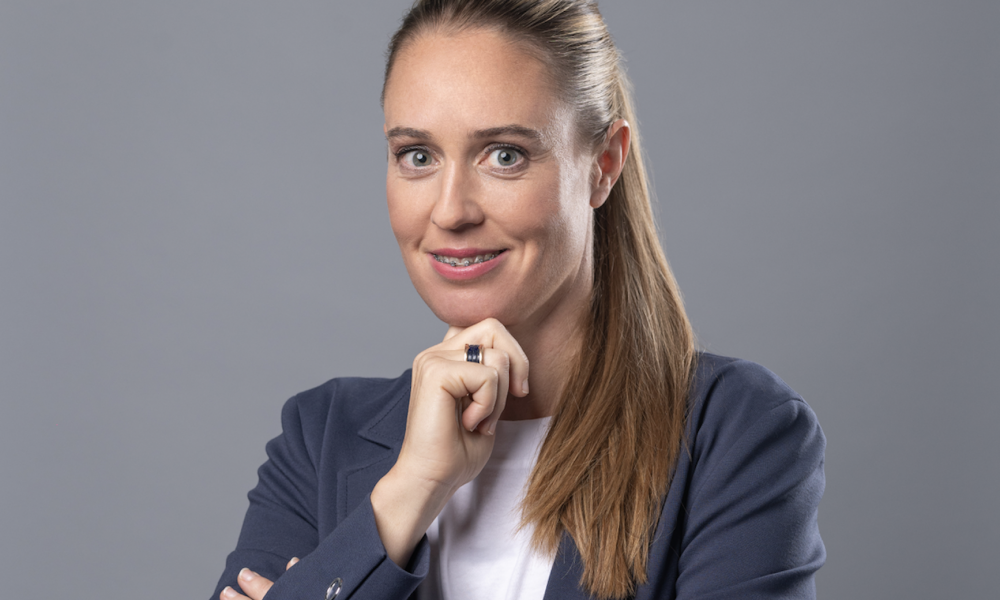
AI start-ups have emerged as the newest players in the tech world. We speak to Ula Sankowska, co-owner and co-CEO of MIM Fertility, one of Poland’s most exciting deep tech start-ups on a mission to revolutionise IVF.
How did MIM Fertility come about?

Ula Sankowska: I must admit that the idea was born from personal experience. For many years I was a patient of in-vitro clinics, my path to motherhood was long and winding.
I know what prospective patients go through and I know the shortcomings of the treatment. I want to help people to fulfil their dream of a desired child. If we manage to revolutionise infertility treatment, I will be able to say with a clear conscience that my lifelong dream has come true.
The second factor, for sure, that gave me an amazing kick to start MIM Fertility were the people who believed in the idea.
Here I am talking about Piotr Wygocki, co-CEO of MIM Fertility – a great Polish innovator and researcher. It was certainly his enthusiasm and faith in the idea that allowed us to develop and create technologies that today are commercialised globally.
How does your software help couples struggling to conceive?
US: With our AI-driven technologies we increase chances for people to become parents. We provide greater accuracy in the diagnostic and treatment process, reducing the time and cost associated with fertility treatments and leading to better outcomes for our customers.
We developed two software tools that promise to deliver these goals.
The first technology is EMBRYOAID – an application that supports skilled embryologists in choosing the most promising embryo for implantation.
Choosing the right embryo to be implanted for a woman is extremely important because it increases the chance of success, minimises complications and shortens the time to pregnancy.
The EMBRYOAID system learns how embryos develop over time and then our model uses this information to identify the best embryos for implantation.
By understanding the entire development process, the system is able to identify the right embryos even from just one image. This is a cheaper alternative to current analytical tools that are only available at the most expensive IVF clinics.
We believe that it will give clinicians the opportunity to choose the best embryo, thereby reducing the number of in vitro fertilisation cycles needed to achieve a successful pregnancy, improving the success rate and minimising the risk of multiple pregnancies.
Our other technology, FOLLISCAN, is an AI/ML software platform designed to identify, calculate and measure follicles of all sizes in a two-second sweep through the ovary during transvaginal ultrasound. This is a key test because it allows you to determine the fertility of a woman in a given cycle.
This test is performed several times during the IVF process itself and allows you to determine the timing of its individual stages.
Thanks to FOLLISCAN, the gynaecologist and medical staff will have access to highly specialised medical knowledge, so far reserved mainly for a small group of specialists.
In addition, the platform automates a large part of the activities that currently have to be performed by a human. This will significantly facilitate diagnostics in terms of the assessment of ovarian monitoring, as well as the development of follicles.
FOLLISCAN, we think, will improve the diagnosis of female fertility and contribute to the use of treatment methods that are better suited to the patient’s needs, increasing their effectiveness.
What makes your technology different?
US: In the case of FOLLISCAN we have a technology that can cooperate with any ultrasonographic machine, i.e., both 2D and 3D.
For example, our main competitors require us to use 3D mode, which is typically not used in the AFC examination but as well requires more advanced hardware.
As for EMBRYOAID, this is more about our transparent approach to the development of our tools that includes engaging into tests with clinics, explaining well limitations of our models, as well as working on the explainability of our tools.
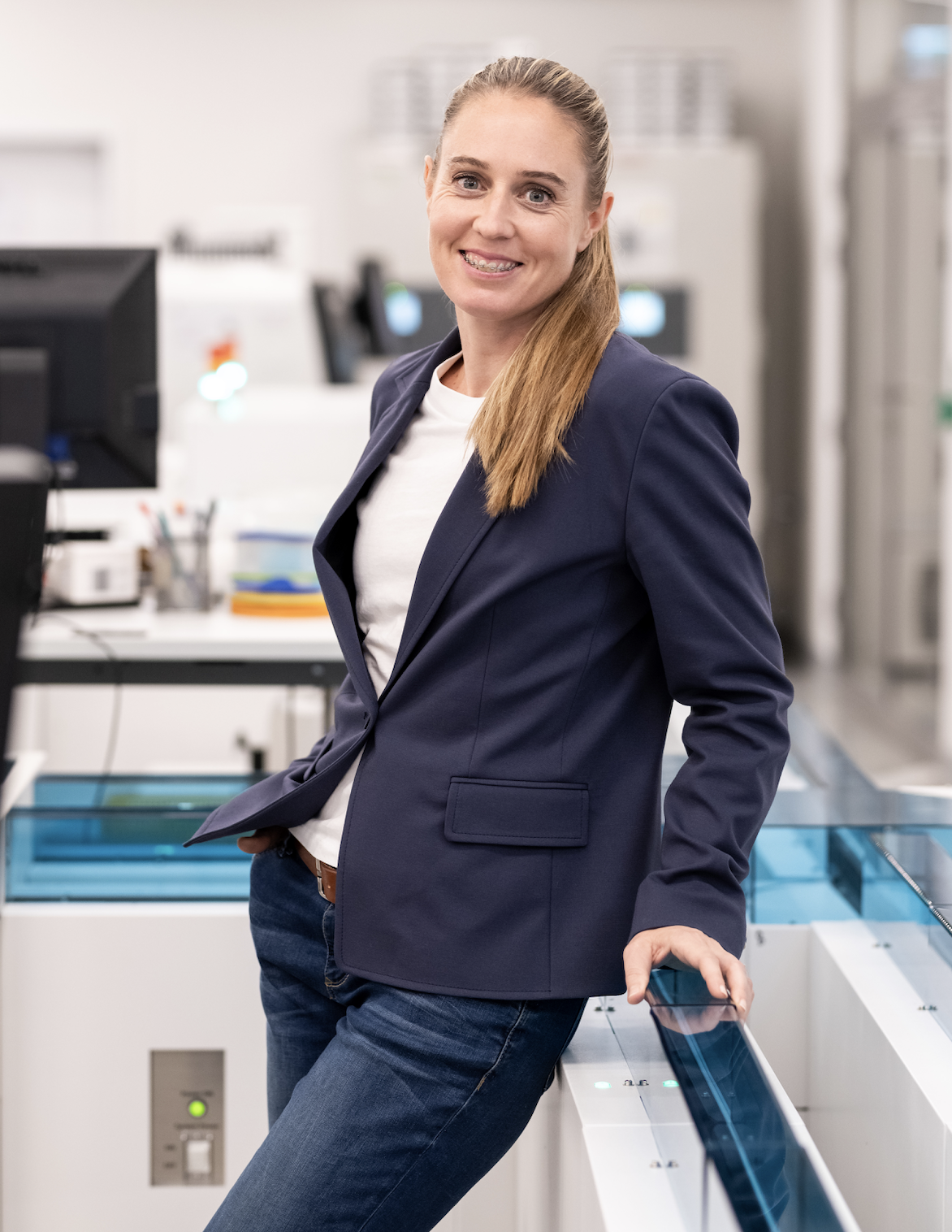
Where are you with the business now?
US: We are offering our technologies to IVF centres and clinics globally. Starting from January this year, the MIM family have joined 15 IVF clinics from different continents.
We are truly happy that by empowering clinics with our AI-driven software, we have a real impact on the decisions making by doctors and thus influence the treatment of patients.
Our software was created with passion and with the conviction that, above all, it must provide real value to people who use it.
Our motto is quality. Solid and robust algorithms are solutions you can trust. We do not want to hand over something that would not be effective and transparent.
What are your long-term goals?
US: We aim to introduce AI into further aspects of the IVF process. Starting from individual and personalised patient care, through deeper understanding of factors that are important for the IVF procedure itself, and ending with AI support for pre and post implantation treatment.
It is important to stress that we are a deep-tech company, i.e., research that leads to the development of our products can take even years.
Hence, we have already started some of these research projects as well as are planning further development works. We truly believe that AI can greatly improve IVF and make it more accessible.
Some clinicians remain sceptical of the benefits of AI to their work. How do you deal with such perceptions?
US: There is almost no doubt that AI will become the technology of the 21st century and will enter into more and more aspects of our jobs and lives.
Such disruptive technologies usually raise questions and doubts as their introduction is clearly visible. Hence, we need to engage in education of the public on two levels.
First, we need to familiarise the public that this technology is helpful, for example by explaining that image editing or styling tools are based on cutting edge AI.
Second, we need to educate our users on how to apply our tools and what their limitations are. In order to build trust in our solutions, we take special care to make them robust and explainable.
Do you think we need more AI education in healthcare?
US: Certainly and MIM Fertility engages into this process in the context of fertility care. We present widely our solutions on specialistic conferences devoted not only to IVF but targeted at gynaecologists.
We are also inviting a wide range of IVF clinics to test our tools, giving them an opportunity for discussions and further explanations.
However, AI education is quite challenging, as fully understanding these methods requires deep mathematical knowledge.
Where do you see fertility care in ten years’ time when it comes to technology advances?
US: AI understands complex processes and dependences much better than we humans. This technology will only reveal its full potential when more aspects of IVF are digitised and amenable for analysis.
Only then will we be able to fully understand the process and help more people become parents.
For more info, visit mimfertility.ai.


Newsletter
Sign up for free weekly updates
The latest femtech news, research and investment, straight to your inbox.




