Connect with us

News

Digital health app expands service for female employees

Published

on

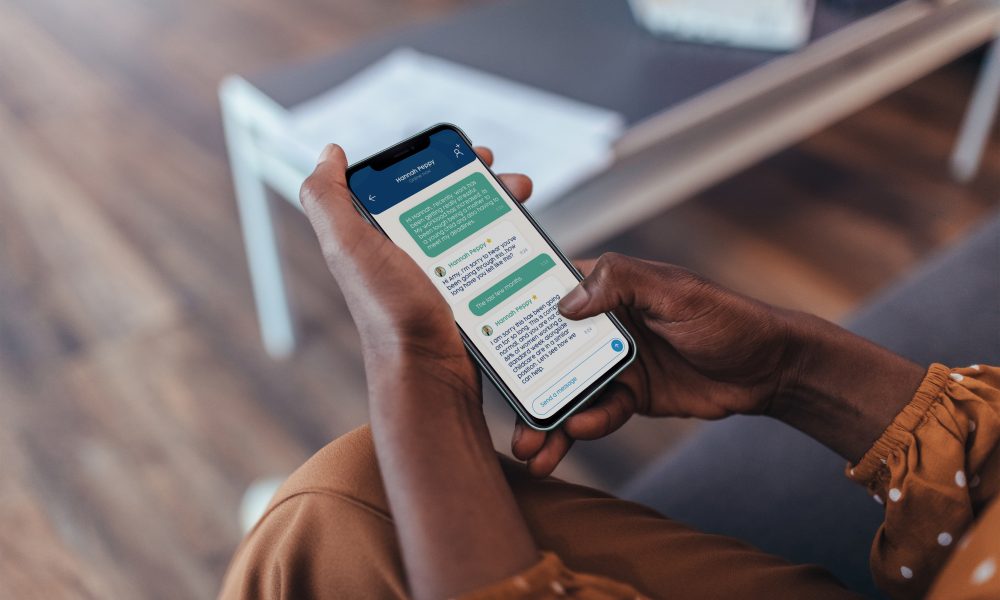
Digital health platform Peppy has launched an expansion of its women’s digital health service to mirror the service the company already offers for men.

Peppy is a digital health app that works with organisations across the private and public sectors to give their employees access to remote, specialist support, including in some of the most underserved areas of health.

The service connects employees to medical experts, offering video call appointments, wellbeing programmes and live events and is usually provided by the employer to help their staff remain healthy and solve specific health issues such as fertility, early parenthood and menopause.

Following Series A funding round, Peppy secured £6.6m. It now provides digital health support for over 250 employers including Santander, BNP Paribas, Cap Gemini and Novartis, and via PMI providers Vitality and AXA Health. Overall it supports over a million employees across its existing services, including menopause, fertility, pregnancy, new parenthood and men’s health.

The launch of further support for female employees is in direct response to current clients asking for a fuller health service for women.

The new service expands on the existing provision to now encompass more areas, including gynaecology, contraception, common conditions such as endometriosis, breast care, UTIs, PMS, sex, nutrition, exercise, mental health, addiction and relationships.

Human-led, digital health enables employers to support all their employees equally and consistently, with expert personalised support, and has enabled Peppy to support so many in a relatively short space of time.

“Technology has really helped democratise this type of human-led support, making it much easier for more employers to offer it, which is important as all female employees should be able to access the support they need, when they need it,” says Dr Mridula Pore, founder and CEO of Peppy .

The company believes that broadening the range of support available is not just about reducing the negatives for employers, such as lessening the impact of staff absences. By offering a holistic women’s health service, employers are making a positive statement that they want to attract, retain and engage with female employees and that they recognise there are many factors that can impair a woman’s ability to bring her best self into the workplace.

The founder emphasises that: “Standard healthcare ignores the physical and emotional issues that many women experience. From our research, we found 85 per cent of women experiencing at least four conditions during their working life that are currently underserved by standard healthcare services. Ultimately, this impacts their wellbeing as well as their employers’ bottom line.

“The female body goes through several specific phases and stages, but we recognise that support is not only needed at these physiological change points in a women’s life,” she adds.

“Support could be required at any time during an employee’s working life and therefore having workplace support available that is easily accessible, devoid of any wait time is what’s really needed and this speaks volumes about how much an employer values its staff.”

“We all understand that the NHS has been under huge pressure, particularly over the past two years, but this means that so many women cannot currently access the services and support that they require, and in some cases, desperately need. That is why we are launching this expansion to help female employees and in turn, improve outcomes for employers too, by improving retention, engagement and attraction of women in the workplace.”

For more information, visit peppy.health.

Entrepreneur

Just 24 hours left to nominate your company of the year

Published

on

You have until Friday to nominate your femtech company of the year.

The award is one of 10 featuring at Femtech World’s third annual awards event, which attracts entries from across the UK, EU and Europe.

The Company of the Year Award is for companies that have demonstrated exceptional leadership in tackling women’s health needs through groundbreaking products, services or platforms that are shaping the future of global femtech.

If your company is driving innovation, impact and growth in this space, this award was made for you.

About the sponsor: Femovate

The category is backed by Femovate, the global femtech incubator using design to fuel innovation across every stage of a woman’s health journey, from proactive prevention through to personalised treatment.

Femovate has invested over US$2 million in design capital, working side-by-side with founding teams to bring market-ready solutions to life.

The startups it supports have collectively raised US$120 million, launched 30 products, and secured seven FDA clearances.

Why enter?

The Femtech World Awards are free to enter.

Winners and shortlisted companies receive extensive coverage across all Femtech World platforms.

Winners will also receive a trophy and the opportunity to be featured in an interview for the publication.

Find out more about the Femtech World Award and enter here by 4pm BST on Friday 17.

Continue Reading

Diagnosis

Women with osteoporosis face increased Alzheimer’s risk, study suggests

Published

on

Women with osteoporosis may be more likely to carry a gene linked to Alzheimer’s, according to new research.

Scientists found that APOE4, the most common genetic risk factor for Alzheimer’s, can weaken bone quality in women, even when standard scans appear normal.

The study, carried out by researchers at the Buck Institute for Research on Ageing in California, US, and UC San Francisco, suggests the gene may damage bone at a microscopic level long before any visible signs.

These changes can emerge as early as midlife and remain invisible to routine imaging tests used to assess bone strength.

The findings suggest a link between Alzheimer’s risk and skeletal health and could help pave the way for earlier detection of both conditions.

Professor Birgit Schilling, a senior author of the study, said: “What makes this finding so striking is that bone quality is being compromised at a molecular level that a standard bone scan simply will not catch.

“APOE4 is quietly disrupting the very cells responsible for keeping bone strong – and it is doing this specifically in females, which mirrors what we see with Alzheimer’s disease risk.”

Doctors have long observed that people with Alzheimer’s suffer higher rates of bone fractures, while osteoporosis in women is known to be one of the earliest predictors of the disease.

Now scientists believe they may have uncovered why.

Researchers led by Dr Charles Schurman carried out a detailed analysis of proteins in aged mouse bone and found that tissue was unusually rich in molecules linked to neurological disease, including those associated with Alzheimer’s.

In particular, long-lived bone cells known as osteocytes showed elevated levels of APOE, with levels twice as high in older female mice compared with younger or male animals.

Further experiments using genetically modified mice revealed that APOE4 had a strong and sex-specific impact on both bone and brain tissue.

The disruption at the protein level was even greater in bone than in the brain.

However, the bone structure itself appeared completely normal under scans.

Instead, the gene interfered with a key maintenance process inside bone cells, preventing them from repairing microscopic channels that keep bones strong and resilient.

When this process breaks down, bones become more fragile even if they look healthy on standard imaging.

These results suggest bone cells could potentially act as early biological warning signs of cognitive decline in women carrying APOE4.

Professor Lisa Ellerby, another senior author, said: “We think targeting these cells may open a new front in preserving bone quality in this population.”

Experts say the findings highlight the need to view the body as an interconnected system rather than treating diseases in isolation.

Dementia, of which Alzheimer’s is the most common form, remains one of the UK’s biggest health challenges.

Around 900,000 people are currently living with the condition, a figure expected to rise to 1.6 million by 2040.

It is already the leading cause of death, responsible for more than 74,000 deaths each year.

Continue Reading

Hormonal health

Relaunched women’s health strategy aims to tackle ‘medical misogyny’

Published

on

Health secretary Wes Streeting has relaunched England’s women’s health strategy, vowing to stop women being “gaslit” by doctors.

Speaking before publication of the renewed strategy, the health secretary said the NHS was “failing women” and set out measures to help them access the healthcare they need.

The government said the strategy would include a new standard of care to ensure women were offered pain relief for invasive procedures, such as fitting a contraceptive coil and hysteroscopies.

Feedback would be directly linked to provider funding through a new trial, giving women more power to affect change if they have a poor experience.

Action would also be taken to ensure women no longer face long waits for diagnoses for conditions such as endometriosis, which can take a decade to diagnose.

Streeting said: “[Women] have for so long been let down by a healthcare system that too often gaslights women, treating their pain as an inconvenience and their symptoms as an overreaction.

“Whether it’s being passed from one appointment to another for conditions like endometriosis and fibroids, or a lack of proper pain relief during invasive procedures, through to having to navigate symptoms for years before receiving a diagnosis, it’s clear the system is failing women.

“Women’s voices must be central to delivering effective, respectful and empathetic care. We need to hit medical misogyny where it hurts – the wallet.

“Today’s renewed strategy will tackle the issues women face every day and ensure no woman is left fighting to be heard.”

A report last month by the women and equalities committee found that gynaecological and menstrual health had not been “sufficiently prioritised” by the government.

MPs said parts of the 10-year women’s health strategy, launched in 2022 by the Conservatives, were at risk of being scaled back or discontinued under wider changes to the NHS.

These included initiatives that had reduced waiting lists and improved women’s access to healthcare, such as women’s health hubs.

Sarah Owen, chair of the committee and a Labour MP, said: “This would be a disaster for girls’ and women’s menstrual healthcare, when it is in dire need of more support.

“It is a national scandal that nearly half a million women are on hospital gynaecology waiting lists when there are effective treatments that could be administered in primary and community care, if only they could access them.”

The report said women faced “medical misogyny” and were left to “suck it up” and suffer in pain for years because of a lack of awareness of women’s health conditions.

A redesign of clinical pathways for some women’s health issues will aim to speed up diagnosis and treatment, and there will be a review of support for families who experience repeated baby loss.

The government also promised a “single referral point” to ensure women were directed to the right place the first time they sought help.

Dr Sue Mann, NHS England’s women’s health director, said too many women were dismissed for “serious symptoms” that affected every part of their lives.

“The renewed women’s health strategy will build significantly on the work the NHS has been doing to ensure women are heard and get the specialist care they need,” she said.

Women’s health groups cautiously welcomed the renewed strategy. Emma Cox, chief executive of Endometriosis UK, said decisive action would be vital to improve women’s healthcare in England.

Continue Reading

Trending

Copyright © 2025 Aspect Health Media Ltd. All Rights Reserved.