




Fertility
Genea Biomedx and Future Fertility develop scientific partnership to streamline oocyte quality assessment and improve clinical outcomes in fertility labs
Future Fertility’s oocyte tools will be available for automatic integration within the Geri Time-lapse incubator


Future Fertility’s new integration with Genea Biomedx’s Geri time-lapse incubators enables labs to seamlessly generate personalised oocyte quality reports for patients, adding to Geri’s proven ability to improve clinical outcomes and efficiency.
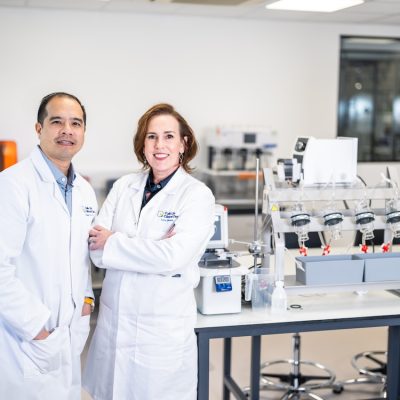
On the heels of a recent acquisition by Basecare, Genea Biomedx, manufacturer of medical devices for IVF laboratories including Geri, the world-first and world’s only humidified time-lapse incubator, announced a strategic scientific partnership with Future Fertility, the global leader in oocyte assessment tools.
Future Fertility’s oocyte tools will be available for automatic integration within the Geri Time-lapse incubator as an optional value-added feature for Geri clients globally.
With over two thirds of fertility cycles failing on average globally, it is critical for clinicians and embryologists to understand all variables and to use top-quality medical devices for all stages of the process.
While it is well understood that the oocyte plays a critical role in embryo development, there is no current standard of care for oocyte assessment, which leaves embryologists and physicians to rely upon age and number of mature eggs to estimate egg quality.
Validated in over eight regions, live in over 15 countries and used in over 70 clinics globally, Future Fertility’s AI tools empower patients and clinicians to make more informed decisions along the IVF journey.
Validation studies have demonstrated an approximate 20 per cent improvement over embryologist assessments, and a 100 per cent repeatability rate in predictions.
Studies have also proven a strong correlation between Magenta scores and embryo quality, with scores outperforming prediction models built based on age alone, demonstrating the importance of personalised oocyte assessments and their role in clinical practice.

Geri has an established presence in over 600 laboratories globally and its use resulted in statistically significant improvements in embryo development and clinical outcomes, including a 24 per cent increased clinical pregnancy rate, in comparison to a conventional culture system.
As the world’s only humidified time-lapse incubator and with individualized patient culture, Geri presents a premium offering to laboratories aiming to achieve the best quality embryos and the fastest time to pregnancy.
Integration between Future Fertility and Geri enables clinics to pull oocyte AI reports in real-time, saving the clinic time as images are automatically collected in the background from Geri. This streamlines lab processes, simplifying access to oocyte assessments which are available in as little as three seconds.
Geri customers will benefit from hands-off software set-up and improved lab efficiency, in addition to an enhanced patient experience from the patient-friendly counselling reports, complementing Geri’s ability to bring greater efficiency via remote monitoring and automated annotation of embryos.
“The importance of choosing the right tools to culture and select embryos has never been more obvious, and AI-powered decision support tools are emerging as a new standard of care in fertility treatments,” said Tom Beckitt, COO of Genea Biomedx.
“In our company’s commitment to developing fertility technologies that improve clinical outcomes, the integration of Future Fertility’s clinically validated oocyte assessment software alongside Geri Connect & Geri Assess provides our customers not only with lab efficiencies, but also new AI-powered insights that were not previously observable by embryologists alone.”
Future Fertility’s CEO, Christy Prada, expressed her excitement about this innovative partnership, stating: “We’re thrilled to collaborate to streamline embryologists’ workflows and deliver more value to their ICSI IVF patients through easy access to our personalised oocyte quality reports.
“Genea Biomedx’s commitment to quality is evidenced through their uniquely designed Geri time-lapse incubator, and we are grateful to partner with a leader in the field.”



Chelsea FC Women is to launch a fertility fund giving players access to assessments, treatments, counselling and workshops.
The initiative is part of a new partnership with London fertility clinic Fertility Plus, which has been named the club’s official fertility partner.
Chelsea said the fund will be available to every player in its women’s team, with support tailored to individual needs.

Giulia Mazzia, commercial director for Chelsea FC Women, said: “At Chelsea FC Women we are never done pushing for progress for our players and our community.
“This first-of-its-kind partnership with Fertility Plus will open up the conversation about fertility, help to raise awareness for our incredible fanbase and beyond, and give practical support to our players off the field as well as on it.”
Support through Fertility Plus will include fertility assessments and treatments, as well as counselling and workshops.
The partnership will also provide evidence-based information about reproductive health and address misconceptions around fertility.
Chelsea cited previous research on fertility knowledge which found that 41 per cent of respondents actively trying to conceive did not know when their fertile window was.
The club and Fertility Plus plan to provide educational content, resources comparing fertility myths with medical evidence and insights from Chelsea FC Women ambassadors.
Dr Amit Shah and Dr Anil Gudi, co-founders of Fertility Plus, said: “Elite sport asks a lot of women during the very years when fertility matters most, yet it’s a conversation the game has rarely had.
“Partnering with Chelsea FC Women allows us to help change that by giving players, staff and supporters access to trusted fertility expertise and compassionate, consultant-led care.
“We’re proud to work alongside a club that’s setting a new standard for supporting women’s health, both on and off the pitch.


Higher cumulative doses of common fertility drug clomiphene citrate may increase pregnancy loss risks, according to new research.
Around one in six people experience infertility, with irregular or absent ovulation among the most common causes.
Clomiphene citrate has long been a mainstay of fertility treatment, but Adelaide University research has raised concerns about higher cumulative doses.
The new study found that high doses of clomiphene citrate accumulated over multiple fertility treatment cycles could increase the risk of pregnancy loss.
Lead author associate professor Sheree Boulet said the findings showed a clear dose-response relationship, meaning the risks increased as cumulative exposure rose.
She said: “Women who received higher cumulative doses of clomiphene citrate experienced progressively greater risks of adverse pregnancy outcomes.
“We examined more than 21,000 embryo transfer cycles across four cumulative dose categories and found that increasing the dose did not significantly improve the chance of a live birth.
“Our findings suggest there may be a point where increasing the dose offers little additional benefit while exposing women to greater risk, highlighting the importance of carefully balancing effectiveness with safety when making treatment decisions.”
Supported by the NHMRC and conducted in partnership with Boston University and the Centers for Disease Control and Prevention, researchers analysed 21,004 IVF embryo transfer cycles in the US.
Women receiving cumulative doses of 500mg to 749mg of clomiphene citrate had a 12 per cent higher risk of miscarriage, while those receiving 750mg to 999mg had a 38 per cent higher risk.
Women receiving cumulative doses of 750mg or more were also more than twice as likely to have twins or other multiple births.
Rates of spontaneous abortion, another term for miscarriage, increased as the dose rose.
Researchers also recorded more than a threefold increase in stillbirth at the highest dose, although the finding was not statistically significant because that dose was rare. Larger studies are needed to confirm the association.
The finding is consistent with an earlier Adelaide University study that showed a doubling of neonatal death in pregnancies involving clomiphene citrate. Neonatal death means the death of a baby shortly after birth.
Higher cumulative doses did not improve the chance of a live birth, but did increase twinning, which raises the risk of adverse outcomes for both mother and child.
Clomiphene citrate is one of the world’s most widely prescribed fertility drugs. It has been prescribed to millions of women worldwide since 1967 and remains a recommended first-line treatment for ovulation induction.
The drug is recognised as an essential medicine by the World Health Organization. It works by stimulating the ovaries to release eggs, increasing the chance of pregnancy.
Women who do not respond to lower doses, or who require multiple treatment cycles, may receive progressively higher cumulative doses over time.
The findings build on a series of studies from Adelaide University’s Robinson Research Institute linking clomiphene citrate with increased risks of pregnancy loss, stillbirth, perinatal death and some birth defects.
Experimental studies in mice supported these findings, showing that higher doses reduced successful pregnancies and were associated with pregnancy loss, impaired fetal growth and developmental abnormalities.
Professor Michael Davies, senior researcher and co-author of all the studies, said the latest work builds on more than two decades of Adelaide-led research into the safety of fertility treatments.
He said: “Clomiphene citrate has been used by many women since 1967, but it has never been comprehensively evaluated in large prospective clinical trials.
“Our studies indicate that women respond differently to clomiphene citrate and that increasing cumulative doses may increase the risk of adverse pregnancy outcomes without improving the likelihood of a live birth.
“The findings confirm and extend our previous studies in both human and mouse models which highlight the need to better understand the dose-response relationship and whether more personalised dosing strategies could improve safety.
“Until we can better understand these differences, it remains important that clinicians rigorously follow manufacturer’s safety recommendations and avoid unnecessarily increasing cumulative doses.
“The same questions are now being asked of newer ovulation-inducing medications, so any move away from clomiphene citrate should also be guided by robust evidence rather than assumptions about safety.”

Common IVF preparation techniques used before embryo transfer have no proven effect on pregnancy rates, according to a review.
Researchers said evidence for the widely used practices remains uncertain because available studies are limited and generally of low quality.
Embryo transfer is the final and most vulnerable stage of IVF, when an embryo is placed into the womb. Only around one in three transfers results in pregnancy.
Practice varies between clinics, with some routinely using preparation techniques such as adjusting bladder fullness while others do not consider them necessary.
Dr Ryosuke Akino, practising obstetrician-gynaecologist from Kato Ladies Clinic, said: “To an extent, this is a case of tradition driving practice rather than the evidence.
“Current practices in this area often reflect local protocols, clinician preference, and historical convention rather than strong, high-quality evidence.”
The Cochrane review analysed 11 studies involving 2,524 women undergoing embryo transfer.
Researchers looked at three preparation techniques used by fertility clinics: having women arrive with a full bladder to straighten the angle between the uterus and cervix, removing cervical mucus and using a technique called afterloading.
Afterloading is a technique used to guide the embryo through the cervix.
The review found no reliable evidence that any of the three approaches improved pregnancy rates compared with standard care.
Researchers rated the evidence as low or very low certainty because the trials were small and had methodological weaknesses. They found no grounds to recommend any of the techniques over standard care.
There was also limited information about possible side effects.
The review team, which included methodologists and practising obstetrician-gynaecologists, said full bladder preparation and cervical mucus removal were generally considered safe, with no clear evidence of harm or major complications.
Dr James Brown, obstetrician-gynaecologist from Women’s Health and Research Institute Australia, said: “While these techniques are generally considered safe, it’s still important to test their effectiveness.”
Akino and Brown added: “A full bladder can be uncomfortable, although it may ease catheter insertion in certain uterine positions and reduce procedural difficulty.
“Mucus removal is usually quick, but if done roughly and causes bleeding, it may affect the woman’s experience.
“Overall, the risks are minor and relate mostly to discomfort and procedural factors rather than clinical harm.”
The authors said embryo transfer has changed relatively little despite major advances elsewhere in IVF.
Research has instead focused more heavily on embryo quality and genetic factors, which have a greater bearing on treatment success than transfer technique.
Embryo transfer also depends heavily on the person carrying out the procedure and can be difficult to standardise, making large, rigorous clinical trials harder to design.
Researchers said women may also be reluctant to risk valuable embryos by taking part in randomised studies comparing different transfer techniques.
Dr Noyuri Yamaji from Showa Medical University in Japan said: “Sixteen years of research still haven’t answered a basic IVF technique question.
“This is a critical step in the IVF process and these small changes and techniques have the possibility to make a massive difference, but we won’t know more until more robust, better-quality trials are conducted.”
All the studies assessed were carried out in high-income countries, meaning the findings may not necessarily apply to other healthcare settings and populations.
The authors said further research could be particularly valuable in resource-limited settings, where these procedures are inexpensive and simple to change and basic procedural standardisation could matter more than advanced technical modifications.











 News2 weeks ago
UK femtech investment surges 194% in a decade, research finds

 Entrepreneur2 weeks ago
TidalSense raises £14m to expand five-minute COPD test across NHS

 News2 weeks ago
Cross-Border Impact Ventures raises US$58m for women and children’s health

 Entrepreneur7 days ago
Applications close August 18 for Women’s Health Innovation Summit 2026 Innovation Showcase

 News2 weeks ago
Cultural stigma is a barrier to menopause help, black women say

 Menopause7 days ago
Third of women unaware of perimenopause mental health impact

 Motherhood2 weeks ago
One in eight mothers diagnosed with gestational diabetes, research finds

 Hormonal health2 weeks ago
Menstrual data is missing a critical layer: The mind
1 Comment