




Menopause
New community hub for menopausal women launches

Global women’s health company, Essity has announced the launch of Issviva.
Issviva will be a community hub that aims to support women going through menopause.
Issviva will help to build a better menopause experience for women around the world. The new platform aims to break barriers for women going through menopause and empower them to thrive and not just survive during this transactional period in their lives.
The platform will enable women to seek education, share advice and connect with like-minded people.
Dr Shahzadi Harper, a menopause expert who is working with Issviva, said: “I see so many women in my clinic every week whose lives are being seriously impacted by menopause. Some experience breakdowns in their relationships, some are facing debilitating health conditions and some are even leaving their jobs because of symptoms of the menopause”.
The platform will provide education blogs, a safe space where women can speak with each other, and scientifically backed products and solutions for the users.
This will help women overcome the vision that menopause is still a taboo as according to a Gen-M Invisibility Report from 2020 two thirds of women still see it as a stigma. As a result, there is an invisible generation of menopausal people suffering in silence, with symptoms that can be physically and mentally debilitating.
NHS also found that 41 per cent of menopausal women feel “lonely, invisible, irrelevant and dispensable”. These feelings can manifest into serious mental health issues, impacting confidence and self-worth.
The platform has been launched by Essity which is a leading global hygiene and health company.
The company includes areas such as health and medical, consumer goods and professional hygiene.
In June of this year the parliament finally acknowledged the need for workplaces to become more ‘menopause-friendly’ by signing a new bill called the Menopause Workplace Pledge.
The first activity of the newly launched Issviva hub was to provide support for the Menopause Mandate’s parliamentary campaign and the Issviva team joined the lobbying day at The House of Commons.













Michigan State University researchers are launching a novel project to transform how medications are developed and prescribed for women.
A US$4.6m award will fund computer models designed to predict how hormonal changes affect the way medicines move through and act in women’s bodies.
The funding is the first instalment of an award worth up to US$12.8m over three years, supporting work intended to account for hormonal changes throughout women’s lives.
Researchers plan to examine factors including menstrual cycles, pregnancy, contraceptive use, menopause and hormone replacement therapy, which can affect responses to medicines.

Teresa K. Woodruff, lead investigator on the project, said: “Because female hormone levels are constantly shifting, precision medicine allows us to map out these complex interactions.
“This NIH-backed initiative will create the first computationally driven clinical tool designed to guide medical care across every stage of a woman’s life.”
The project is led by researchers at Michigan State University and funded by the National Institutes of Health, with collaborators from Rutgers, Emory, Tulane, the University of Colorado Anschutz, the University of Michigan and the University of Utah.
Thirteen researchers will develop computational models to predict how changes in female hormones influence the way medicines move through and act within the body.
The work is part of the NIH Computational Modeling of Hormone Homeostasis Initiative, which is awarding US$21m nationally to support research into sex-specific hormonal biology.
The team plans to use artificial intelligence to digitise and organise more than 40 years of hormone research data in a publicly accessible database.
Researchers will also develop a standard computer model of a 28-day menstrual cycle, alongside models of how hormones regulate organs and tissues involved in processing nutrients, including the liver, muscle and fat.
Real-world patient data will then be used to expand the models to represent groups including women going through menopause or taking birth control, as well as women with conditions such as diabetes and obesity.
The project will also use three-dimensional human tissue models and lab-grown organoids, including liver, muscle and ovarian tissue, to test and refine the computer predictions.
Researchers plan to examine medicines including metformin, insulin and GLP-1 drugs, with the aim of developing tools that could help clinicians tailor doses and avoid harmful side effects.
Qiang Zhang, associate professor at Emory University, said: “Empowered by AI, novel assays and legacy human data, we will develop mechanistically based computational models of female physiology that can make translational, quantitative predictions for women’s responses to metabolic therapies.”
The researchers said the work could help address differences in how women respond to treatments for metabolic conditions including obesity, type 2 diabetes, cholesterol imbalances and thyroid disorders.
Nanette Santoro, professor at the University of Colorado Anschutz and president of the Endocrine Society, said: “Women experience large shifts in reproductive hormones at several points in their lifespan: puberty, pregnancy and menopause.
“During reproductive years, women also undergo profound day-to-day changes in reproductive hormone levels, giving them a markedly different endocrine backdrop than men.
“Using state-of-the-art computational technology to examine how these changes interact with commonly used medications is a critical pathway toward supporting life-course women’s health.”
The project team said its computer models and data will be made freely available to researchers and healthcare professionals when the work is completed.

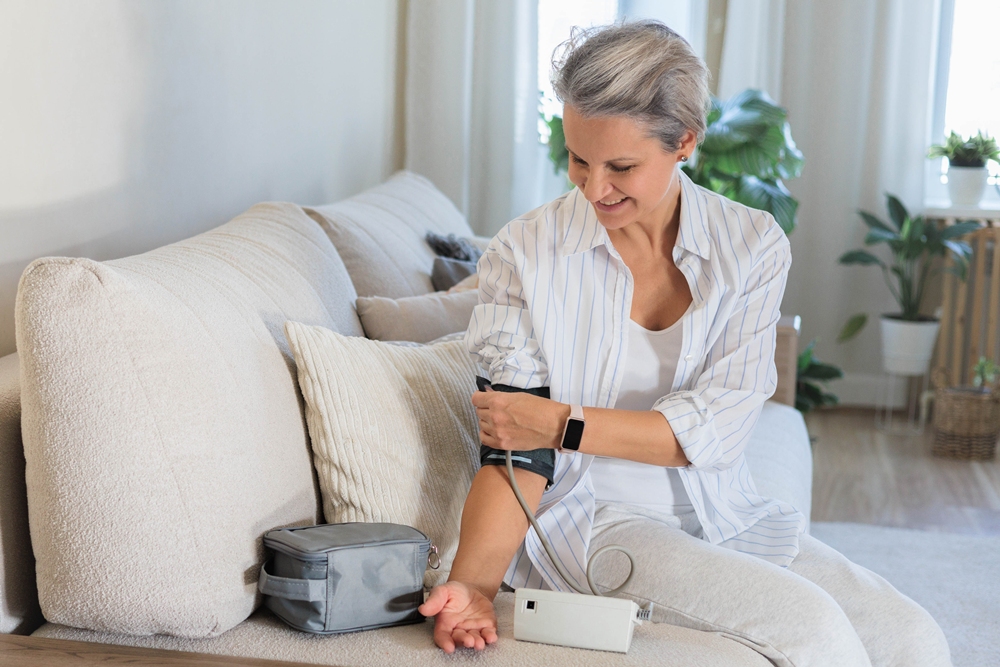
Menopause may not drive rising pulse pressure after midlife, with changes beginning up to two decades before the final menstrual period, a study found.
Pulse pressure, the gap between the upper and lower numbers in a blood pressure reading, is influenced by the stiffness and width of the aorta, the body’s largest blood vessel.
The analysis found that women’s pulse pressure reached its lowest point and began rising in their late 30s, around a decade earlier than in men, regardless of when menopause occurred.
Researchers analysed data from the Framingham Heart Study, a long-running study of cardiovascular risk factors involving three generations of families in Massachusetts.
The study included 6,760 adult women assessed at three health visits over 14 years. Women were grouped according to whether they were premenopausal or experienced early, average or late menopause.
Women whose menopause was induced by surgery or medication were excluded. Researchers also analysed data from 3,248 adult men to examine differences between the sexes.
Pulse pressure typically falls between early adulthood and midlife as the internal space within the aorta increases in diameter, allowing blood to flow more easily.
After midlife, pulse pressure tends to rise as the aorta stops widening and its walls become stiffer. A wider pulse pressure means the heart has to work harder and can contribute to damage in small blood vessels in organs including the brain and kidneys.
The researchers found that the age at which women’s pulse pressure changed from falling to rising was not affected by whether their final menstrual period occurred early, late or at a typical age.
After midlife, pulse pressure increased with age in both women and men, although it rose faster among women. Average pulse pressure was higher in women than men after the age of 60.
Gary F. Mitchell, senior author of the study, said: “To our huge surprise, our results suggest that factors other than the timing of the final menstrual period were likely involved in the accelerated increase in pulse pressure in women after midlife.”
The findings challenge the assumption that hormonal changes associated with menopause contribute to the increase in aortic stiffness seen among women later in life.
However, the observational study could not establish cause and effect. It also relied on participants reporting their age at menopause rather than researchers measuring oestrogen levels.
Most participants were of white European descent, meaning the findings may not apply to people from other racial or ethnic groups.
Wide pulse pressure is an independent risk factor for cardiovascular disease, dementia and kidney disease, according to the researchers, although pulse pressure is not currently included in clinical guidelines for managing blood pressure.
Mitchell said healthcare professionals should consider pulse pressure when assessing middle-aged and older people with high blood pressure, particularly women.
Samar R. El Khoudary, who was not involved in the study, said the findings did not mean menopause had no role in women’s cardiovascular health.
“Vascular aging may begin years before menopause, but that doesn’t mean menopause is irrelevant. The trajectory may accelerate as women enter perimenopause.
“We shouldn’t wait until menopause to start thinking about cardiovascular health.
“By the time a woman reaches her final menstrual period, vascular changes may already have been underway for years. Midlife is an opportunity to identify cardiovascular risk early and intervene before disease develops.”

Many menopause supplements contain ingredients with limited evidence for symptom relief, while formulations and prices vary widely, a study has found.
Researchers analysed 201 products sold by nine major UK retailers, comparing their ingredients, doses and monthly costs.
Prices ranged from £1.50 to £95 a month, while no single ingredient or category of ingredient was common across all products.
The study, carried out by University College London, found that 80 per cent of products contained herbs, 77 per cent contained vitamins and 74 per cent contained phytoestrogens, naturally occurring plant compounds found in foods including soy and flaxseed.
Vitamin B6 was the most common vitamin, while red clover and sage were the most frequently identified plant ingredients.
Researchers said more evidence was needed on the effectiveness and safety of supplements marketed for menopause symptoms.
Professor Joyce Harper, senior author of the study and professor of reproductive science at University College London, said: “The menopause supplement market is growing rapidly, despite limited scientific evidence that many of these products improve menopause symptoms.
“Some social media influencers promote these products as effective solutions, despite many claims not being supported by scientific evidence.
“This can contribute to the spread of misinformation and help drive a rapidly growing menopause supplement market, leading some women to spend substantial amounts of money on supplements in the hope of improving their symptoms and overall wellbeing.”
Half of the supplements did not contain vitamin D, while less than 24 per cent contained calcium.
The British Menopause Society and International Menopause Society have highlighted vitamin D and calcium as important for maintaining bone health and preventing osteoporosis after menopause.
Researchers also identified botanical ingredients that may carry risks, including black cohosh.
Poppy Sullivan, first author of the study, said: “Certain botanical ingredients in some menopause supplements may also have risks.
“Black cohosh, in particular, is known to carry a potential risk of liver toxicity.”
The amounts of vitamins and minerals included in different products also varied widely.
Sullivan said: “Some nutrients can have adverse effects when consumed in excess over time.
“For example, excessive vitamin D intake can theoretically lead to high calcium levels, which could cause adverse effects such as vomiting and confusion.”
The study found little empirical evidence supporting the effectiveness of even the most expensive products.
Researchers called for more high-quality research, including clinical trials, to determine whether menopause supplement ingredients are effective and safe.
They said the findings could also help healthcare professionals understand the wide variation in supplement formulations.
The researchers acknowledged that the analysis may not have included every menopause supplement available in the UK.









 Ageing1 week ago
Menopause may not explain rising heart condition in women – study

 Fertility2 weeks ago
Paracetamol use may impact future fertility, studies suggest

 Insight1 week ago
Women with birth trauma face 2.5x higher healthcare costs – study

 Menopause2 weeks ago
Cancer drug could tackle osteoporosis menopause weight gain

 pain conditions1 week ago
Medical cannabis may improve endometriosis symptoms – study

 Cancer1 week ago
Study could explain why obesity is a breast cancer risk factor

 Hormonal health2 weeks ago
Menopause hormone therapy may improve cardiovascular health outcomes, study suggests

 AI1 week ago
Evvy secures US$40m for AI-powered vaginal microbiome testing
3 Comments