




Menopause
Menopause hair loss system shows trial promise


Menopause hair loss trial data showed what the company called clinically meaningful regrowth from a scalp system in a phase II study of menopausal women.
The four-month independent trial evaluated Prevention and Treatment Serums in 43 menopausal-aged women with androgenetic alopecia.
Androgenetic alopecia is a common form of hair thinning.

The trial was announced by dermatologist-founded brand KilgourMD.
Dr James Kilgour, board-certified dermatologist, founder and chief executive of KilgourMD, said: “Menopausal women have been largely excluded from rigorous hair loss research, despite experiencing some of the most challenging and persistent forms of thinning.
“This study validates not only the performance of the KilgourMD System, but also the importance of designing and testing solutions specifically for this population.
“These results represent a meaningful step forward in how menopausal hair loss is treated.”
Unlike many studies in this category, eligibility required a clinically significant level of hair loss, and outcomes were objective and dermatologist-evaluated rather than consumer perception surveys.
By day 120, the company said 53 per cent of participants achieved at least a half-grade improvement on the modified Female Ludwig scale, a clinical scale used to rate the severity of female hair loss.
This threshold is considered by dermatologists to represent a meaningful visual change. A further 26 per cent showed a full one-grade improvement.
KilgourMD said this level of improvement is comparable to, and in some cases exceeds, results typically reported after six to 12 months of conventional pharmaceutical therapies such as minoxidil or finasteride.
Across the full study population, participants experienced an average 11.1 per cent improvement in Ludwig score within four months, the company said.
The trial also reported a 60 per cent reduction in hair shedding by month four, measured through standardised combing and washing assessments.
Reductions were seen as early as day 45, when more than 95 per cent of participants showed a decrease from baseline in terminal hair shedding count, measured by standardised hair washing studies in the lab.
Regrowth outcomes were graded by two independent board-certified dermatologists, with high-resolution imaging used to confirm visible improvements in hair density and scalp coverage over time.
More than 80 per cent of participants reported noticeable improvements in hair density, health and overall appearance by the end of the study.
The full results are currently undergoing peer review and are expected to be published later this year.











Nearly a quarter of women often miss work because of menstrual symptoms, according to a survey examining hormonal health among women in full-time work in Ireland.
The survey looked at the impact of menstruation, fertility and motherhood, and perimenopause and menopause.
Research from The Menopause Hub found more than one in three women who had not disclosed a menstrual health issue at work said the lack of a clear workplace policy was the reason.

More than a quarter said they did not think their concerns would be taken seriously, while 22 per cent cited embarrassment and 18 per cent feared being judged.
Nearly half of respondents said better workplace support would have made them feel less stressed, while 40 per cent said it would have made them feel more valued. Some 36 per cent said they would have felt more comfortable speaking up.
Some 76 per cent of women surveyed said they experienced menstrual health issues, with 23 per cent of those often missing work because of symptoms.
Nearly half of respondents, 49 per cent, said they felt uncomfortable talking about menstruation at work.
One respondent said: “As a woman, we try to get through the day, sometimes in pain that can’t be seen. We feel emotionally and physically drained.”
The research also found that 62 per cent of those who experienced baby loss reported a moderate or significant impact on work attendance.
More than half of respondents who experienced depression during pregnancy also reported a moderate or significant impact on attendance.
Some 63 per cent of mothers said it was “difficult” to return to work after pregnancy, while nearly half said their maternity pay arrangement had negatively affected their financial wellbeing.
One respondent said: “I almost walked away. The only reason I stayed was because I had to provide for my family.”
The survey also found that nearly half of respondents said menopause had some impact on their attendance, while more than six in 10 reported an impact on their work performance.
Some 44 per cent of women said they were “uncomfortable” discussing perimenopause and menopause at work.
One person said they were “already terrified of losing my job at my age:
“I need to just struggle through this without support or acknowledgement. That’s basically workplace discrimination.”
The Menopause Hub chief executive Loretta Dignam said women’s hormonal health has been treated as a “private or personal issue” for too long, “when the reality is that it has a very real impact on women’s working lives”.
“The fundamental point is that women are not ‘mini men.’
“Our biology is different, and workplaces that were largely designed around a male model of health and working life need to evolve to recognise that.
“What is striking is how many women continue to show up, perform, push through and progress at work while managing significant physical and emotional symptoms, often without the policies, understanding or practical support they need,” Dignam said.
She added that because expectations are changing, Gen Z and Gen Alpha employees will be “far less willing than previous generations to accept workplaces that ignore their health and wellbeing”.


A perimenopause app that maps existing smartwatch data to the menopausal transition has launched across 39 markets in the UK and Europe.
anna app uses information already recorded by wearables, including sleep, heart rate and body temperature, and returns one suggested lifestyle action each morning alongside the research behind it.
The company says each rule in its library links a defined pattern in a woman’s own data to a specific action. The recommendations were developed with an advising clinician and draw on more than 300 published studies.
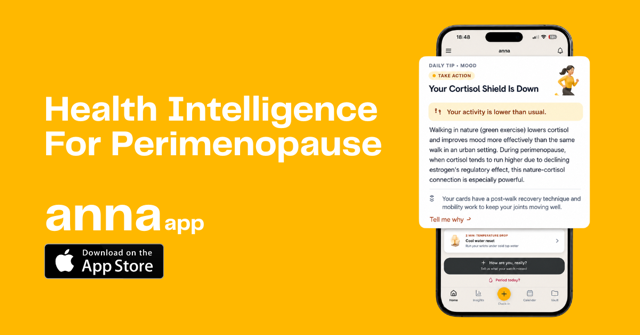
The company says recommendations are not generated automatically and each can be traced to research reviewed by a doctor.
The app was built by two women in Riga, has been funded without outside investment and was tested with women in the UK over three months before launch.
Perimenopause is the period of hormonal change before periods stop and usually begins after 40.
The company says one of the challenges is the unpredictability of the transition, with sleep, energy, mood and concentration potentially changing from week to week.
Because the experience varies between women, the developers say it can be difficult to find care tailored to individual needs. After 45, there is also no reliable blood test to confirm perimenopause.
The transition can coincide with a busy period in women’s working lives.
CIPD research published in 2023 found that 27 per cent of working women aged 40 to 60 with menopause symptoms said they had affected their career progression, equivalent to around 1.2m women in the UK.
Some 79 per cent said they felt less able to concentrate.
The long-running Study of Women’s Health Across the Nation, which has followed thousands of women through the menopausal transition, found that cognitive difficulties reported during perimenopause appear to be time-limited, with improvement returning in early postmenopause.
The developers say anna differs from standard wearable data by interpreting measurements specifically in the context of perimenopause.
A smartwatch may show changes in sleep, heart rate or temperature, but anna is designed to look at combinations of those signals and link them to lifestyle guidance for that day.
The app is also designed to work without daily symptom logging.
Users can complete an optional daily check-in if they want to add more context, but the app can operate without a symptom diary or daily manual entries.
It uses information from a compatible device the user already owns, such as a watch, ring or band.
Elina Pika-Lepere, co-founder and chief executive of anna app, said: “Perimenopause arrives exactly when a woman has the least spare capacity. She is often at the peak of her career, raising children, caring for ageing parents. What she has lost is not information, it is predictability.
“We built anna to offer a helping hand and evidence-based guidance through a stage that is difficult but temporary.”
The company gave the example of a morning when a user’s watch shows she has slept well below her own 28-day average.
Rather than simply telling her she is tired, anna may suggest choosing one priority and working on it in 25-minute blocks with a short break between them.
The app also displays the sleep and concentration research used for the recommendation.
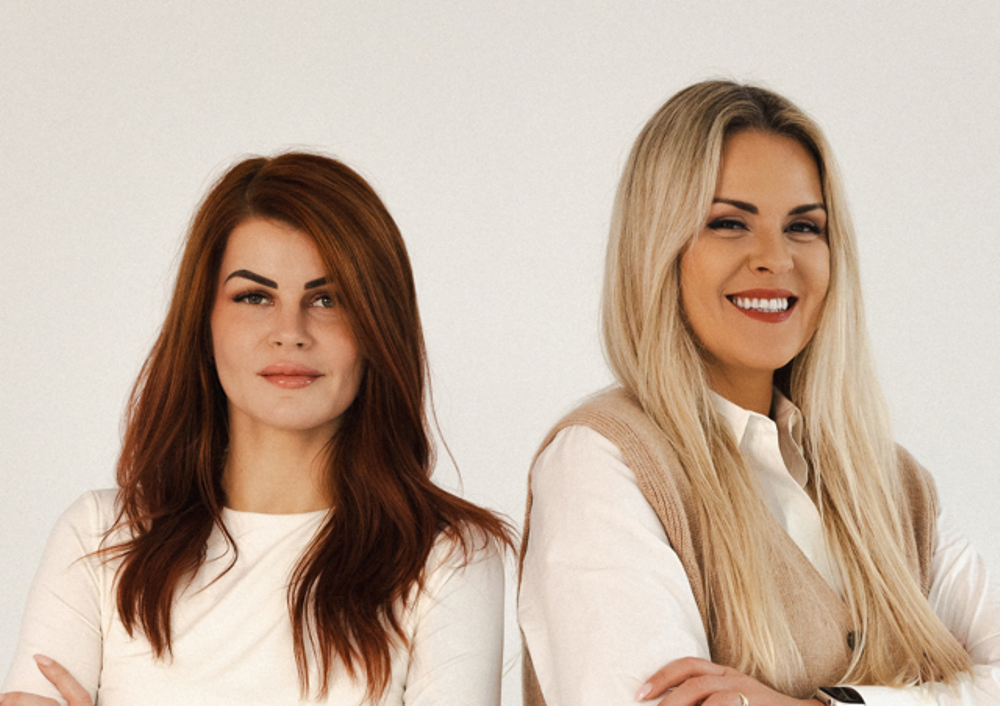
anna was founded by Pika-Lepere, who spent 15 years building products in advertising, retail and e-commerce, and product lead Zanda Freimane, whose background is in product management in fintech and e-commerce.
The wider team includes a mathematician and university researcher advising on data architecture, a senior developer and a user experience adviser from a Baltic unicorn company.
anna app is not a medical device and does not provide medical advice.
Its guidance is limited to lifestyle support, and the company describes the app as a tool to complement a doctor rather than replace professional medical care.
anna app is available on iOS across 39 markets in the UK and Europe and is listed on the App Store as anna: Perimenopause & Sleep.
The app is in English and works with Apple Watch, Garmin, Fitbit, Oura and Whoop through Apple Health.
The company says user data is hosted in the EU and is never sold.
The service costs £13.99 a month or £99.99 a year in the UK and €14.99 a month or €99.99 a year in the euro area after a seven-day free trial.





 Hormonal health4 days ago
Major UK study could be a ‘game-changer’ for heavy periods and endometriosis

 Fertility2 weeks ago
Chelsea FC Women to launch first-of-its-kind player fertility fund
 Menopause6 days ago
Quarter of women miss work due to menstual symptoms, survey finds

 Opinion2 weeks ago
anna perimenopause app launches across 39 markets
 Sponsored Content2 weeks ago
The perfect ‘period pair’: WUKA launches first-ever Teen Starter Kit in Tesco

 Fertility5 days ago
One week left to apply: W Accelerate with Merck KGaA and M Ventures

 Insight6 days ago
Study to tackle years-long delays in endometriosis diagnosis

 Hormonal health2 weeks ago
Coffee linked to healthier body composition and distinct sex hormone changes – study
1 Comment