



Features
‘We are all different, but very much the same’: Are we failing to understand women’s life stages?

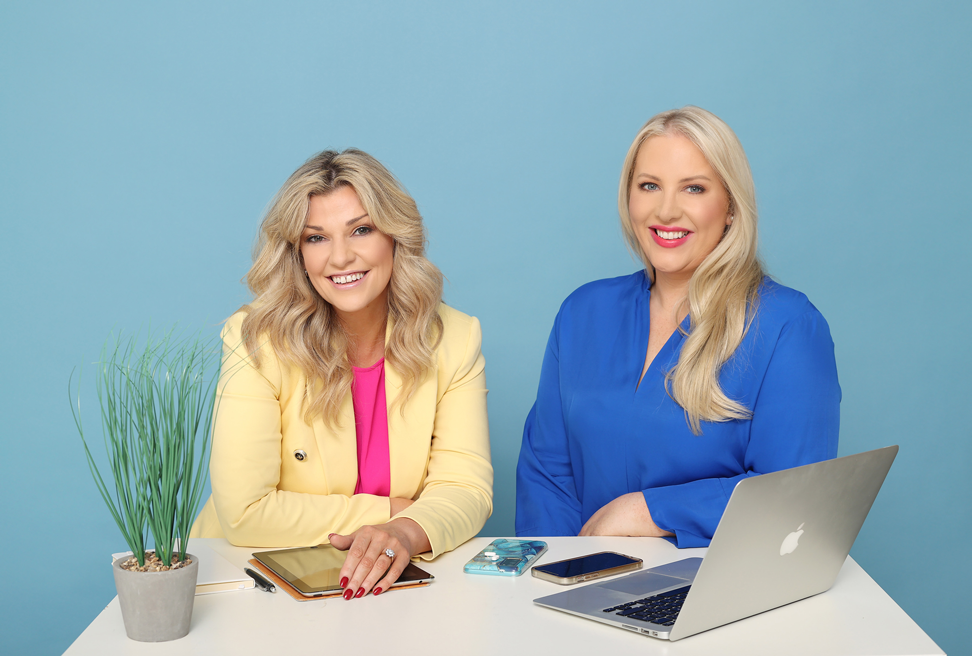
KEY founder, Donna Ledwidge, tells FemTech World why education is vital in understanding women’s bodies
Period cramps made Donna Ledwidge dependent on painkillers every month. “I couldn’t survive without them,” she remembers. “I had every symptom you can imagine and it was really affecting my life.”
She was aware of the numerous side effects of taking them and she wanted to do more research herself. Along with her friend, Renée O’Shaughnessy, she started looking for natural alternatives using herbals and together, they founded keyforher.com – a platform aiming to help women understand their symptoms.
“We were going through different life stages,” Donna explains. “Renée had a lot of thyroid issues and we both became frustrated because everything was very disjointed. The information was very difficult to find and so, the whole company stems from our sharing to each other about things that we were facing that weren’t being openly talked about. Because we had a lot of issues that we were dealing with, we wanted other women to find the community and solutions that they need.”
KEY is based on an online assessment that offers women tailored supplement recommendations, information and insights and help them better understand and track their symptoms.
“We knew that supplements worked for us,” the founder tells me. “They made a difference for us. I got the cramps under control and I had my life back because I understood the nutrients that I needed. So, we came up with the concept of trying to personalise [the supplements] for each life stage.
“The assessment really helps women understand and write down their symptoms,” Donna continues passionately. “Very few women do that. We are all different, but we are very much the same. We go through these different life stages differently and at different times. So, to have something like this allows women to pause, take a moment and recognise how severe their symptoms are.”
The team behind KEY has done extensive research on clinical data and the nutrients used in herbals, says Donna. “We had a group of 100 women who took our KEY supplements for approximately six weeks and the results were absolutely phenomenal across every symptom that we presented on,” she adds. “They work extremely well and I think that’s also because a lot of us are very much lacking in nutrients. Introducing those nutrients back into the system can help dramatically.”
Supplements aside, Donna believes that education is crucial in understanding women’s health. “I wasn’t taught about menstruation in school and my mum never talked about this. It was something that women dealt with in silence,” she says. “It’s sad to see how so many generations have gone through what we are going through, in complete silence without any support and information whatsoever.”
I ask her how her company aims to change that. “I think our core is to educate first and then provide solutions because we need to understand why we’re feeling that way in the first place. Once we do that, we’re looking to innovate wherever we can and as naturally as possible.”
Donna says that building and improving the platform is a work in progress. “We’re still in our infancy. It’s like a piece of art that will never be finished,” she laughs. “I’m happy with what we’ve achieved today, but there’s so much more that we can do.
“We want to grow the information hub and we are looking at ways in which we could make the platform more interactive. We’re also going to be bringing in women who have gone through perimenopause or different challenges in life so that they can share their stories and advice and we’re pushing through updates every couple of months.”
As we wrap up our interview, I would like to know what she is hoping for the future. “We want to become recognised in helping women, making KEY an all-encompassing platform for all women, no matter where they are. Our number one goal is information because that’s where it all starts.”


Early pregnancy therapy can cut postpartum depression and anxiety by tackling prenatal anxiety, new research has revealed.
A trial of 1,200 pregnant women in Pakistan found those receiving cognitive behavioural therapy (CBT), a talking therapy that changes patterns of thought and behaviour, had 81 per cent lower odds of postpartum depression or moderate-to-severe anxiety than those receiving usual care.
Only 12 per cent of women in the intervention group developed postpartum depression, compared with 41 per cent in the control group.
The research was led by Pamela Surkan at Johns Hopkins University, in partnership with the University of Liverpool and the Human Development Research Foundation Pakistan.
Surkan said: “We hope this research doesn’t end with evidence, but with implementation.
“Every pregnant woman deserves the chance to thrive, and mental health must be recognised as a core part of maternal health everywhere.”
Among women who attended five or more sessions, the risk of low birthweight (under 2.5kg) and small-for-gestational-age births (smaller than expected for weeks of pregnancy) decreased by 39 per cent and 32 per cent respectively.
The approach was designed to be scalable: therapy was delivered by trained non-specialist counsellors in a public hospital in Rawalpindi, making it accessible and low-cost for health systems without specialist clinicians.
In Pakistan, up to 49 per cent of pregnant women experience anxiety, yet access to mental health care remains limited.
Prenatal anxiety is rarely addressed in public health systems despite long-term consequences for mothers and children.
What began at a global mental health meeting in Washington DC in 2012 evolved into a research partnership spanning 2017 to 2024. Findings from the main trial were published in March 2024.
Beyond clinical outcomes, the research linked better social support, reduced stress and fewer pregnancy-related difficulties to improved mental health outcomes.
To date, 29 peer-reviewed articles have been published from the project, which has established one of the world’s largest datasets on prenatal anxiety in low and middle-income countries and developed an intervention manual ready for wider use.
The team is now focused on scaling, with proposals submitted to test the intervention in new contexts and plans to make the manual publicly available.












-

 Insight2 weeks ago
Cannabis compounds kill ovarian cancer without harming healthy cells, research finds
-
 Opinion4 weeks ago
Femtech in 2025: A year of acceleration, and what data signals for 2026
-

 Insight3 weeks ago
Meta removes dozens of abortion advice and queer advocacy accounts
-

 News4 weeks ago
Round up: First wearable detects symptoms of perimenopause, and more
-

 Insight3 weeks ago
Sperm donor with cancer-causing gene fathered nearly 200 children across Europe
-

 Mental health4 weeks ago
Insomnia combined with sleep apnea associated with worse memory in older women
-

 News3 weeks ago
UK couples exploiting legal loophole to rank embryos based on IQ, height and health
-

 Insight4 weeks ago
Planned birth at term reduces pre-eclampsia in high-risk women – study