




Features
‘We are all different, but very much the same’: Are we failing to understand women’s life stages?

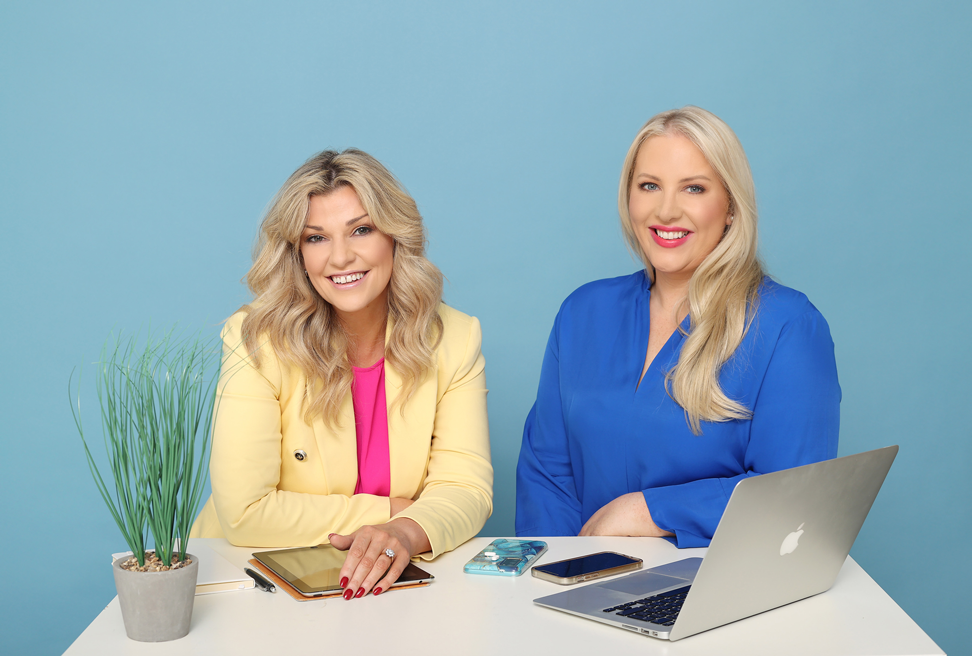
KEY founder, Donna Ledwidge, tells FemTech World why education is vital in understanding women’s bodies
Period cramps made Donna Ledwidge dependent on painkillers every month. “I couldn’t survive without them,” she remembers. “I had every symptom you can imagine and it was really affecting my life.”
She was aware of the numerous side effects of taking them and she wanted to do more research herself. Along with her friend, Renée O’Shaughnessy, she started looking for natural alternatives using herbals and together, they founded keyforher.com – a platform aiming to help women understand their symptoms.
“We were going through different life stages,” Donna explains. “Renée had a lot of thyroid issues and we both became frustrated because everything was very disjointed. The information was very difficult to find and so, the whole company stems from our sharing to each other about things that we were facing that weren’t being openly talked about. Because we had a lot of issues that we were dealing with, we wanted other women to find the community and solutions that they need.”
KEY is based on an online assessment that offers women tailored supplement recommendations, information and insights and help them better understand and track their symptoms.
“We knew that supplements worked for us,” the founder tells me. “They made a difference for us. I got the cramps under control and I had my life back because I understood the nutrients that I needed. So, we came up with the concept of trying to personalise [the supplements] for each life stage.
“The assessment really helps women understand and write down their symptoms,” Donna continues passionately. “Very few women do that. We are all different, but we are very much the same. We go through these different life stages differently and at different times. So, to have something like this allows women to pause, take a moment and recognise how severe their symptoms are.”
The team behind KEY has done extensive research on clinical data and the nutrients used in herbals, says Donna. “We had a group of 100 women who took our KEY supplements for approximately six weeks and the results were absolutely phenomenal across every symptom that we presented on,” she adds. “They work extremely well and I think that’s also because a lot of us are very much lacking in nutrients. Introducing those nutrients back into the system can help dramatically.”
Supplements aside, Donna believes that education is crucial in understanding women’s health. “I wasn’t taught about menstruation in school and my mum never talked about this. It was something that women dealt with in silence,” she says. “It’s sad to see how so many generations have gone through what we are going through, in complete silence without any support and information whatsoever.”
I ask her how her company aims to change that. “I think our core is to educate first and then provide solutions because we need to understand why we’re feeling that way in the first place. Once we do that, we’re looking to innovate wherever we can and as naturally as possible.”
Donna says that building and improving the platform is a work in progress. “We’re still in our infancy. It’s like a piece of art that will never be finished,” she laughs. “I’m happy with what we’ve achieved today, but there’s so much more that we can do.
“We want to grow the information hub and we are looking at ways in which we could make the platform more interactive. We’re also going to be bringing in women who have gone through perimenopause or different challenges in life so that they can share their stories and advice and we’re pushing through updates every couple of months.”
As we wrap up our interview, I would like to know what she is hoping for the future. “We want to become recognised in helping women, making KEY an all-encompassing platform for all women, no matter where they are. Our number one goal is information because that’s where it all starts.”



Women with the same medical conditions as men were less likely to receive the same treatment across several specialties, a global research review found.
The review found differences in care for conditions including cardiovascular disease, kidney disease and Parkinson’s, with women less likely to receive some active treatments.
Of 38 studies analysed, 33 found women were less likely than men to be offered active treatment.

Researchers at the University of St Andrews found women with myocardial infarction, heart failure or an irregular heartbeat were more likely to receive medication, while men were more likely to undergo coronary bypass surgery, stenting or other surgical treatment.
Women were also less likely to be prescribed statins.
Men with Parkinson’s were more likely to be referred for deep brain stimulation.
Men with liver failure were more likely to receive a transplant, while women with kidney disease requiring dialysis were less likely to receive permanent access and spent longer using a catheter.
Women were also less likely to receive opioids for pain management.
The researchers found no significant difference between women and men in treatment for stroke or diabetes, while women were more likely to receive treatment for dementia.
None of the studies identified clinical guidelines recommending different treatment based on sex.
Researchers said this suggested the differences could not be explained by the need for different clinical approaches to women’s health.
Dr Andrew O’Malley, who co-led the study, said: “For clinicians, the findings are a prompt to check whether treatment is being offered on clinical grounds rather than assumption.”
He said studies showed doctors more often attributed women’s symptoms to anxiety and made more diagnostic errors with female patients, even when test results were positive.
Dr Miriam Veenhuizen, honorary lecturer in the School of Medicine at St Andrews, said: “While the direction of the findings was not a surprise, the consistency was. The same pattern appeared in cardiology, surgery, transplant medicine and emergency care, and it survived statistical adjustment in most studies.”


Alexander Parker is head of wellness at packaging design and manufacturing company, Burgopak.
Burgopak is a world leader in design innovation, with a 25-year-history spanning entertainment, consumer tech and now health diagnostics, including an expanding range of at-home hormone and fertility testing kits.
We speak to Alexander to discover what goes into designing robust, functional but engaging packaging and the sometimes surprising considerations that can make or break a product.
Hi Alexander. Please tell us about your role at Burgopak.
My role is about driving our growth and direction in the healthcare and wellness space, which in practice means everything from packaging to client engagement, to partnerships, to developing the team.
I also sit on the company management committee and help manage our IP portfolio.
Before stepping into this role, I spent 20 years as a designer, 15 of them as head of design – so I bring a hands-on understanding of what it takes to deliver great packaging.
At-home test kits require the user to perform a medical procedure alone, without professional support.
How does that inform your design approach?
It’s a key pillar of a project, heavily influenced by the product and its intended use.
In the case of a test kit being used to collect a sample specimen and return it to a lab, there’s often plenty of opportunity for packaging to help or hinder the process and experience.
There are layers to effective packaging.
● Structure – Physical interventions through the packaging.
● Artwork – The visual identity, messaging and instructions across the pack and instructions for use.
● Signalling – Sometimes-undervalued but what signals are communicated through the packaging – how this makes the user feel about the product, the company behind it and the task at hand.
Careful design of the instructions for use is universally appreciated and often a regulatory requirement.
However, the pack structure and artwork should also work together to communicate a clear user journey.
This could include presenting components in the order they’re used, aligning the pack layout with the IFU steps (Prepare>Test>Return), making the IFU immediately visible as a hero component.
We can also introduce physical aids, like collection tube stands, to help during the sampling process.
The packaging is often used in the return of the sample to a lab so this needs to be considered and intuitively designed.
The structure, materials and artwork are all communicating something to the user.
You want to reassure the user by signalling care, efficacy, trust and in the case of a paid product, value.
In your mind, compare these two pack examples.
One a simple carton with a sea of components loosely filled and rattling around inside. Poor quality print and seemingly damaged in the post.
Contrast that with a suitably robust piece of packaging, with the components arranged and labelled into steps 1, 2, 3.
They might both work, but you can imagine the second building a reassured user experience.
How often do you encounter brands that haven’t thought about the emotional and potentially anxiety-inducing moment of opening a testing kit, and what’s the first thing you fix?
Thankfully it’s not too often, in our case at least.
I think we tend to attract customers who sense there’s more to packaging than just being a container or functionally driven.
The start of a project for us is building a brief with the customer and aligning on values for the packaging – what we want people to feel when opening or using it – as well as defining the technical requirements.
So, if there’s going to be an early fix it’ll probably be here, establishing the emotional intent.
How has the rise in social media ‘unboxing’ videos and product reviews changed what you do?
Is there a tension between designing for social media shareability and designing for the privacy women often want around health testing?
I don’t think there has to be a tension, provided everyone is clear on what the goals of the packaging are, and they are aligned with the product type and its use.
We can’t influence the results of a test or the positive or negative emotional significance it has in someone’s life.
What we can do is design packaging that offers the best possible user experience.
If there’s a shareable moment at the end, packaging might be a prop within a photo or video. But equally it might be a very private experience.
If it’s a test offering a diagnosis or insights into a health condition – you can conceive of a range of emotional outcomes. As you could imagine for certain fertility products too.
The design needs to acknowledge all these possibilities in its structural design, visual identity and the signals they communicate.
For women using a fertility or hormone test, perceived quality signals trust.
How do you stop sustainable choices from reading as cheap?
Do the essentials well, look for small interventions that add value and use attention to detail to signal that the care taken over the packaging, and sustainability, extends to the user.
Material choice is incredibly important.
In the case of paperboard quality can be a spectrum so it’s important to take the time to find and qualify the right one.
One that offers the necessary performance characteristics, is verifiably from responsibly managed forests such as through FSC/PEFC, and from a mill whose activities are aligned with your sustainability targets.
Take care over the design of each touch point and detail. A fitment that holds a device should neatly cradle it. A closure should be intuitive to open and work every time.
If the pack is meant to stand up, then the proportions should be optimised to facilitate that. It’s attention to the details that’s important.
Print quality will have a big impact on perception, not just the messaging or visual identity it renders. If the print quality is poor, then it devalues the product.
Doing it well doesn’t mean using material resources – it’s careful vendor selection and quality assurance.
For some responsible premiumisation you can introduce embossing or debossing details to the artwork, a tactile three-dimensional finish.
This details-led approach is valuable across all packaging but if sustainability is driving a reduction to the essentials, then there is a heightened importance to the execution of what is left.
As at-home health testing moves into NHS and public health contexts, what does good packaging look like when the brief is scale and cost rather than aspiration?
Scale and cost often feature very heavily in the success of projects outside of these settings, so there are parallels between the public and private, but with greater imperative to strip things back.
What is important to understand is success is not a piece of packaging in isolation. It’s efficiency, kitting, quality, distribution, tracking, data management across all activities and partners. Packaging is one part of the bigger picture.
Central to all of this is the need for it to reliably and consistently encourage the correct use of the kit through structure, artwork and instructions.
It is materially efficient and from a robust agile supply chain.
Assembly and kitting might be automated so it will be designed for those production lines or in conjunction with the equipment development.
It is compliant with all transport regulations and the most cost-efficient postal streams to the patient and from them back to the lab.
So, what does good packaging look like? It’s the design that efficiently offers the best patient user experience through a robust, reliable, scalable supply chain.
How do you make the business case for investing in packaging design before the product itself is ready to market?
There’s an opportunity cost.
Packaging has the potential to be a valuable asset when someone invests time and resources into coherent design and development. By starting too late or under resourcing the process you risk having packaging that’s a commercial pain point.
At the earliest opportunity, you at least want to be selecting your packaging partners and have a clear understanding of the development timeline and milestones – structural design, prototyping, stakeholder feedback, artwork/labelling development, regulatory milestones, transit testing, stability testing, wetproofing, manufacturing, delivery.
You must complete these steps before your product can go to market.
What’s the cost to you of delaying launch because you didn’t get packaging underway sooner?
You need to spend time creating packaging that elevates your brand and is a marketing asset that works across ecommerce, retail, advertising, social media.
Engage with the other supply chain stakeholders.
One example would be involving kitting partners in the process to validate and input on packaging improvements. If it’s expensive to kit, your cost of goods go up and if it’s slow to kit you might not have a scalable solution.
You may also find packaging insights influence product decisions.
If you are defining components for a test kit, factor in that larger devices might in turn increase pack size and eventually incur higher shipping costs.
You might work with a device manufacturer on how a USB cable is wound so the packaging volume can be decreased – another potential packaging and shipping cost reduction.
Transit testing and design improvements ensure that products arrive in acceptable condition – reducing costs associated with replacements, damaged reputation and potentially the loss of repeat purchases.
Packaging done well is that opportunity realised – it’s value demonstrated across sales, marketing and operations.
For a founding team approaching a packaging partner for the first time, what does a genuinely useful brief contain, what do most brands leave out, and how much does coming in underprepared add to the timeline and cost?
At Burgopak we build a brief together with the customer and that usually happens in a few stages.
The initial conversation is a chance to learn more about each other, make sure we’re a good fit for one another and the project.
We like to learn more about you, your product, how it’s used and some headline information around timelines, volumes, budget, your packaging ambitions and likes/dislikes.
We explain what we do and how we typically work. This really is the kick-off point – the goal at the end of this stage is being excited to be working together on a project that looks technically and commercially feasible.
In the next stage we build-out a brief capturing the technical and brand-led requirements of the packaging.
It will cover product details, brand & experience, sales & delivery channels, fulfilment and distribution, budget and timelines, compliance and regulations.
The exact questions will vary by product and project, but they span those areas.
From this we can build the project plan – and this might involve working towards answers that aren’t yet defined.
It seems obvious, but knowing exactly what needs to be packaged is fundamental – the product, peripherals – and this can be one of the common missing puzzle pieces.
You can design a container to hold ‘something’.
But when you know exactly what the product is – its size, shape, weight, how it’s used – you can design a piece of packaging that is maximally efficient and effective in elevating the total product experience.
The risk to a successful project is not so much under preparedness at the start – we’re here to help build the brief and a realistic project plan – it’s a loss of momentum through the process.
The packager and the client must work together.
We can be very efficient and agile in doing the work but there’s also the responsibility from the client to keep momentum through rounds of feedback, coordinating product samples or technical drawings and so on.
If there’s a finite timeline and repeated delays within it there can come a crunch point – when delivery dates are pushed out or potentially avoidable compromises made.
Come prepared to collaborate on the brief – but know that the founding teams who get the best outcomes are the ones who stay engaged and keep momentum through the whole process, not just the kick-off.
Learn more about Burgopak at burgopak.com

Elation Health has acquired Aster, a women’s health EHR startup created by sisters Fifi Kara and Dr Lailah Kara-Newton.
The deal, announced on 3 June 2026, will see Aster’s team join Elation Health as the company expands development of what it describes as the first agentic operating system for primary care.
An EHR, or electronic health record, is a digital system used by healthcare providers to store and manage patient information.
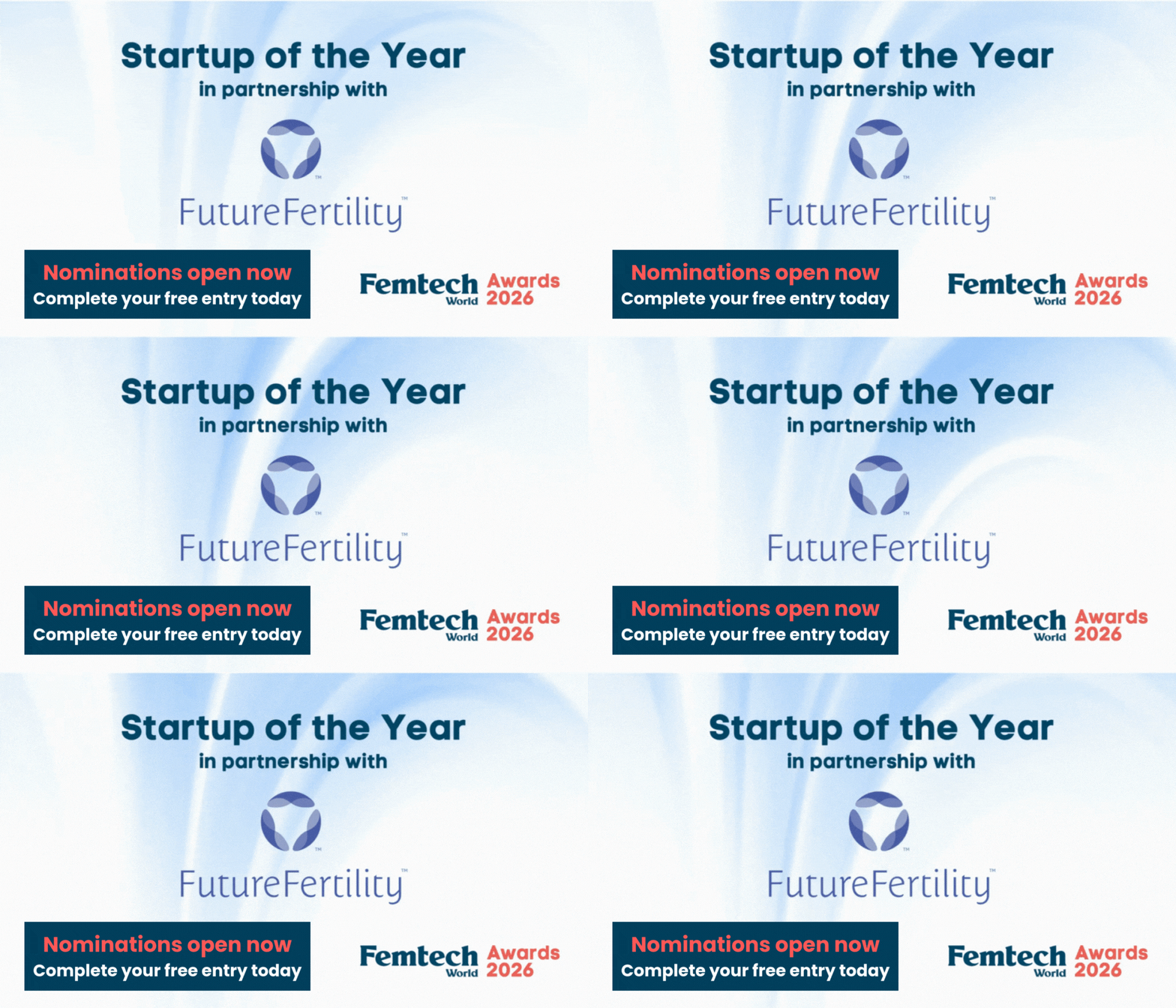
Aster was founded by Kara and Kara-Newton as an AI-native EHR platform for women’s health providers.
Elation Health said the acquisition would allow Aster to learn from its expertise in AI agents and support development of its agentic operating system for primary care.
Kyna Fong, co-founder and chief executive of Elation Health, said: “The Aster team impressed us with their vision and creative inventions to support independent practices.”
Fong said Elation, like Aster, was founded by siblings who wanted to change the healthcare system.
She added: “That shared north star means they understand what we’re building and why it matters. It was clear right away they would significantly add to our capabilities.”
Kara has spent 10 years creating consumer and business-to-business products across the UK, Europe and the US, and recently supported Meta’s Health & Fitness team, according to Aster’s website.
Kara-Newton previously worked as a hospital doctor in the NHS across medical and surgical specialties, including breast surgery, general surgery, emergency medicine and obstetrics and gynaecology.
Aster launched in 2023 after raising US$2.8m from Zeal Capital Partners, Cornerstone Ventures, Octopus Ventures and others.
Kara, Kara-Newton and Aster’s chief technology officer, Nacho Vazquez, will all join Elation.
Kara said: “From the moment we met Kyna Fong, Ashley Rogers, and the Elation leadership team, it was clear we were aligned on what matters most: that clinicians deserve truly incredible software that brings joy back to their practice. Together, we can now bring that vision to millions of primary care patients across the country.”
The sisters said their work was shaped by Kara-Newton’s first pregnancy, when undiagnosed pre-eclampsia led to an emergency caesarean section and neonatal intensive care admission for her son.
The founders said they wanted to build technology that could help prevent similar outcomes for other women.
The acquisition comes amid continued concern over maternal health inequalities in the US.
In the US, Black maternal mortality remains alarmingly high, with rates nearly double those of white women, and experts point to unequal access to care, implicit bias and fragmented approaches to care.







 Menopause1 week ago
Menopause may not explain rising heart condition in women – study

 Fertility2 weeks ago
Paracetamol use may impact future fertility, studies suggest

 Insight1 week ago
Women with birth trauma face 2.5x higher healthcare costs – study

 Menopause2 weeks ago
Cancer drug could tackle osteoporosis menopause weight gain

 News1 week ago
Medical cannabis may improve endometriosis symptoms – study

 Cancer1 week ago
Study could explain why obesity is a breast cancer risk factor

 Menopause2 weeks ago
Menopause hormone therapy may improve cardiovascular health outcomes, study suggests
 AI1 week ago
Evvy secures US$40m for AI-powered vaginal microbiome testing