




Entrepreneur
Can a holistic approach change the way we treat endometriosis? This start-up thinks so
It affects 190 million women around the world, yet endometriosis remains hugely misunderstood


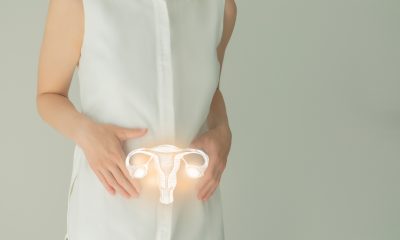
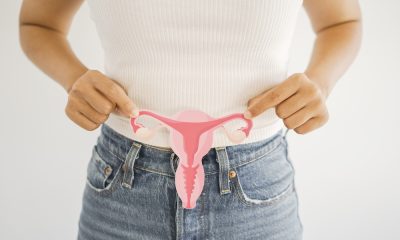
Abdominal pain, heavy bleeding, fatigue and depression are all too well known to those living with endometriosis.
The condition, which the World Health Organization estimates affects one in 10 women and girls globally, can have enormous implications, affecting anything from women’s mental health and quality of life to their education, productivity and relationships.
The impact of it is compounded by a lack of treatment options and knowledge among medical professionals which can lead to repeated surgeries and sometimes infertility.
A study by Aston University found that GPs often lack knowledge about endometriosis, with some saying they’d had scant training in medical school about the condition.
“Endometriosis manifests in the body in a similar way to cancer. There are oncologists who specialise in cancer, but there’s no such thing as an endometriosis doctor,” says Brittany Hawkins, co-founder and CEO of virtual chronic care platform ELANZA Wellness.
“The training a lot of medical professionals have haven’t equipped them properly to allow them to diagnose and treat patients with endometriosis early enough. It’s a failure of the system rather than doctors not caring that much.”
The standard first-line treatment for women with endometriosis is hormonal, specifically progestin-based therapy.
However, research shows the management of endometriosis requires a more holistic approach focused on reducing overall inflammation, increasing detoxification, and attenuating troublesome symptoms.
“It’s not just the public research supporting this holistic approach when it comes to endometriosis,” says Hawkins.
“Top academic centres of excellence in the world use a multimodal approach. However, accessing these centres is very expensive and it’s something most women couldn’t afford.”
Wanting to shake up the treatment and management of endometriosis, Hawkins and her co-founder, Catherine Hendy, launched the first virtual endometriosis centre to help women and assigned female at birth individuals learn about different treatments, meet with specialist care providers and better understand the condition.
The platform, called EverythingEndo, aims to provide patients with a personalised symptom management plan that combines scientific research, individual data and specialist support.
“For too long the majority of people have had their symptoms dismissed or normalised and over 70 per cent of sufferers are now left with unmanaged pain,” explains Hendy.
“Currently, there’s no space to knit together the full and balanced options for people to be able to hear not only clinically, but also in terms of wider lifestyle, and relationships, things they can do to limit and minimise the impact of endometriosis on their lives.
“Our aim is to simplify everything and give patients the tools they need at every stage of their journey.”
But the duo’s mission goes beyond improving endometriosis care. Hawkins says a big part of their work at ELANZA is centred around restoring trust in healthcare and addressing financial barriers to treatment.
“We know many women are gaslit, ending up not wanting to set foot into a medical office and, in some cases, getting their prescriptions from random sources, which can be very dangerous. We want them to have trust in the care they are given.
“In the future, we are also planning to look at different comorbidities. A lot of women [with endometriosis] end up seeing a psychologist if they have depression symptoms, then they would see a gynaecologist and possibly a gastroenterologist but actually, the condition itself is not being addressed as a whole-person issue. This is something we would like to go into.”
While some investors understand the issue, Hendy says many of them still see it as “niche”.
“It’s definitely a challenge to educate people about endometriosis and how under-diagnosed and under-researched it is,” she adds.
“What we often see in the VC space is that if endometriosis is not something that affects the investors themselves or their wives or daughters, they don’t understand it. It’s along the lines of ‘If this hasn’t affected me personally, I don’t think it’s a problem.’
“It’s definitely a harder road than we expected. Fortunately, the right investors do fit with us eventually. It just takes time.”
EverythingEndo is accessible from any device and works either standalone or in complementary tandem with in-office surgical and medical treatments.








Flexible working could help more women entrepreneurs become leaders of family firms by making it easier to balance work and family life, new research suggests.
Digital workplace tools may allow women to take a greater role in strategic decision-making and other leadership duties while maintaining family responsibilities. the report found.
They could also challenge the assumption that effective leaders must always be physically present at work.

Co-author Professor Kirk Chang said: “Technology such as Microsoft Teams and cloud-based collaboration platforms can create new opportunities for talented women to demonstrate leadership. But lasting change depends on family businesses judging leaders by their performance rather than their physical presence.”
Researchers from the University of East London say tools such as Microsoft Teams, Zoom, Google Workspace and cloud-based business systems can shift the focus from office attendance to measurable performance.
Cloud-based systems are online services that give employees remote access to documents, software and business information.
Family businesses are often considered family-friendly employers, but women can still face barriers to senior positions.
Leadership in these companies often passes between generations through informal family decisions rather than formal recruitment.
Traditional expectations around gender roles can make it harder for women with caring responsibilities to be seen as potential successors, particularly when being visible in the workplace is treated as a sign of commitment.
The researchers say digital workplace technology could make women’s contributions more visible while helping them manage work and family responsibilities.
Their proposed framework sets out four ways digital working could support women’s progression: building confidence, creating opportunities to take part in strategic decisions, increasing business knowledge and changing perceptions of who is ready to lead.
The authors stress that technology alone will not remove the barriers women face in reaching leadership roles. Family businesses must also develop cultures that value results over physical presence and actively support women pursuing senior positions.
Dr Ozlem Ozdemir, from the Royal Docks School of Business and Law, said: “Family businesses are built around close relationships, but that does not automatically make them easier places for women to become leaders. It can be tougher for women family members to be seen as ambitious professionals.
“Digital workplace tools can help shift the focus from who is seen most often in the office to who is making the strongest contribution.”
The paper draws its conclusions from existing research and proposes a framework showing how digital workplace innovation may improve work-life balance and support more women to become future leaders in family businesses.



A fertility startup has raised US$4m and will open its first lower-cost IVF clinic in West Palm Beach later this year.
It will offer a full IVF cycle, including medications, for US$8,995.
Around 12 per cent of American couples struggle with infertility, according to the company, but only 14 per cent of them receive IVF because of the cost.
A single IVF cycle costs an average of US$23,500, it said, with the cost nearly doubling if further cycles are needed.
Co-founder and chief executive Van Spina said: “We’re building ABC around a straightforward premise: IVF has become unnecessarily expensive, and many patients are priced out before they ever have a real chance to start a family.”
“This is personal for me. My fiancée and I went through IVF ourselves, including multiple failed cycles,” Spina continued, citing Jamie Rapp.
“That experience pushed me to build the kind of fertility company we wished had existed when we began treatment.”
The US$4m seed round was led by Wormhole Capital and Tower Research Ventures.
In a blog post, New York-based Tower Research described ABC as a new model for fertility care, praising its “evidence-based protocols, AI-assisted intake, and modern lab workflows.”
“When we met the team at The American Baby Company (ABC), we saw an opportunity to rethink how fertility care is delivered in the US from the ground up,” the post said.
Co-founder and chief medical officer Dr Paul Magarelli is a board-certified reproductive endocrinologist and one of the most prominent voices in the US on expanding access to fertility care, according to Tower.
Reproductive endocrinology is a branch of medicine concerned with hormones and fertility.
Magarelli developed the Clinical Fertility Physician certification programme, which trains generalist clinicians to deliver routine fertility procedures under specialist oversight.
Spina spent his early career as a technology investor at Warburg Pincus before founding an institutionally backed data business in private credit.
“We’re on a mission to become the place Americans go to start their families,” Spina said.
“Our 10-year goal is to help make 250,000 babies per year.”
News
From Hologic to Ark Surgical: Why Joseph LaBruzzo is betting on the future of women’s surgical innovation


After more than two decades leading organisations at some of the world’s most respected medical device companies, including Hologic, SenoRx Breast Care, and BTL Industries, Joseph B. LaBruzzo is embarking on a new chapter as President & CEO of U.S. Operations and Board Member at Ark Surgical.
We sat down with Joseph to discuss what drew him to Ark Surgical, why he believes women’s surgical innovation is entering a transformative era, and what it takes to bring meaningful technologies from concept to standard of care.
You have held leadership positions at some of the biggest names in MedTech. What attracted you to Ark Surgical?
Throughout my career, I’ve been fortunate to work with organisations that developed technologies capable of changing the standard of care.
What attracted me to Ark Surgical is the opportunity to help address a meaningful unmet need in gynecologic surgery with an innovation that has the potential to improve patient outcomes while preserving the benefits of minimally invasive surgery.
Opportunities like that don’t come along very often.
FemTech World recently highlighted that many women remain unaware of gynecologic cancers and that unexpected diagnoses continue to have a profound impact on patients and families.
How has your own experience shaped the way you think about innovation in women’s health?
Earlier in my career, I witnessed many women receive life-changing cancer diagnoses.
Those experiences stayed with me and reinforced my belief that if there’s an opportunity to reduce risk through better innovation, it’s one worth pursuing.
That’s one of the reasons I was drawn to Ark Surgical.
The vast majority of minimally invasive gynecologic procedures are performed for conditions believed to be benign. Unfortunately, in rare cases, pathology later reveals an unexpected malignancy.
LapBox was designed with a proprietary dual-wall tissue containment system to help facilitate contained specimen retrieval and minimise the risk of tissue spillage during laparoscopic procedures.
I believe innovations like this can help surgeons manage the unexpected while preserving the many benefits of minimally invasive surgery for women.
Women’s health has gained significant momentum in recent years, yet surgical innovation often receives less attention than diagnostics or therapeutics. Why do you think that is?
Women’s health has historically been underfunded and underserved across many areas of medicine, and surgery is no exception.
While we’ve seen tremendous advances in diagnostics and pharmaceuticals, there are still important opportunities to improve the surgical experience for both physicians and patients.
Innovation that enhances safety, efficiency, and outcomes has the potential to make a lasting impact.
What excites you most about LapBox?
LapBox addresses a very real challenge that gynecologic surgeons face during minimally invasive procedures.
It was thoughtfully designed to integrate seamlessly into the surgical workflow while providing an added layer of confidence when tissue retrieval is required.
I believe technologies that solve real clinical challenges in a practical way have the greatest potential to become part of the standard of care.
What do you see as the biggest unmet needs in minimally invasive gynecologic surgery today?
The future of surgery isn’t simply about making procedures less invasive. It’s about making them smarter and safer.
Surgeons need technologies that integrate seamlessly into their workflow while helping them navigate increasingly complex clinical situations.
Every advancement that helps reduce risk while preserving the benefits of minimally invasive surgery has the potential to improve outcomes for both physicians and patients.
That’s where I believe the greatest opportunities for innovation exist.
As you take on this new role, what are your priorities over the next 12 months?
Our focus over the next 12 months is to build a strong foundation for growth. That means expanding physician partnerships, driving early clinical adoption, growing our team, and ensuring that more surgeons have access to technologies like LapBox.
At the same time, we’re focused on building strategic relationships with investors, healthcare systems, and industry partners that support our long-term vision.
What advice would you give entrepreneurs building the next generation of women’s health companies?
Start with a real clinical problem and never lose sight of the patient.
Great technology alone isn’t enough. You also need strong clinical evidence, physician advocates, and a clear market strategy. The companies that succeed are the ones that bring all of those pieces together while remaining focused on improving patient care.
About Joseph B. LaBruzzo
As President & CEO of U.S. Operations and Board Member, Joseph LaBruzzo is leading Ark Surgical’s U.S. growth strategy, physician partnerships, strategic investment initiatives, and organisational expansion, supporting the company’s mission to advance safer minimally invasive gynecologic surgery through innovative technologies.











 Entrepreneur1 week ago
Fertility startup American Baby Company secures US$4m

 News2 weeks ago
From Hologic to Ark Surgical: Why Joseph LaBruzzo is betting on the future of women’s surgical innovation

 Wellness2 weeks ago
AstraZeneca drug approved for breast cancer in EU

 Insight1 week ago
Natural Cycles receives sixth FDA clearance for fertility algorithm
 Wellness3 days ago
Cancer patient receives ‘landmark’ treatment in world-first
 Sponsored Content2 weeks ago
Two opportunities for women’s health founders closing this autumn

 Menopause2 weeks ago
Menopause care failing women worldwide, review finds

 Hormonal health2 weeks ago
Type 2 diabetes rising among young women, experts warn