




Connect with us

Mental health

Free to Feed launches AI-powered allergy ally with Ema
Published

on

By Morgan Rose, CNM, WHNP-BC, IBCLC | Chief Science Officer, Ema

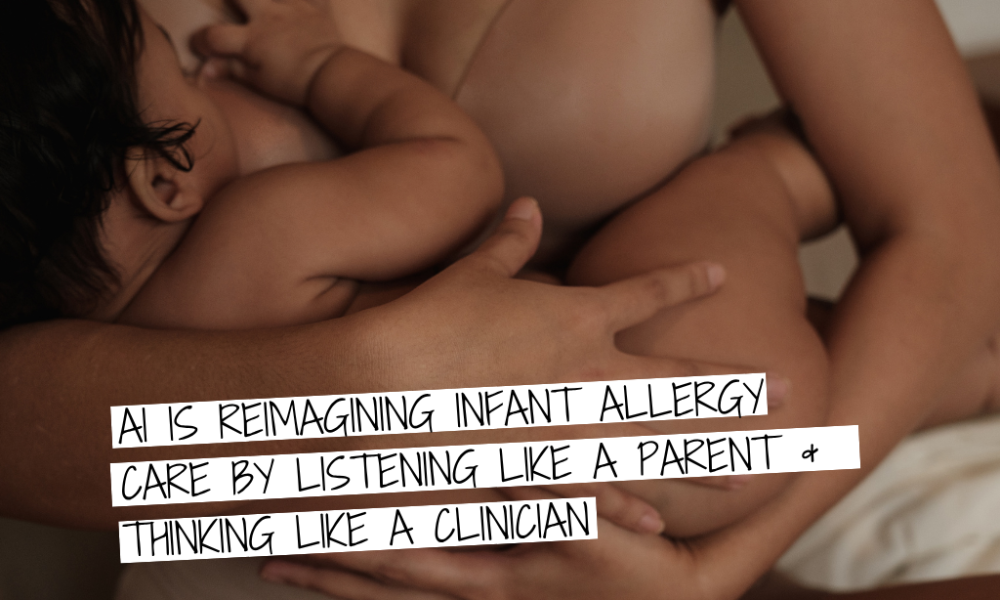
In a bold stride toward reshaping paediatric allergy care, Free to Feed has launched a groundbreaking new partnership with Ema, the first AI platform built for women’s health.

This collaboration is more than technology; it radically improves how we identify and support food-allergic children through care that’s smarter, more personal, and emotionally attuned to the families navigating it.

Dr Trillitye Paullin, molecular biologist and co-founder of Free to Feed, said: “Partnering with Ema has been transformative for Free to Feed.

“Ema’s cutting-edge AI capabilities have enabled us to deepen our understanding and enhance our approach towards managing infant allergies effectively.

“With Ema’s support, we are addressing the symptoms directly while empowering families and clinicians with the knowledge to make informed decisions. It’s a game changer.”

The collaboration centres on an ambitious capstone project titled “Improving Outcomes for Food-Allergic Children,” led by Dr Trill and supported by the Stanford University Data Science for Social Good Program.

Alongside Stanford research assistant Miguel Esteban Villarreal Rodriguez, MD, the team is tackling one of pediatric health’s most frustrating disconnects: the gap between what parents report and what’s formally diagnosed.

That gap is starkly highlighted by the fact that non-IgE-mediated reactions, which largely impact children under 5, didn’t get their own ICD-10 codes until 2017 despite case reports dating back to the 1960s.

Ema brings to this partnership a proprietary AI trained on the real language, symptoms, and care experiences of women across life stages.

But Ema isn’t just built for women, she’s built for how women care.

Because when a child struggles with food allergies, it’s the mother who carries the invisible load: tracking symptoms, managing anxiety, navigating dismissals, and advocating for answers.

That’s why Free to Feed chose Ema to power this next phase.

Her hybrid language model delivers information and adapts to the emotional, cognitive, and logistical realities families face.

She meets parents where they are, and meets mothers as they are: the primary interpreters of paediatric health.

Through Free to Feed’s expansive data on infant food reactivity, Ema is helping build a powerful new AI-driven tool designed to:

  • Collect and interpret parental reports of food allergy symptoms
  • Prepare for integration through a planned pilot study with pediatric practices through Stanford
  • Educate providers on emerging insights, especially around underrecognized non-IgE-mediated allergies
  • Support parents with personalized, empathetic decision guidance

The project is already underway with over 500 families surveyed through the Stanford University Hoover Institution Veteran Fellowship Program, with clinical integration slated to begin next.

But its real promise lies in what comes next: improved provider awareness, better identification of food allergies, and ultimately, healthier outcomes for children.

Amanda Ducach, CEO of Ema, said: “This collaboration isn’t just academic.

“It’s a glimpse into what pediatric care can look like when we build around families’ real experiences, starting with how they talk, worry, and decide.”

Free to Feed’s mission has always been to give parents clarity in the chaos of infant allergies.

With Ema, that mission now includes a new kind of ally: one that’s smart, empathetic, and built to scale care that feels deeply human, while the Free to Feed provider network remains on hand to provide further support as needed.


Mental health

Dr-Julian helps deliver breakthrough mental health support for Black and ethnically minoritised mothers

Published

on

A groundbreaking digital perinatal mental health pilot for Black and ethnically minoritised women has helped women access support faster, complete therapy at higher rates, and recover more successfully than national averages.

The partnership between digital tech company Dr-Julian and The Essential Baby Company Ltd within a new model of mental health care named haPPIE SHE Cares  – who offer personalised support for women sharing their healthcare experiences, showed results well above NHS benchmarks for Black and ethnically minoritised women.

The pilot was created to help women who are less likely to use traditional mental health services during pregnancy and in the first year after giving birth.

By combining trusted community referrals, culturally aware support, and fast access to therapy through Dr-Julian’s online and virtual care platform, the programme delivered standout results.

Every woman who joined the pilot started therapy, 90 per cent completed treatment, and 74 per cent recovered; well above the NHS benchmark of around 52 per cent.

Women referred through community organisations accessed support in just one day on average, compared with around 21 days through many standard services.

Even the programme’s regular referral route reduced waits to 13 days.

The findings come as NHS leaders continue to focus on maternity inequalities and unequal access to mental health care.

Black and ethnically minoritised women can face barriers including stigma, language needs, lack of trust in services, childcare pressures, and difficulty navigating complex systems.

The haPPIE SHE Cares model was designed to break down those barriers by working with trusted community groups, offering culturally informed support, and where possible matching women with therapists who understood their background or language.

Gemma Poole for The Essential Baby Company said: “Too many women who need help feel unseen, unheard or unable to get support when they need it most.

“This project shows that when services are built around trust, culture and community, women engage, recover and thrive.

“This early success could provide a blueprint for reducing inequalities in maternal mental health care across the UK. Behind every statistic is a mother who felt supported, a family that benefited and a woman who found her voice.

“Mental healthcare must work for every community. This partnership shows that when high-quality therapy is combined with culturally responsive support, outcomes improve and women get help faster.

We are proud to have provided the therapists, virtual care systems and digital pathways behind this programme. We believe this model could help NHS organisations nationwide cut waiting times and improve recovery rates.”

Women who took part described the programme as life-changing, saying it reduced isolation, gave them confidence speaking with healthcare professionals, and made them more willing to seek help.

With growing pressure on maternity and mental health services, leaders behind the project say the pilot offers a practical solution that improves care while helping cut long waiting lists.

Plans are now being explored to expand the model through training, regional partnerships, and future funding.

Continue Reading

Mental health

Poor sleep linked to Alzheimer’s risk in older women – study

Published

on

Poor sleep may signal higher Alzheimer’s risk in older women with greater genetic risk, a study suggests.

Older women who reported poorer sleep also showed greater memory difficulties and more Alzheimer’s-related brain changes, the study found.

That pattern appeared only in women with higher genetic risk, suggesting sleep complaints may be a stronger warning sign for some women than for others.

Researchers examined 69 women aged 65 years and older taking part in the Women Inflammation Tau Study, an ongoing project focused on ageing and Alzheimer’s disease risk.

Participants completed questionnaires about their sleep quality, underwent memory testing and received brain scans measuring tau. Tau is a protein that accumulates abnormally in Alzheimer’s disease.

The study found that poorer self-reported sleep was associated with worse visual memory performance and greater tau accumulation in brain regions affected early in Alzheimer’s disease, but only among women with higher genetic risk.

Women with lower genetic risk did not show the same relationship between sleep complaints, memory and tau build-up. The finding was specific to visual memory and was not observed for verbal memory.

Researchers said the results add to growing evidence that sleep disturbances and Alzheimer’s disease may reinforce one another over time.

Previous studies have suggested that disrupted sleep can contribute to the build-up of abnormal tau proteins, while Alzheimer’s-related brain changes may also interfere with healthy sleep patterns.

Because women account for nearly two thirds of Alzheimer’s cases and frequently report poorer sleep quality than men, the researchers said sleep may represent an important and potentially modifiable risk factor in older women.

The authors noted that self-reported sleep assessments are inexpensive and easy to administer, raising the possibility that sleep complaints could help identify people who may benefit from closer monitoring or early intervention.

They also suggested that improving sleep could become a target for future Alzheimer’s prevention strategies, particularly for women at elevated genetic risk.

Continue Reading

Mental health

Women over 40 seeking raves for mental health benefits

Published

on

Women over 40 are seeking raves for mental and physical wellbeing, with a study suggesting the benefits go beyond nightlife.

The findings challenge the idea that nightlife and electronic dance music events are mainly for younger people.

Published in Psychology of Music, the study focused on the common misconception that nightlife is only for younger audiences.

Researchers surveyed 136 female clubbers aged 40 to 65 about their experiences at electronic dance music events.

The study, carried out at the University of Leeds in England, found women reported mental and physical wellbeing benefits from attending these events.

Seeing favourite DJs was the most common motivation, but many women also described dancing as a way to relieve stress and find emotional support.

The research found that 65.9 per cent of participants described attending a rave as “spiritual”, while 62.9 per cent said it offered an escape from everyday life.

A further 58.3 per cent said they felt like a different version of themselves in a club environment.

Nine in ten participants said they felt at home at electronic dance music events, with many pointing to a shared passion for music and the sense of community around it.

The study also suggested physical fitness played a role, with some women saying they had made clubbing part of their regular exercise routine.

However, the findings also highlighted challenges for older women in nightlife spaces.

One fifth of participants said they felt visibly out of place because of their age.

Nearly half reported unwanted physical contact, leading some to seek out different venues or attend only with friends.

Continue Reading

Trending

Copyright © 2025 Aspect Health Media Ltd. All Rights Reserved.

