




“Fertility benefits are the way to go, but European companies are not entirely convinced”
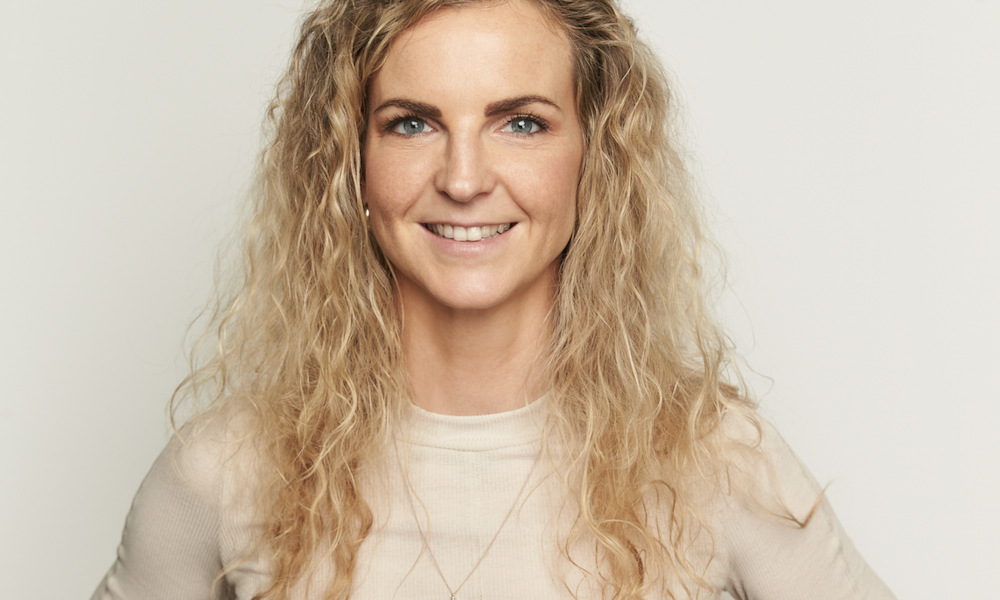
From Spotify and Facebook to Starbucks and Clif Bar, a growing number of US companies have introduced family-building benefits. Now, it’s time for Europe to support aspiring parents, says Jenny Saft.
When Jenny Saft decided to freeze her eggs aged 32, she was unaware of the many barriers women face regarding a relatively new procedure that was declared “no longer experimental” by the American Society for Reproductive Medicine in 2012.
“After I spoke to my gynaecologist, I started to do a lot of research and I became really frustrated with the lack of transparency and stigma around this topic,” she says.
“It almost felt like doctors didn’t know how to have a proper conversation about this.”

Egg freezing retrievals increased dramatically from pre-pandemic levels with UK enquiries rising by as much as 50 per cent in the summer of 2020, compared to the prior year.
But although plans to extend the storage limit from 10 to 55 years are a welcome step in enabling women to freeze their eggs when they are younger, cost remains a major barrier to the treatment.
With the average total cost of egg freezing sometimes reaching more than £6,000 and additional yearly costs for storing the eggs, many aspiring mums like Saft are left disheartened.
“Most of these procedures, including IVF, are self-pay treatments. And even if the public healthcare funds partially cover them, it’s in very discriminating conditions,” she explains.
In her native Germany, the national policy reimburses 50 per cent of IVF/ICSI costs for up to three cycles but only for heterosexual couples in which women must be under the age of 40.
In England, whether you are able to access NHS fertility treatment depends on your GP’s postcode, with different regions offering different levels of access to NHS IVF and some offering none at all.
Women can be eligible for three rounds of NHS-funded IVF treatment if they have been trying unsuccessfully to start a family for two or more years, or if they have had 12 or more unsuccessful rounds of artificial insemination.
Unsurprisingly, the Human Fertilisation and Embryology Authority found that the NHS funded only 35 per cent of IVF cycles in England in 2017 – the lowest level ever recorded by Britain’s fertility regulator – forcing many couples to go private or give up on treatment altogether.
This is due to a “scattered” system across Europe, says Saft. “We have to deal with a framework that doesn’t make sense and is not inclusive.
“If we look at the US where the concept of fertility benefits is exploding, we can see that more can be done for these couples.”
Although European healthcare systems are run at individual national levels, they are generally universal, unlike in the US where most citizens are covered by a combination of private insurance and various federal and state programmes.
However, Saft believes we can use this complexity to our advantage. Alongside her co-founder, Tobias Kaufhold, she brought the concept of fertility benefits closer to home by launching Apryl – a tech platform providing fertility benefits and working with employers across Europe.
“One of the biggest healthcare crises of our generation is infertility. Unfortunately, many people are still unaware of it,” she says.
“We started this journey because we realised that if you can’t afford treatment, you won’t be able to access fertility care.
“But if employers can implement strategic benefits, to give people access [to fertility care] they can make a huge statement not just by encouraging a more inclusive approach but by helping employees to plan their families and thrive in their career.”
Although Apryl is still an early-stage start-up, it aims to become the go-to benefits provider for progressive European companies, by offering employees fertility and family planning benefits, including consultations, access to clinics, as well as egg freezing, IVF and adoption.
“We want to be there for anyone in need of support regardless of sexual orientation or status,” says Saft.
“Diversity was something very clear for us from the very beginning and we knew that if we wanted to build this, we had to be something for everyone.”
Destigmatising fertility issues is another topic Saft is passionate about, as numerous studies have shown the major brunt of infertility is disproportionately borne by women.
“An increasing number of women choose to have kids later in their life and I think it’s important to speak openly about things like egg freezing or IVF.
“It’s funny that companies in Europe are still not entirely convinced that fertility benefits are the way to go. But part of the reason why they see this as niche is due to the stigma around fertility.”
Despite a lack of knowledge and a male-dominated VC space, she remains optimistic.
“I think the beauty is that we can develop solutions that can help employers and governments to work together and give more people access to care,” she says.
“In the US such benefits have come naturally because of their healthcare system. In Europe, they come more from a diversity inclusion angle, but I think we will see more companies implementing them soon.
“I also think governments will improve their set-ups and dedicate higher funds to this topic, in the long term.
“The best thing is that we have a business that people believe in and that can actually make a difference in the world.”


Newsletter
Sign up for free weekly updates
The latest femtech news, research and investment, straight to your inbox.




